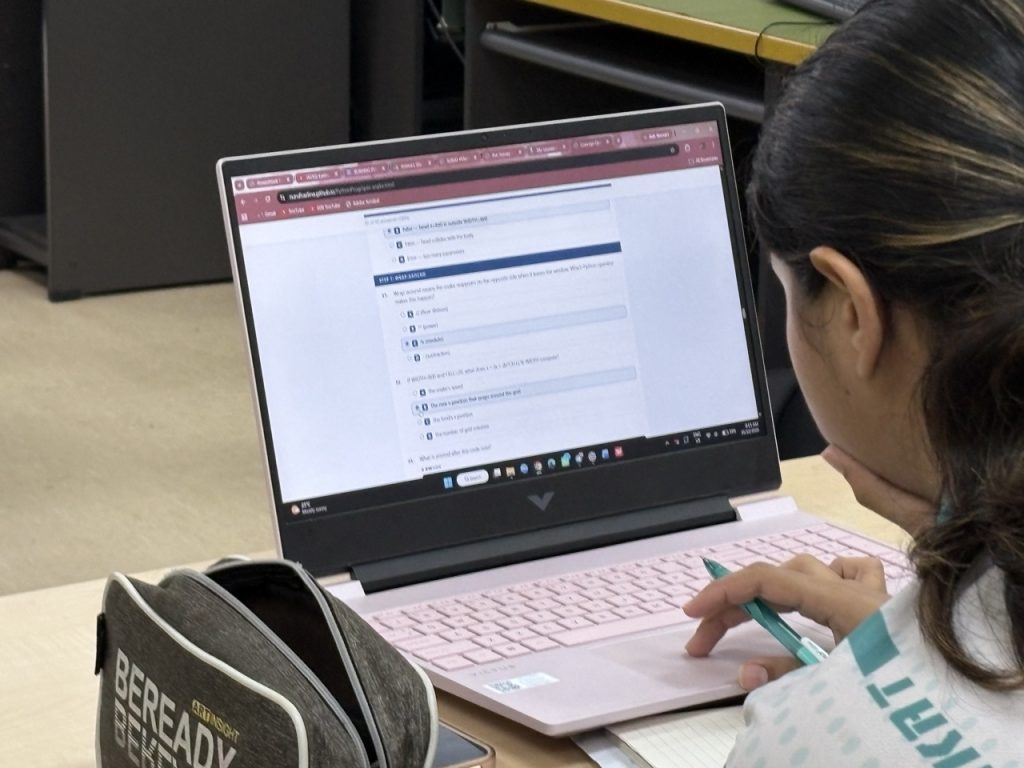
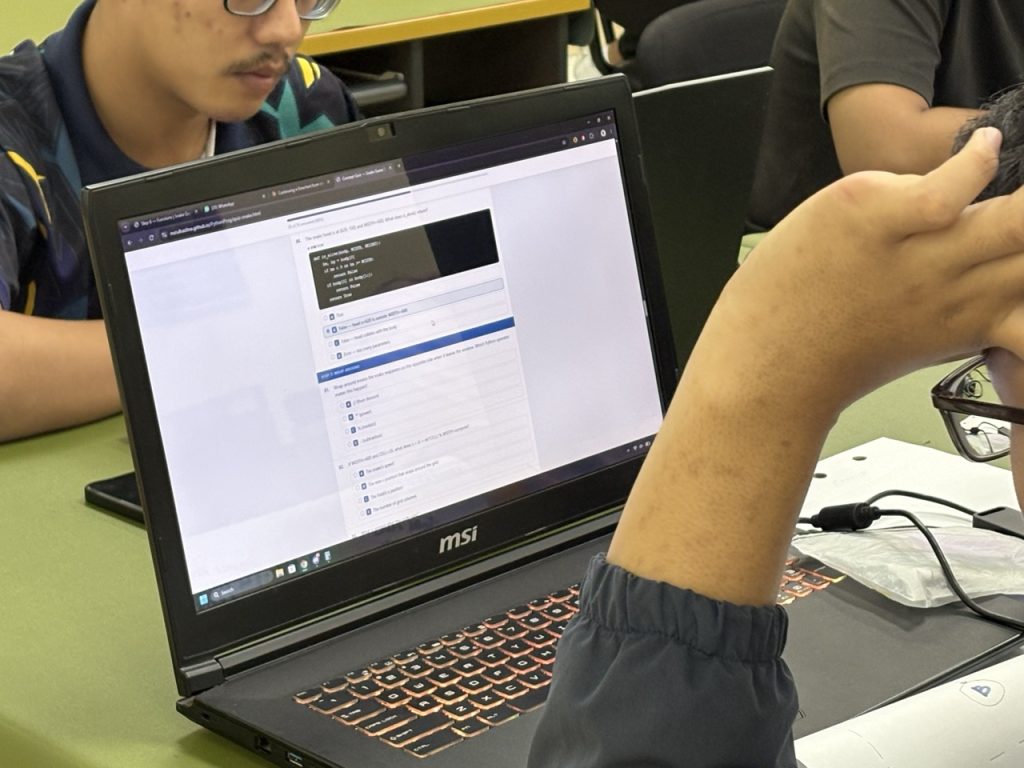
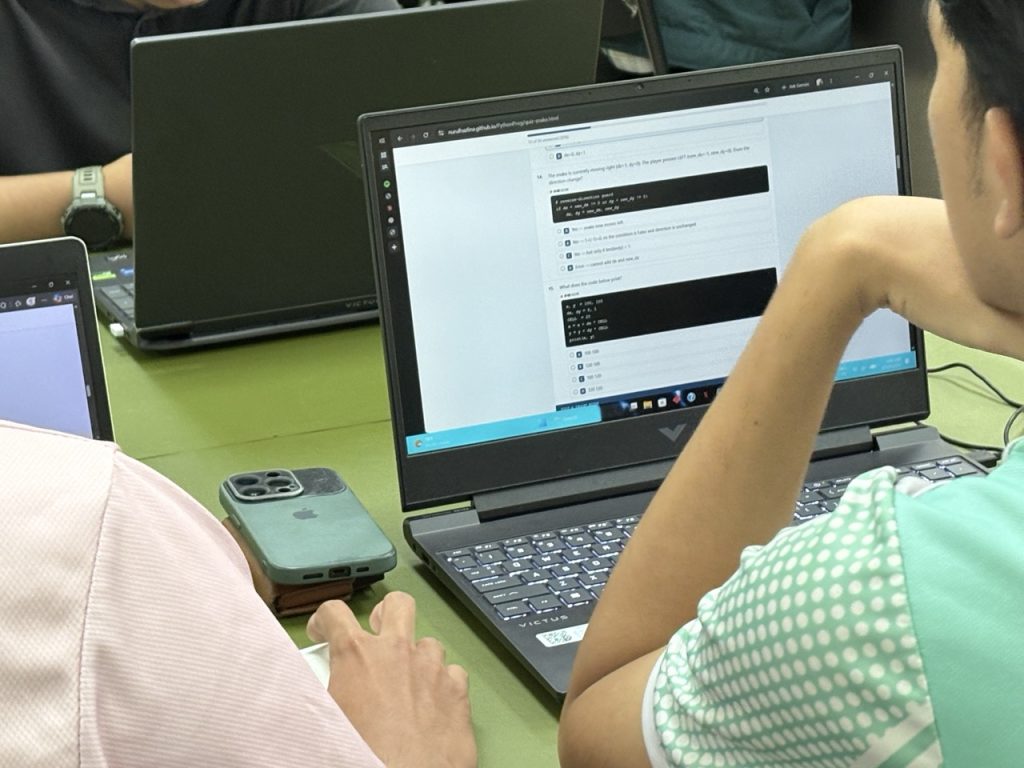
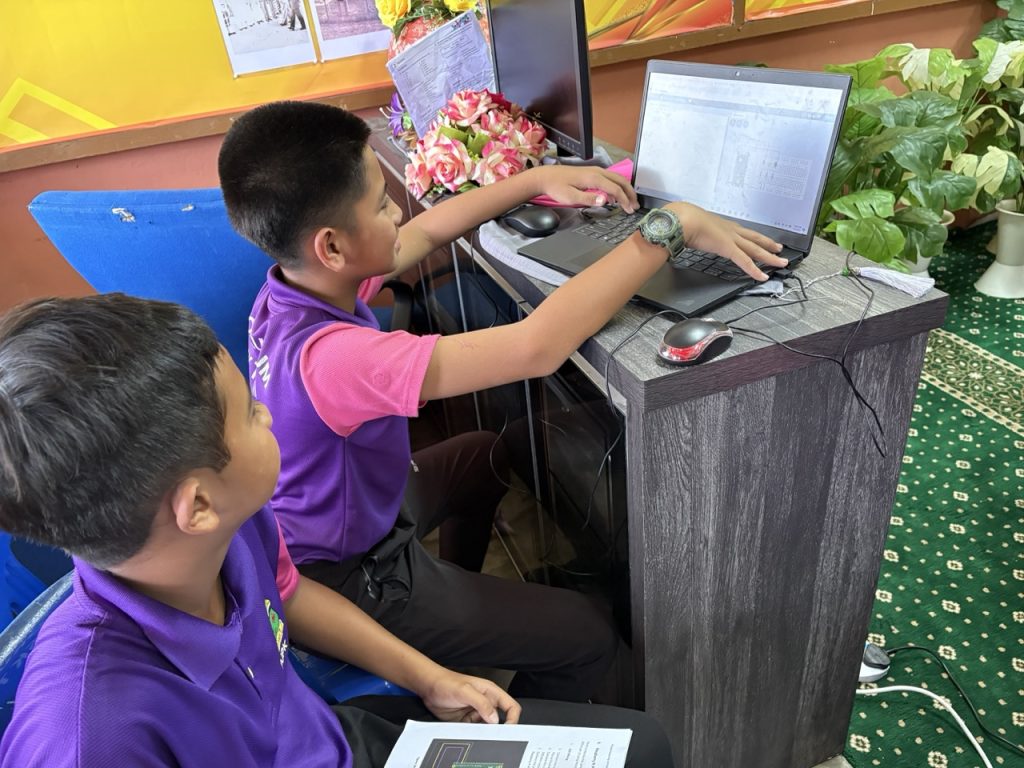
My Machine Learning – Module 1 AI Adventure

The UMPSA STEM Lab MyMachine Learning Module is astarting point on the AI Adventure, a beginner-friendly journey through the ideas that power modern artificial intelligence. Whether you are a student, educator, or curious explorer, this module breaks down Machine Learning into clear, approachable ideas so you can understand how computers learn from experience, make predictions, … Continue reading “My Machine Learning – Module 1 AI Adventure”

The UMPSA STEM Lab MyMachine Learning Module is astarting point on the AI Adventure, a beginner-friendly journey through the ideas that power modern artificial intelligence. Whether you are a student, educator, or curious explorer, this module breaks down Machine Learning into clear, approachable ideas so you can understand how computers learn from experience, make predictions, and solve real-world problems.

What is Machine Learning?

Machine Learning (ML) is a branch of Artificial Intelligence in which a computer program improves its performance on a task by learning from data, rather than following rules written explicitly by a programmer. The core idea is elegant: instead of coding every decision, you feed the system examples and let it discover the patterns itself.

Three things make ML possible: data (the examples the system learns from), an algorithm (the method it uses to find patterns), and a model (the set of rules or parameters produced by training, which is then used to make predictions on new, unseen data).

Types of Machine Learning

Supervised Learning is the most common type. Each input is paired with a label (the correct answer) and the model learns to map inputs to outputs. Classic examples: spam filters and house price prediction.

Unsupervised Learning works without labels. The algorithm discovers hidden groupings or patterns in raw data — used for customer segmentation and anomaly detection.

Reinforcement Learning trains an agent to maximise a reward signal through trial and error — the technique behind game-playing AI such as AlphaGo and robotic control systems.

Type Labelled data? Learns from Example use
Supervised Yes Input–output pairs Image classification
Unsupervised No Raw patterns in data Customer segmentation
Reinforcement No Reward signals Game-playing agents

Key ML Concepts

Features are the measurable inputs a model uses — for a house model: floor area, rooms, location.

Labels are the correct answers the model learns to predict. In supervised learning, every training example carries one.

Training adjusts a model’s parameters to minimise prediction error on the training data.

Overfitting vs Underfitting — overfitting memorises training data but fails on new examples; underfitting is too simple to capture patterns. The goal is a model that generalises.

Evaluation measures performance on a held-out test set using metrics such as accuracy, mean squared error or F1-score.

Hyperparameters are settings chosen before training — such as learning rate or network depth — tuned by the practitioner, not learned from data.

The ML Pipeline

Building a real ML system follows a repeatable sequence of steps, often called the ML pipeline. Each stage feeds the next.

        1. Define the problem — What to predict and who will use the model.
        2. Collect and label data — Quality matters far more than quantity.
        3. Explore and clean — Spot distributions, missing values and errors (EDA).
        4. Engineer features — Transform raw inputs into informative signals.
        5. Choose and train a model — Pick an algorithm and tune hyperparameters.
        6. Evaluate — Measure performance on a held-out test set.
        7. Deploy — Serve predictions via an API, app or embedded device.
        8. Monitor and retrain — Watch for data drift and retrain periodically.

A Friendly Tour of Common Algorithms

Algorithm Type Good when
Linear Regression Supervised Predicting continuous numbers
Logistic Regression Supervised Binary or multi-class classification
Decision Tree Supervised Interpretability matters
Random Forest Supervised Tabular data, good accuracy needed
SVM Supervised High-dimensional, medium-sized datasets
K-Means Unsupervised Grouping unlabelled data
Neural Network Supervised / Unsupervised Images, text, audio, complex patterns

Real-World Applications of Machine Learning

Healthcare — ML models analyse medical images to detect tumours earlier than human radiologists, predict patient deterioration in intensive care, and accelerate drug discovery by screening millions of molecular candidates.

Education — Adaptive learning platforms tailor exercises to each student’s strengths and gaps.

Natural Language Processing (NLP) — Translation services, grammar checkers, chatbots and voice assistants all rely on ML models trained on vast text corpora.

Computer Vision — Facial recognition, autonomous vehicle perception, quality inspection on factory lines, and satellite image analysis for agriculture and disaster response all depend on deep learning applied to images.

Finance — Fraud detection systems flag unusual transactions in milliseconds.

Recommendation Systems — Every time a streaming service suggests a show or a retailer recommends a product, a collaborative filtering or content-based ML model is at work, learning your preferences from past behaviour.

Climate and Environment — ML accelerates weather forecasting, optimises the dispatch of renewable energy on the grid, and monitors deforestation through satellite imagery.

What’s Next on the AI Adventure?

The MyMachine Learning Module is one stop on a longer journey. As you continue through the AI Adventure, future modules will take you deeper into topics such as:

  • Deep Learning — building and training neural networks with many layers
  • Natural Language Processing — teaching machines to read, write and converse
  • Computer Vision — making sense of images and video
  • Responsible AI — understanding bias, fairness, explainability and the ethics of ML systems
  • Hands-on Projects — applying what you have learned to real datasets using Python and popular libraries such as scikit-learn, TensorFlow and PyTorch

ML is not magic — it is mathematics, data, and careful engineering. But its power to find patterns in complexity, to learn from experience, and to generalise to new situations is genuinely extraordinary. The best time to start exploring it is now.

Keep exploring. Keep asking questions. The adventure is just beginning.

Nurul

UMPSA STEM Lab

Publication 2026/4 – IEEE Transaction AI-Assisted Tiered Scaffolding

IEEE TOL – AI Tiered Scaffolding It’s Official — and It Means More Than a Publication =) I am delighted to share that this article, AI-Assisted Tiered Scaffolding for Programming Skill Development in a Problem-Based Game Development Environment, has been accepted and is now available as an Early Access article in IEEE Transactions on Education, … Continue reading “Publication 2026/4 – IEEE Transaction AI-Assisted Tiered Scaffolding”

IEEE TOL – AI Tiered Scaffolding

It’s Official — and It Means More Than a Publication =)

I am delighted to share that this article, AI-Assisted Tiered Scaffolding for Programming Skill Development in a Problem-Based Game Development Environment, has been accepted and is now available as an Early Access article in IEEE Transactions on Education, one of the most respected journals in engineering education research.

This article is a reflection on a journey that began more than six years ago, shaped by curiosity about how students learn to program, deepened through theory and careful design, and now, with the arrival of generative AI, given a new and urgent dimension.

2020: Where It All Began  (The UMP STEM Cube – LilEx)

The journey starts with a question we were asking in engineering education: how do we move students from passive learners to active makers? In 2020, we introduced the UMP STEM Cube (LilEx) a modular, hands-on learning tool strategically designed to elevate digital making skills in engineering programmes.

Grounded in Kolb’s Experiential Learning Theory, the STEM Cube was designed to close the gap between theory and practice. Students worked through programming, physical computing, and 3D modelling activities in a cycle of concrete experience, reflection, abstract conceptualisation, and active experimentation.

The findings were encouraging. Students who engaged with the STEM Cube demonstrated significant learning gains in programming competencies and physical computing skills. More than the numbers, their positive perceptions and growing confidence in digital making were what stood out, a signal that something in the design was working.

This work was published in IEEE Transactions on Education (2024): Assessing the Effectiveness of UMP STEM Cube as a Tool for Developing Digital Making Skill Sets.

2021: Designing the Scaffolding (Tiered and Intentional)

If 2020 was about the learning environment, 2021 was about the instructional design inside it. We turned to the question of how to structure activities so that learners are guided progressively, with support that gradually fades as competence grows.


The result was a tiered scaffolding framework, a carefully crafted sequence moving from full scaffolding toward independent work:

        1. Workout Programming step-by-step guidance through worked examples
        2. Debugging Specific Malfunctions identifying and fixing targeted errors in given code
        3. Semi-Completed Programming Tasks completing partially provided code
        4. New Programming Tasks applying concepts independently with minimal support

This design was tested in two contexts: graphical (block-based) programming and Python-based game development. Both studies confirmed that the tiered structure supported learners at different ability levels without overwhelming beginners or under-stimulating those who were ready to move ahead.


Related publications: Graphical programming study · Python game development study

2023–2026: What Happens When We Add AI .. Carefully =)

By 2023, generative AI tools were everywhere in education. Students were using them, often without guidance, with outcomes that raised real concerns: shallow understanding, passive reliance, and over-dependence on code generation without comprehension.

We did not want to ban AI. We wanted to embed it purposefully.

The central design question became: what does AI-assisted scaffolding look like when it is not left to chance? Our answer was to integrate AI interaction within the tiered scaffolding structure — not as a shortcut, but as a scaffold in itself. The AI interaction was framed around three modes:

      1. Code with AI, collaborating with AI to build and refine
      2. Code for AI, preparing clear prompts and specifications
      3. Code by AI, critically evaluating and adapting AI-generated output

The learning context was a Slider Game built in Pygame: a red enemy block falls from a random x-position; a green player block moves left and right to catch it. Eight structured activities (Acts) took students from orientation and game setup through movement logic, scoring, loop refinement, debugging, customisation, and reflection.

The study ran as a quasi-experimental design comparing an AI-assisted group (n = 60) against a control group (n = 55) following the same tiered scaffolding without AI access.

The Framework: Theory Doing Real Work

What holds this study together is not just the activities, but the theoretical architecture beneath them. Three foundations are woven together:

    1. Cognitive Apprenticeship provides the instructional sequence: Modeling → Coaching → Articulation → Reflection → Fading. Students are not simply given tasks; they observe expert thinking, receive guided feedback, articulate their own reasoning, reflect on their process, and progressively take ownership as scaffolding is withdrawn.
    2. AI Scaffolding is embedded within this sequence — not as an add-on, but as the mechanism through which coaching and feedback are delivered. AI suggestions are treated as materials to evaluate, not answers to copy.
    3. Problem-Based Learning anchors everything in an authentic, motivating context: building a working game. The game is not a gimmick. It provides the problem space within which every programming concept — from loops and conditionals to collision detection and scoring — earns its meaning.

The Learner–AI Programming Process cycle — Prompt → Code → Test → Debug → Reflect → (Prompt again) — describes how learners move through each activity, with AI as a responsive partner in that loop, never as a replacement for thinking.

What We Found

The numbers are hard to ignore. Students in the AI-assisted group achieved a mean learning gain of 25.51 points (SD = 13.68), compared to 6.90 points (SD = 6.16) in the control group. The effect size was large — Cohen’s d ≈ 1.86 — and the difference was highly significant: t(113) = 11.64, p < .001.

But the numbers only tell part of the story. Artifact and interaction log analysis revealed something more qualitative and perhaps more meaningful:

      1. Students in the AI-assisted group showed more systematic debugging — not random trial-and-error, but deliberate hypothesis-and-test cycles.
      2. Over time, there was a gradual shift toward critical evaluation of AI-generated suggestions, rather than passive acceptance. Students began questioning, adapting, and sometimes rejecting what AI produced.
      3. Self-efficacy and engagement were higher in the AI-assisted group — students expressed greater confidence and tackled problems more independently as the course progressed.

The core finding is that the educational value of AI depends not on the technology alone, but on the instructional framework in which it is embedded  =)

On IEEE Transaction Peer Review: Why I Treasure the Process

I want to say something that is not always said out loud in academic circles: I am genuinely grateful for the peer review process, and I mean that without reservation =).

The reviewers’ comments on this manuscript were thorough, specific, and often challenging. There were moments of “oh”, where a reviewer pointed at a gap I had convinced myself did not exist, or pressed on a claim I had made too casually. The revision process was demanding. But it was also one of the most intellectually enriching parts of this entire journey.

Working through each reviewer comment forced me to revisit assumptions, sharpen my arguments, and in several instances, go back and strengthen the research itself , not just the manuscript. That is a rare gift. The final paper is better than the first submitted, and the credit for that belongs in large part to reviewers who clearly read with care and took the work seriously. This whole journey took almost 1 year =)

This is, I believe, why peer-reviewed publication carries the weight it does. It is not simply a stamp of approval. It is a process of scrutiny that when done well, makes the work more rigorous, more honest, and more useful to others who build upon it. I came away not just with an accepted paper, but with a deeper understanding of my own research. Thank you Editor and Reviewers.

What This Means  and What Comes Next

We are at a moment in education where everyone is asking, what do we do with AI? Ban it, embrace it, ignore it and hope for the best?

This research offers a different kind of answer. The question is not whether to use AI, students are already using it. The question is how we design the instructional context in which that use happens. AI embedded within a thoughtful, theory-informed scaffolding framework can accelerate learning, deepen engagement, and develop more independent thinkers. AI used without structure can do the opposite.

The Slider Game, the tiered activities, the Cognitive Apprenticeship sequence, the Learner–AI Programming Process cycle, these are not prescriptions. They are a transferable design framework that educators can adapt for their own programming courses, their own students, their own contexts.

For me personally, this publication closes one chapter and opens another. Six years, three theoretical lenses, two learning environments, one framework, and now empirical evidence that the design works. I am proud of this body of work, and I am already thinking about where it goes next.

Thank you to my UMPSA STEM Lab colleagues, my students who gave their time and engagement to this research, the reviewers who sharpened it, and IEEE Transactions on Education for giving it a home =).


Read the paper: AI-Assisted Tiered Scaffolding for Programming Skill Development in a Problem-Based Game Development Environment  IEEE Transactions on Education, Early Access, 2026.


MyMachine Learning – 2026/1

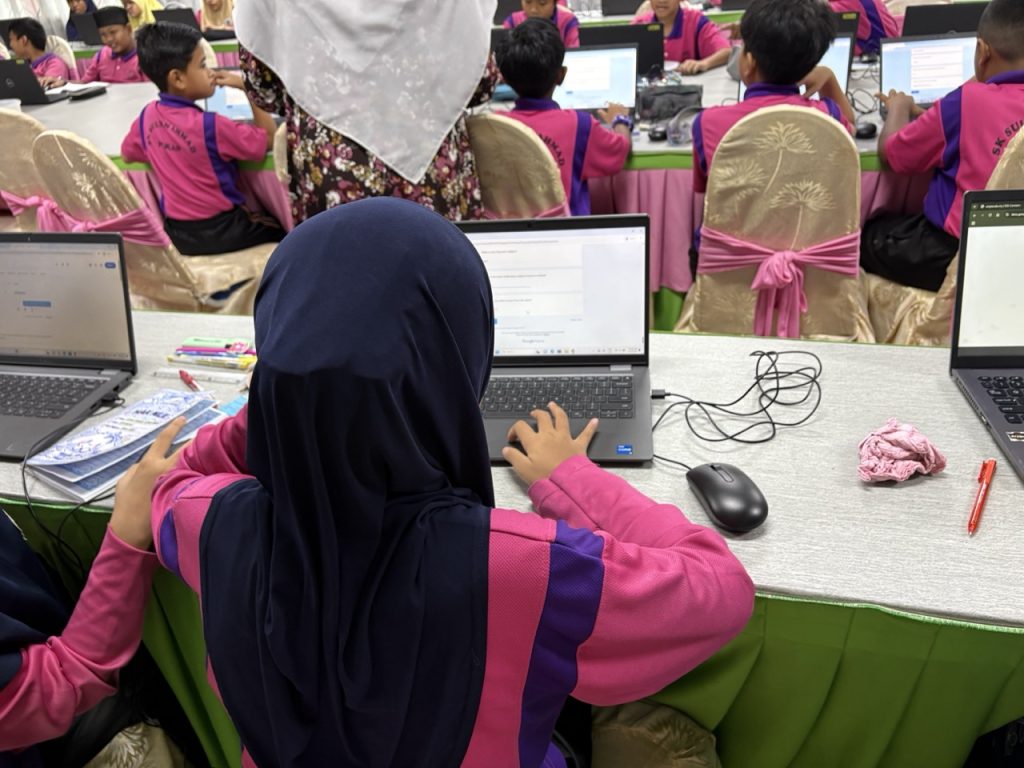
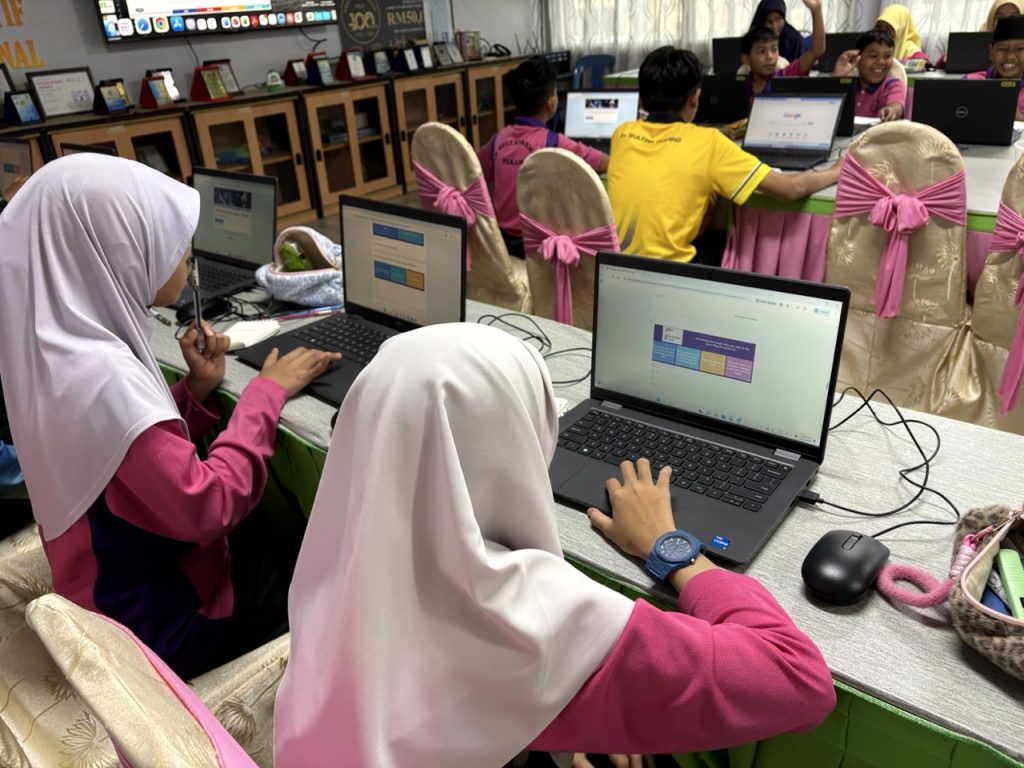
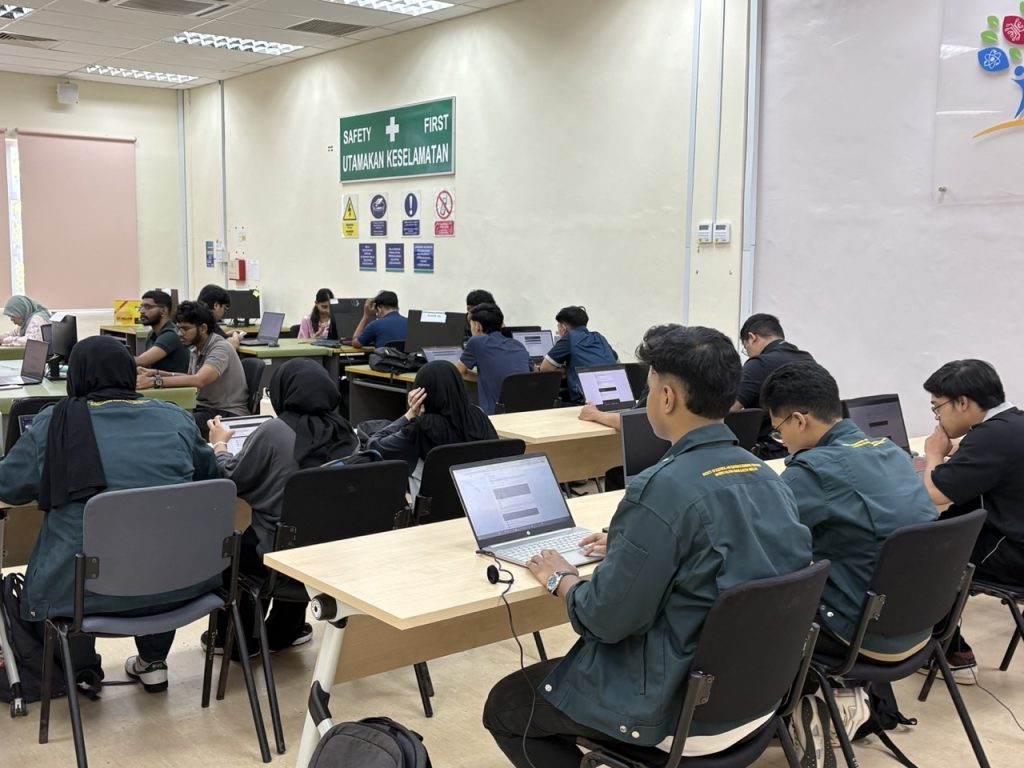
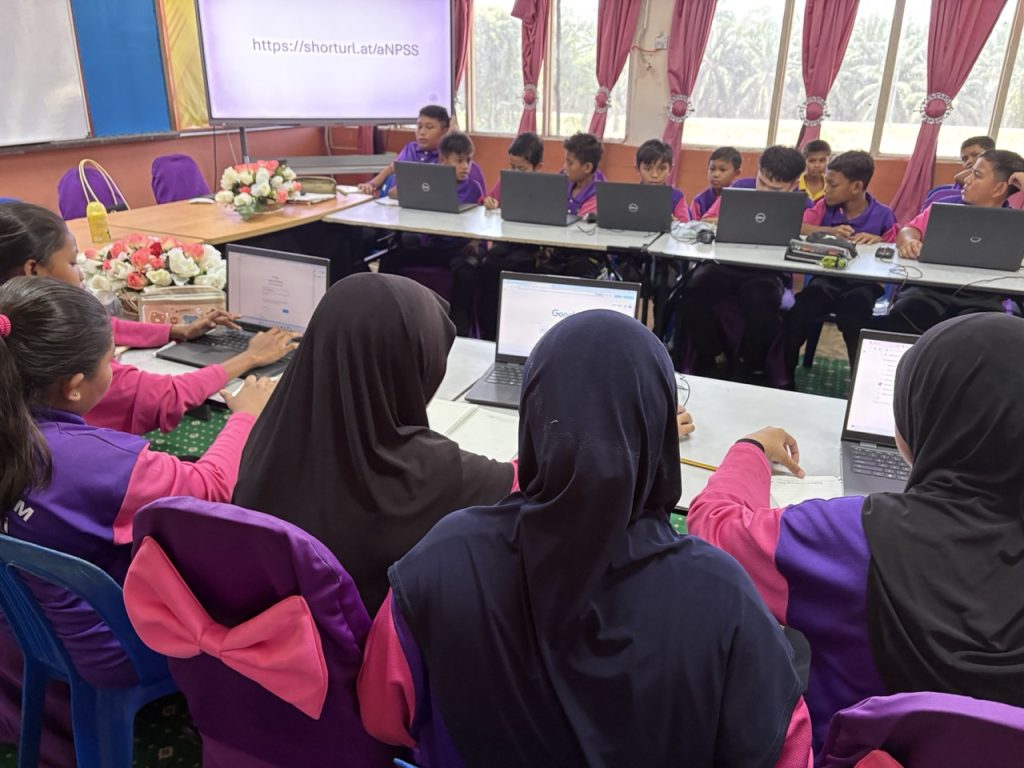
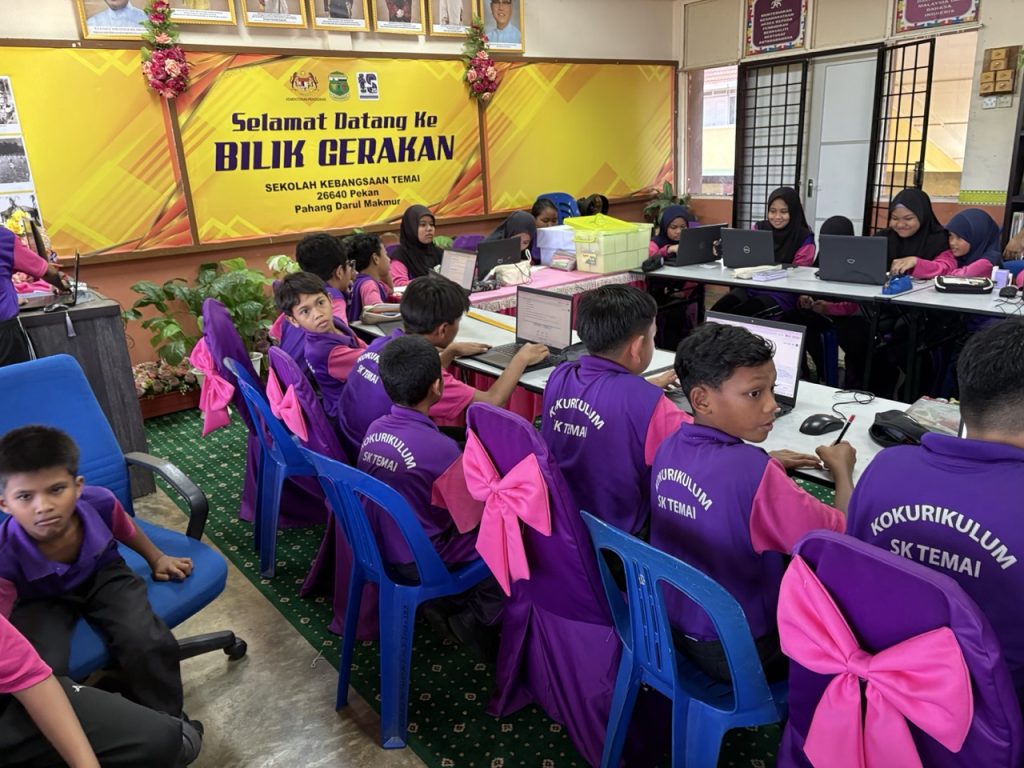
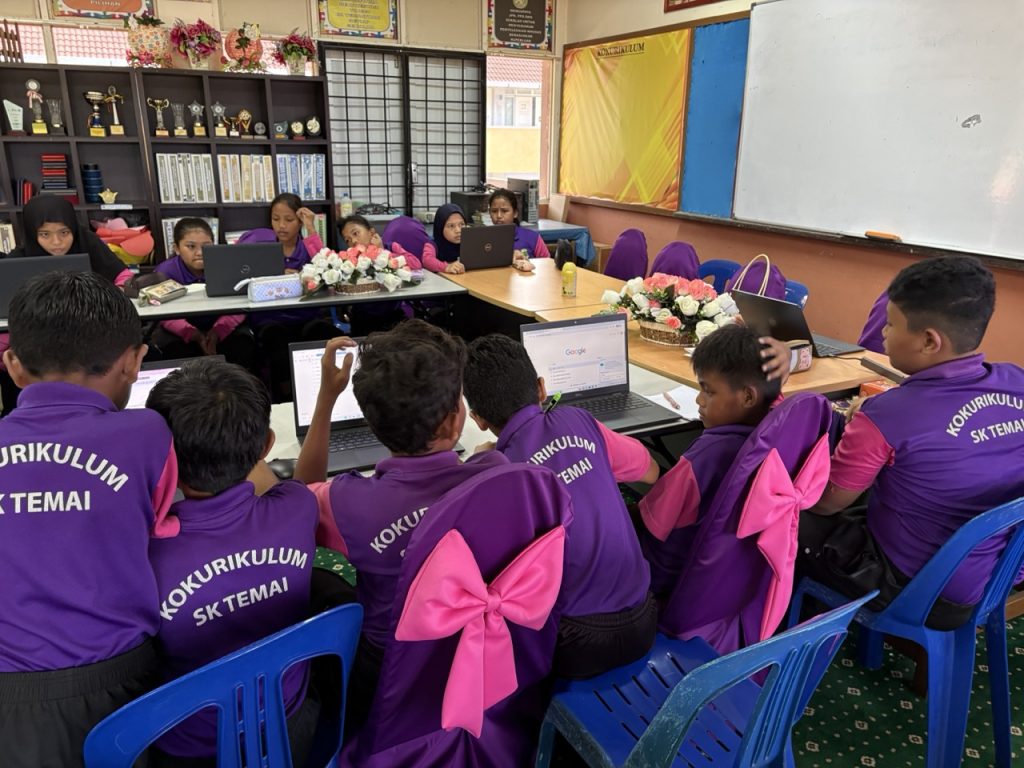
UMPSA STEM Lab, in collaboration with the Pahang State Education Department (BSKK), held the AI Adventure: MyMachine Learning Module workshop from 11–13 November 2026, bringing together 120 participants from across Pahang (50 primary school students, 50 secondary school students and 20 teachers) as the first module of the AI Adventure series. What Participants Explored:- What … Continue reading “MyMachine Learning – 2026/1”

UMPSA STEM Lab, in collaboration with the Pahang State Education Department (BSKK), held the AI Adventure: MyMachine Learning Module workshop from 11–13 November 2026, bringing together 120 participants from across Pahang (50 primary school students, 50 secondary school students and 20 teachers) as the first module of the AI Adventure series.

What Participants Explored:-

        1. What Machine Learning is and how it differs from traditional rule-based programming
        2. The three main types of learning — Supervised, Unsupervised and Reinforcement Learning — with real-world examples for each
        3. Key vocabulary every AI practitioner uses: features, labels, training, models, evaluation and overfitting
        4. The ML pipeline — tracing a dataset from raw collection through cleaning, feature engineering, training, evaluation and deployment
        5. Common algorithms including Linear Regression, Decision Trees, Random Forests, and Neural Networks, explored through hands-on activities
        6. Real-world applications of ML across healthcare, education, finance and everyday technology

These foundational skills equip participants to engage confidently with AI and data-driven technologies — not merely as users, but as informed, critical thinkers. By understanding how ML systems are built and where they succeed or fail, participants are better prepared to:

        1. Ask the right questions when encountering AI tools in their daily lives
        2. Identify opportunities where ML could solve real problems in their communities
        3. Continue learning through the subsequent modules of the AI Adventure series
        4. Pursue further study in computing, data science, and AI at tertiary level

UMPSA STEM Lab wishes to express sincere appreciation to Tuan Arman bin Tojid and Encik Jamil Hamzah bin Sazali from the Unit Pembangunan Bakat Murid, Sektor Pembangunan Murid, Jabatan Pendidikan Negeri Pahang, for their dedication in coordinating communication between the participants and UMPSA STEM Lab throughout the planning and execution of this programme.

Full details on the concepts covered in the UMPSA MyMachine Learning Module, including an overview of Machine Learning, its types, key vocabulary, the ML pipeline, common algorithms and real-world applications, are available in the module overview below.

MyMachine Learning Module – AI Adventure Blog

My Machine Learning – Module 1 AI Adventure


mBlock Programming 2026/4 – SK Sultan Ahmad

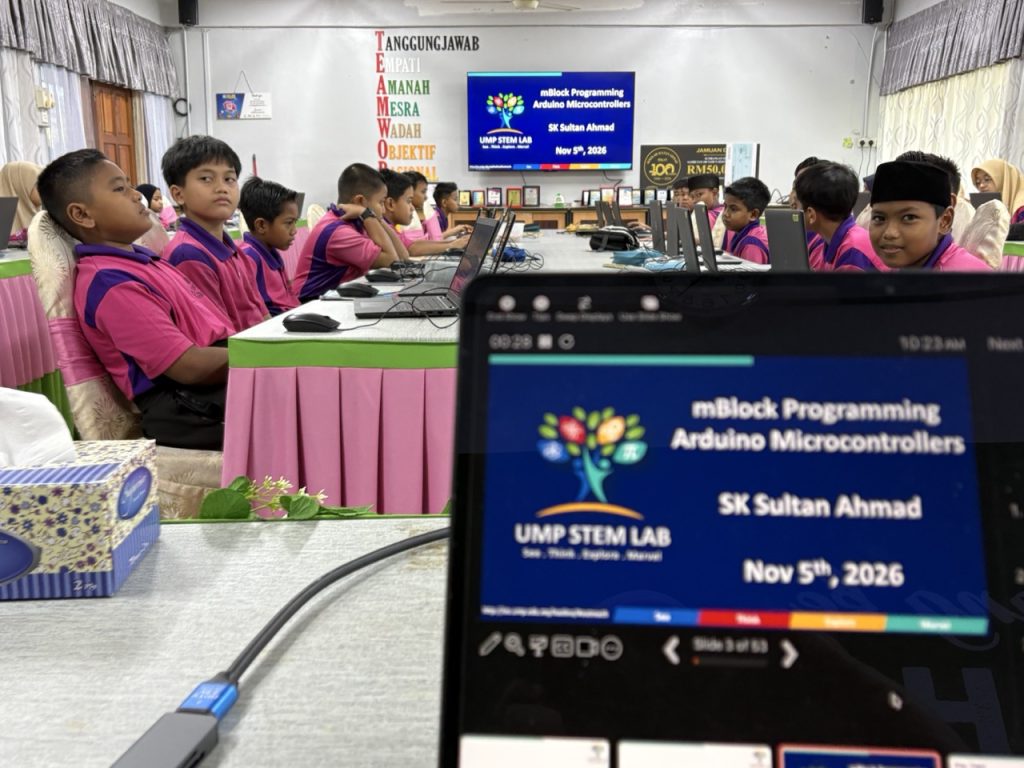
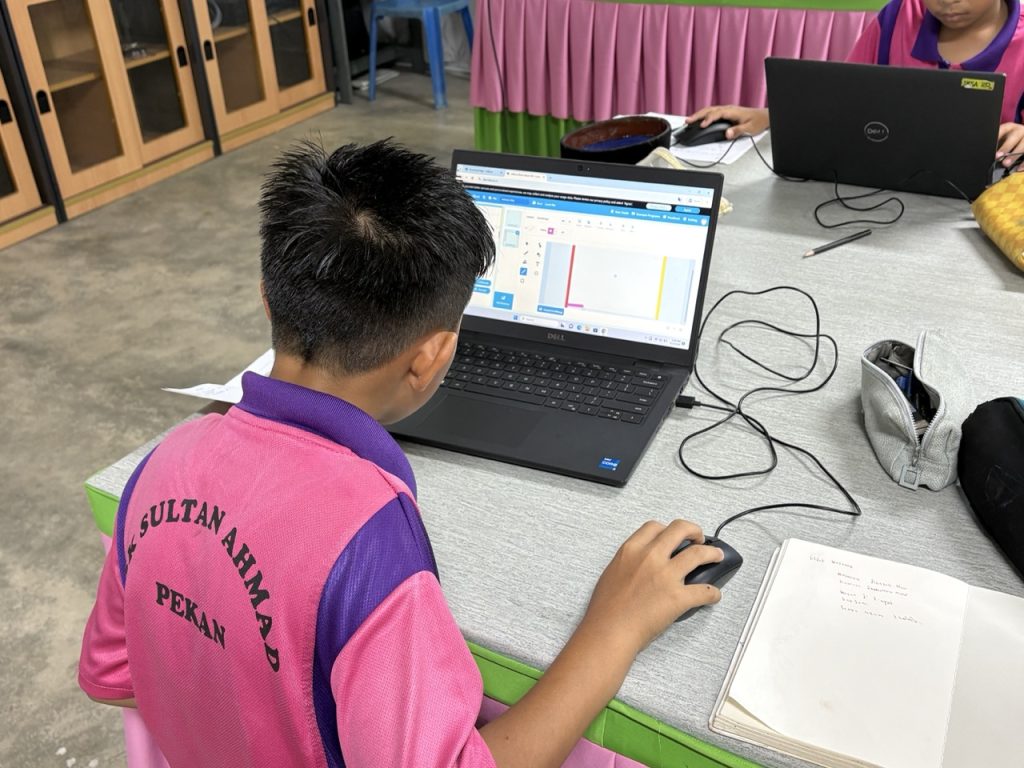
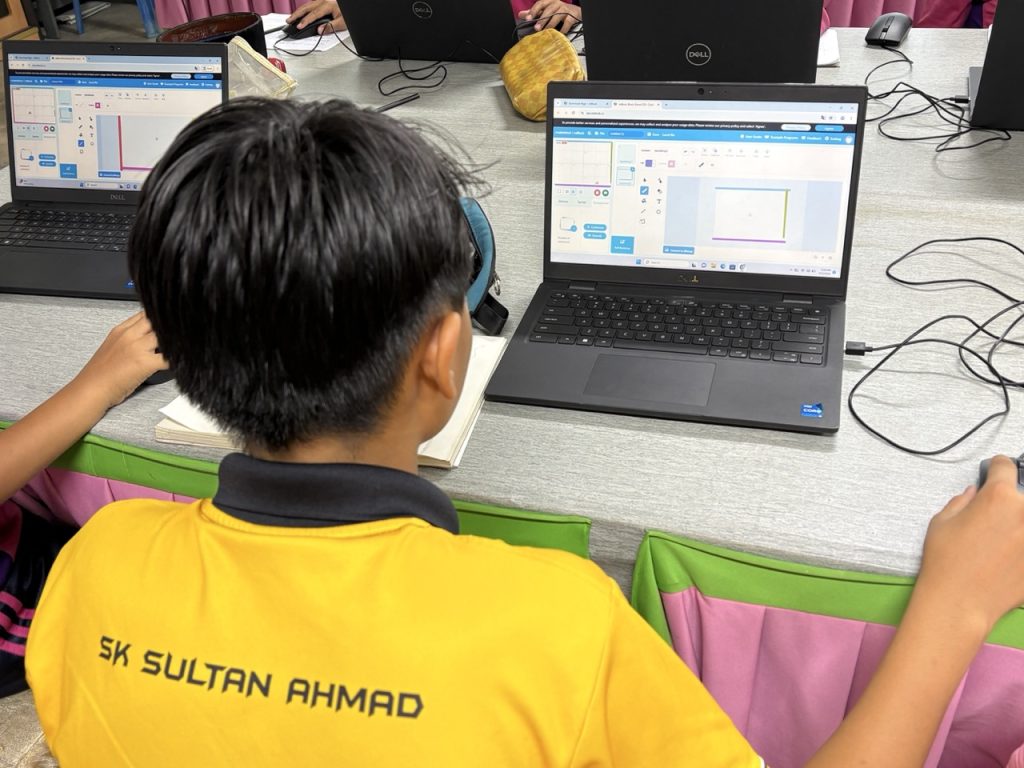
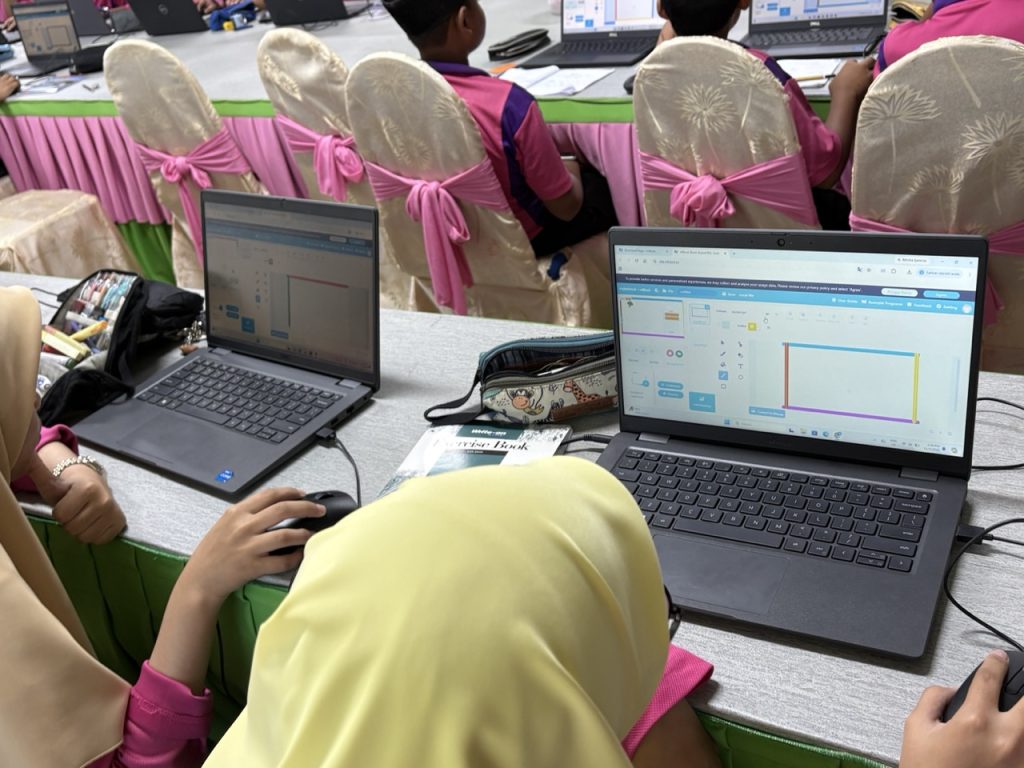
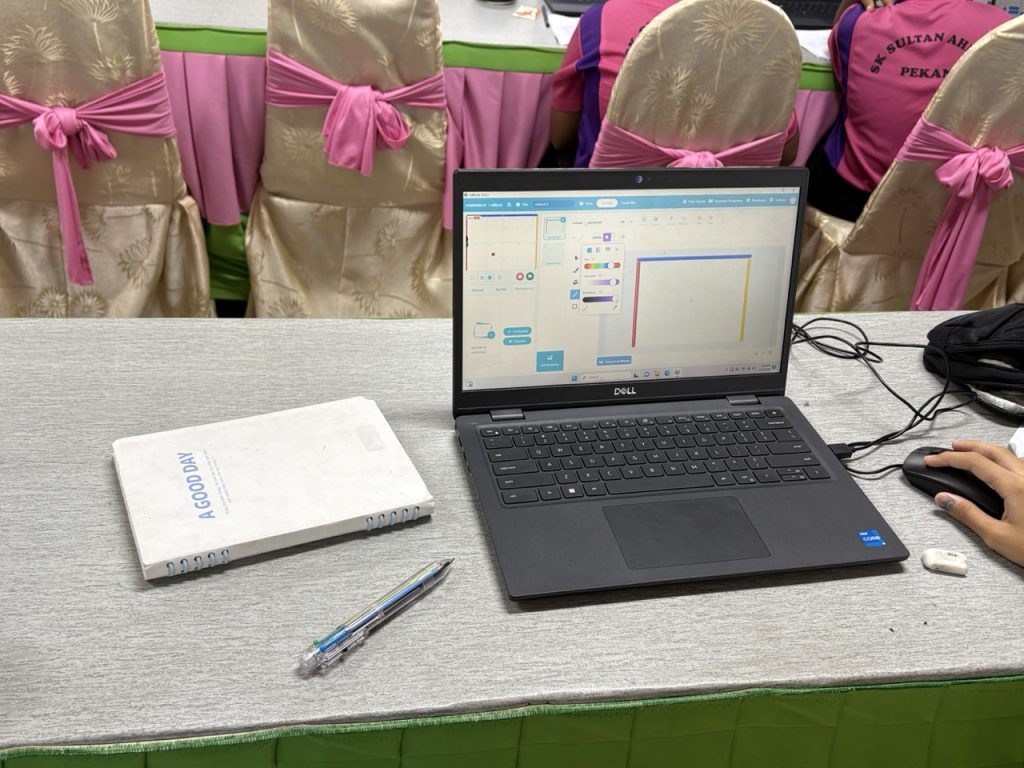
A synopsis of the program can be retrieved via the following link. In today’s program, 40 participants from SK Sultan Ahmad Pekan were introduced to mBlock programming, learning to use its graphical interface to create sequences of instructions. They explored sequential programming, conditional statements, and loops through hands-on tutorials. These foundational skills were applied in two … Continue reading “mBlock Programming 2026/4 – SK Sultan Ahmad”

A synopsis of the program can be retrieved via the following link.

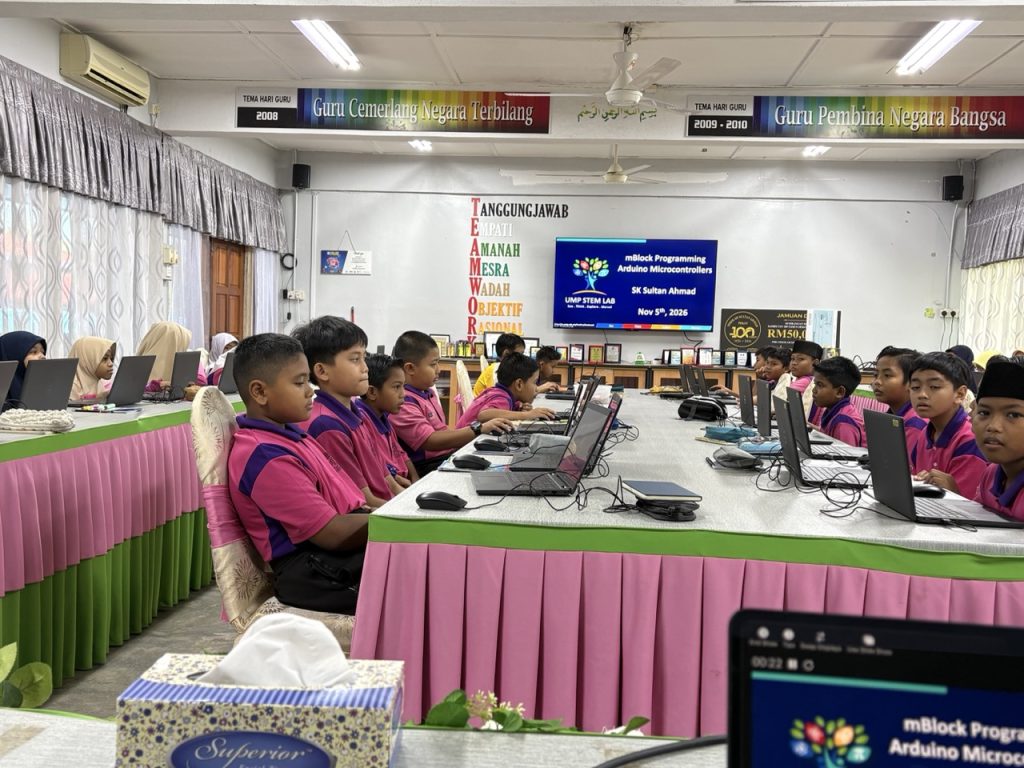
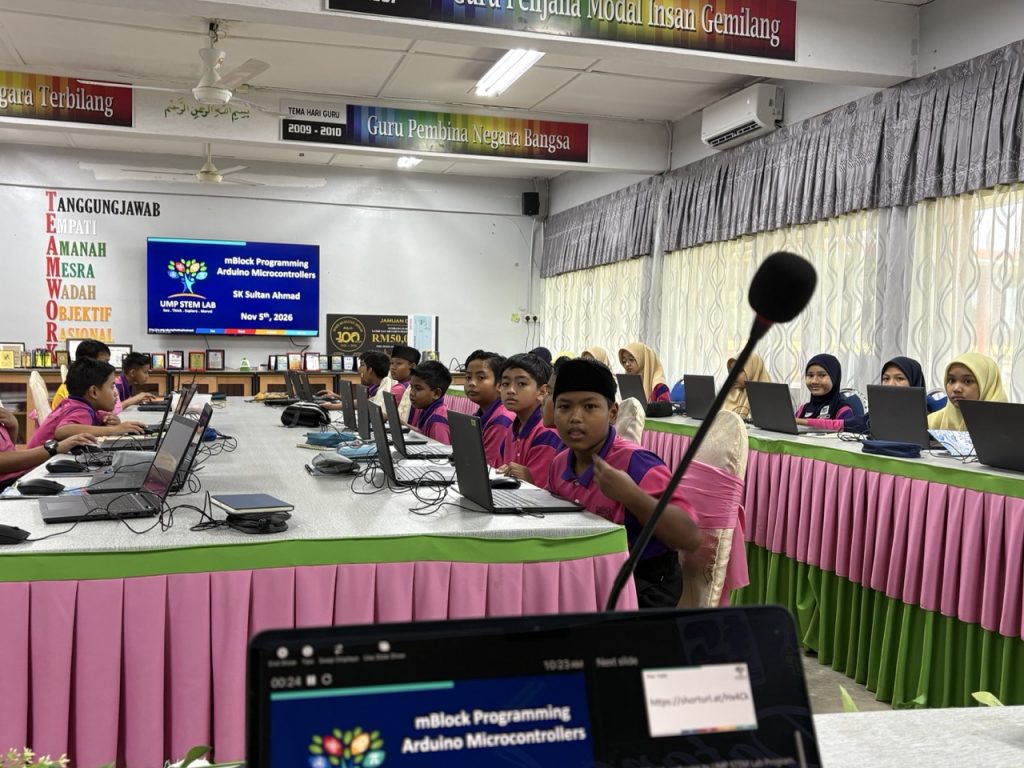
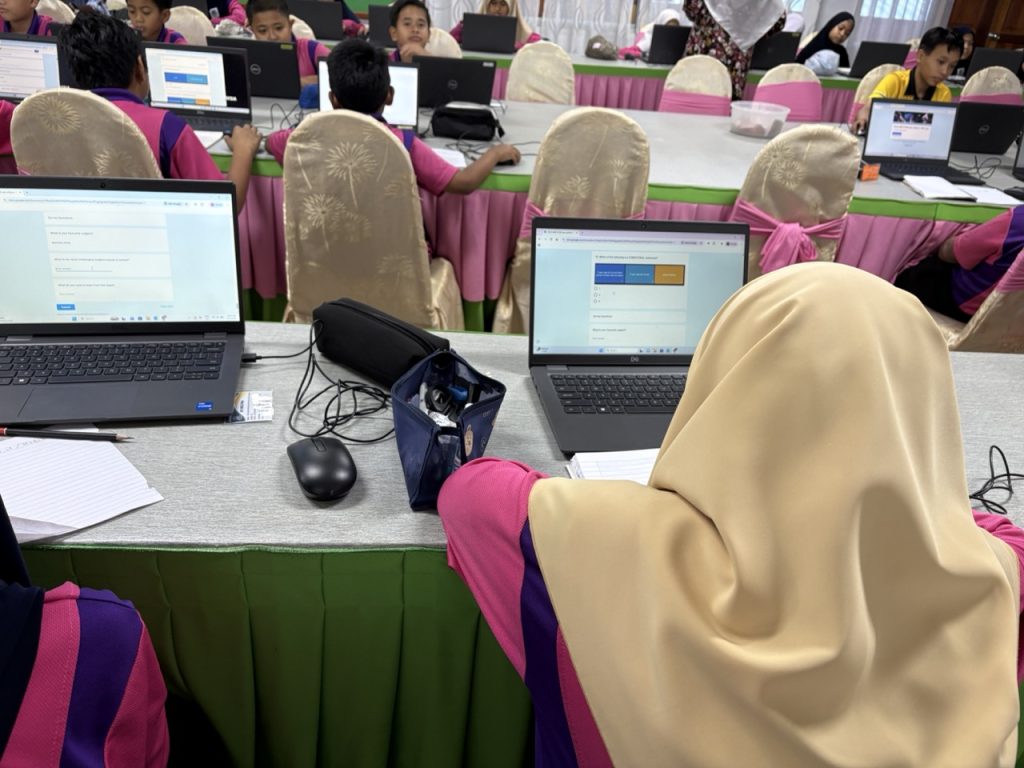
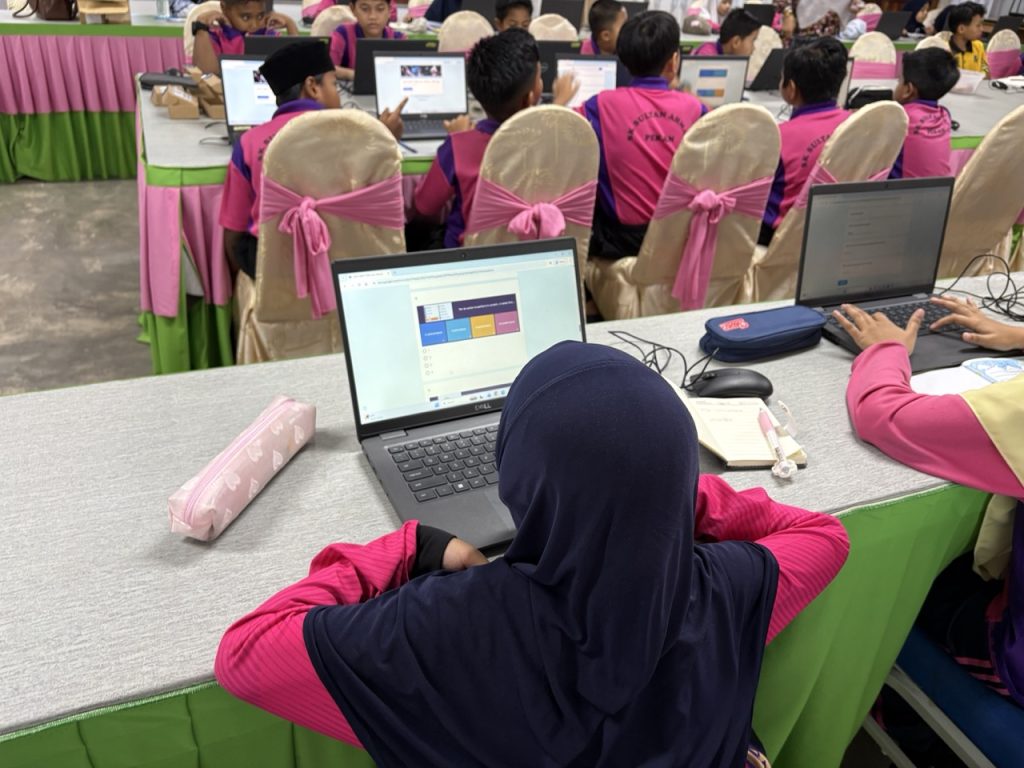
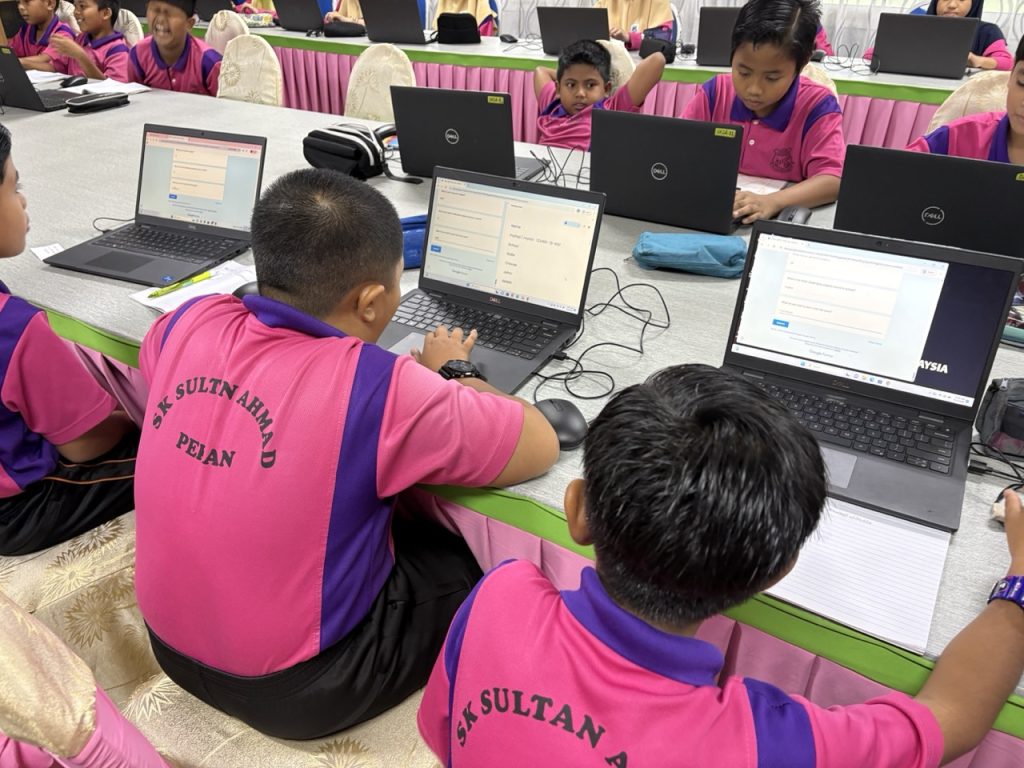
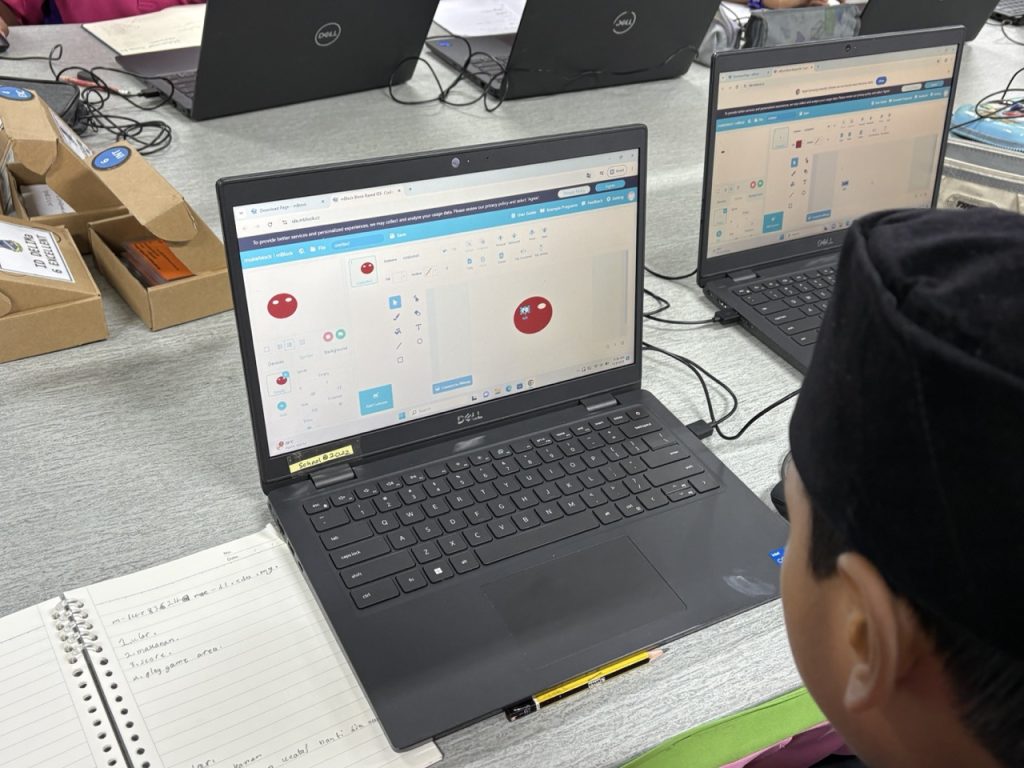
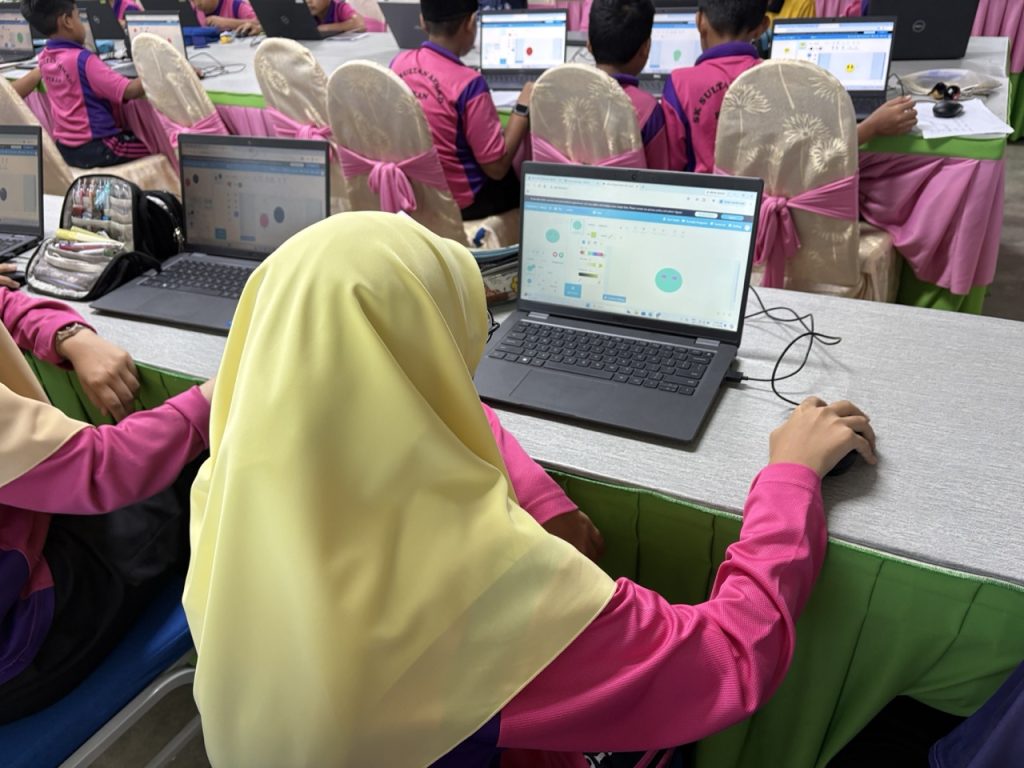
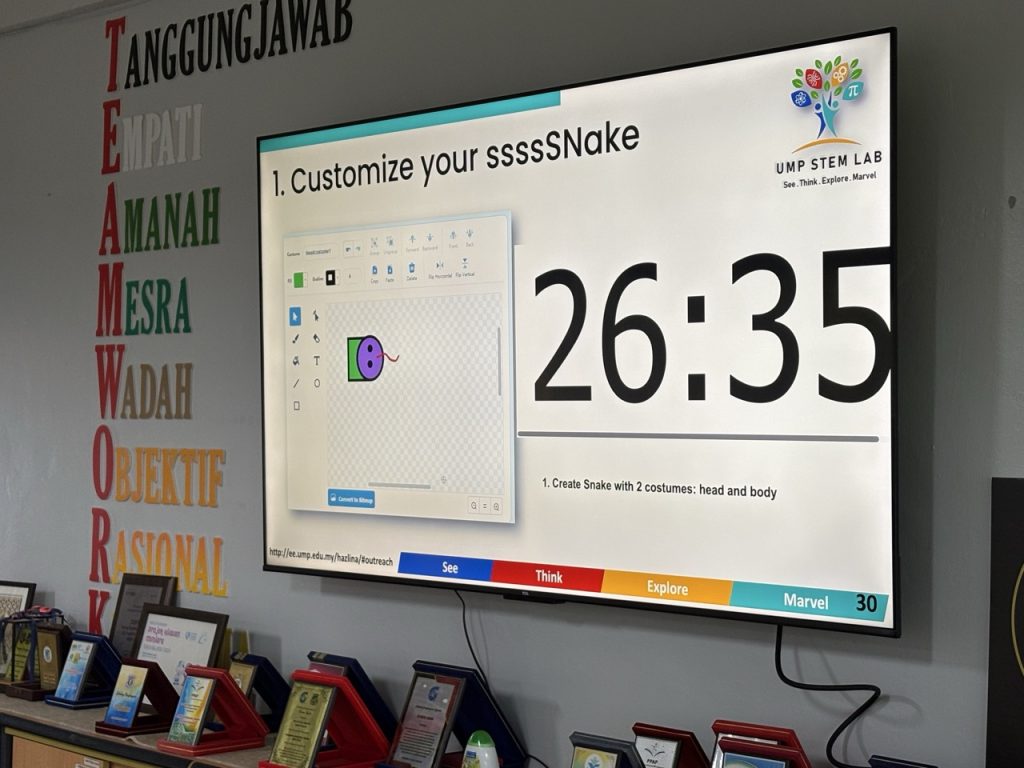
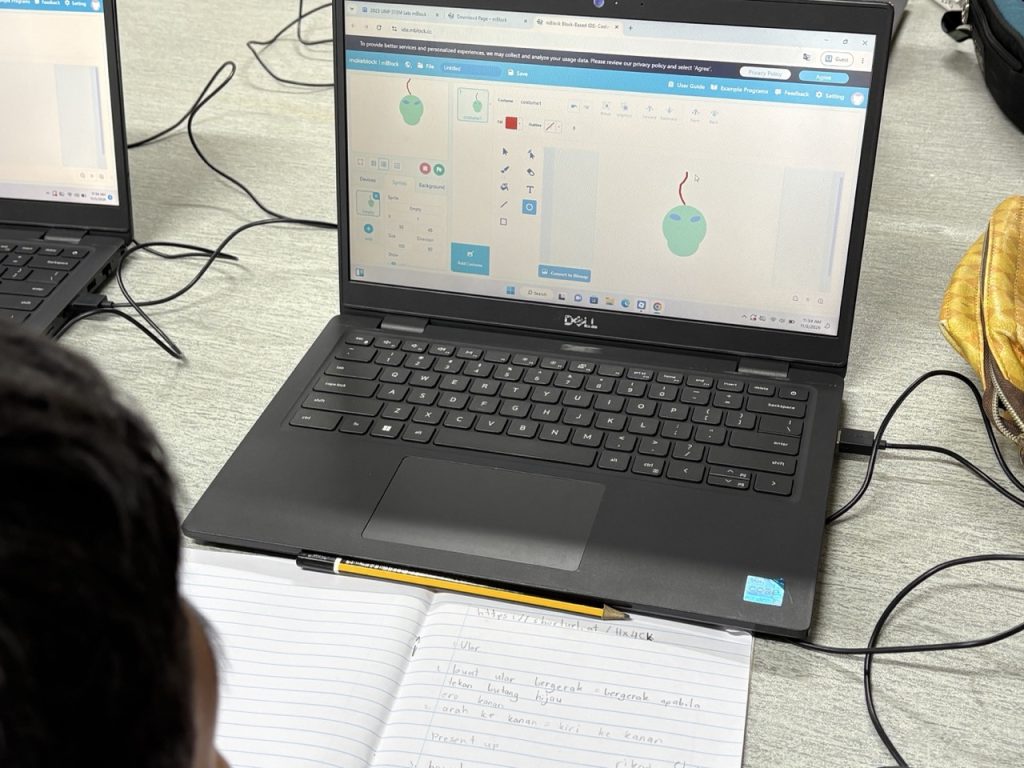
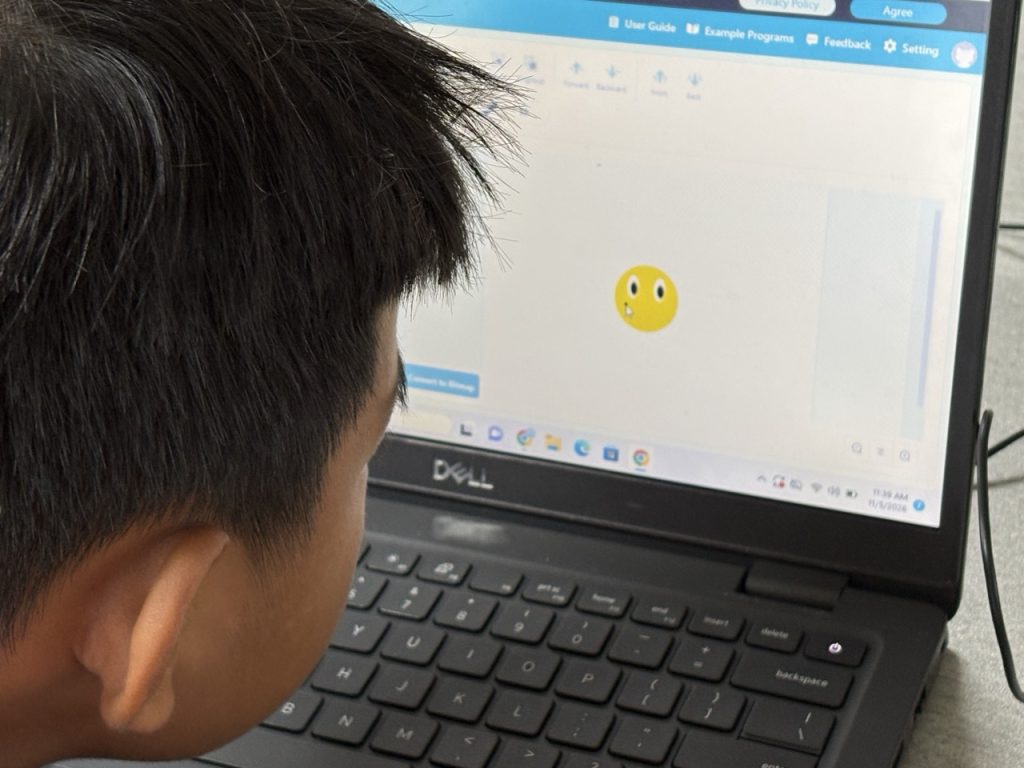
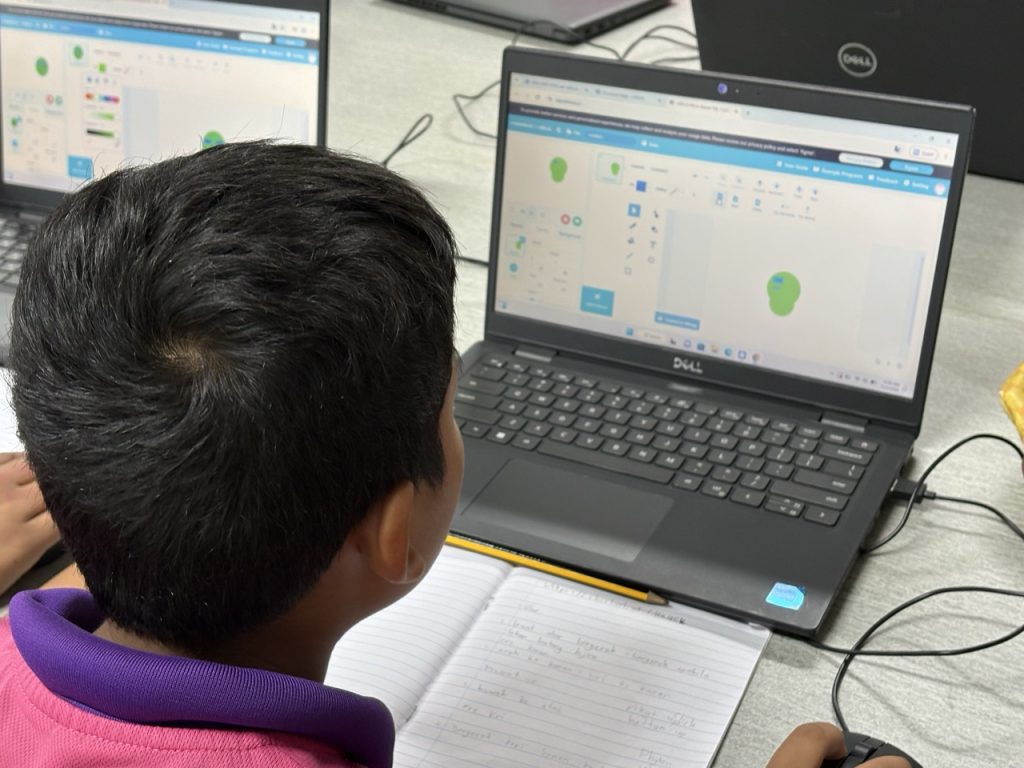
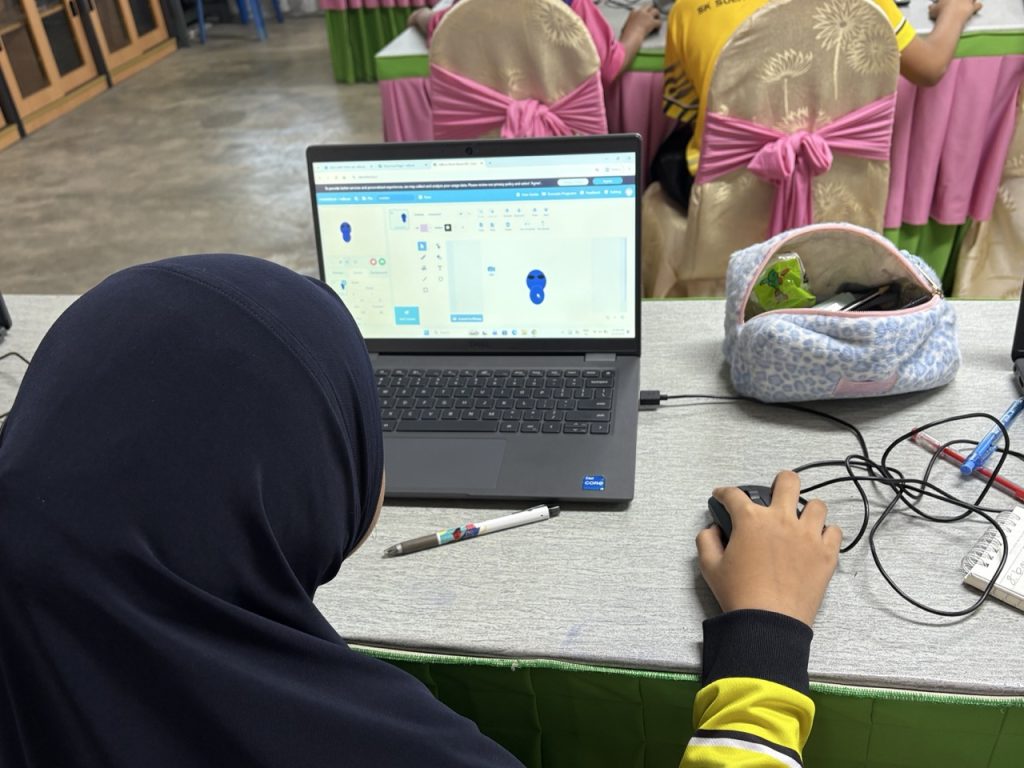
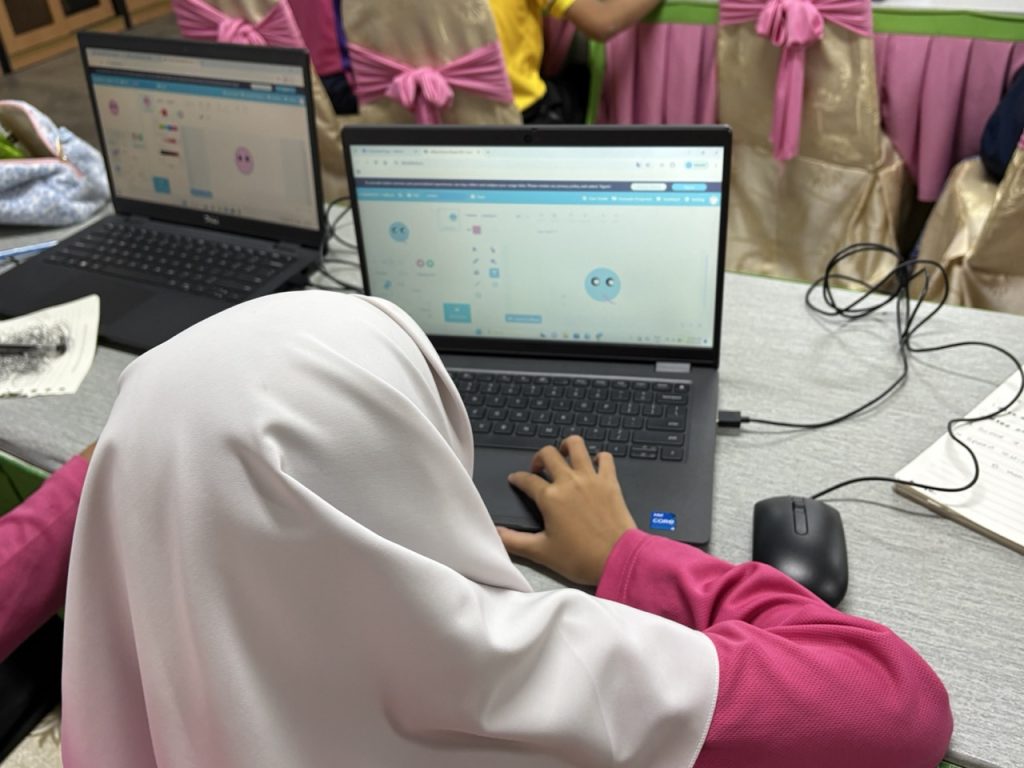
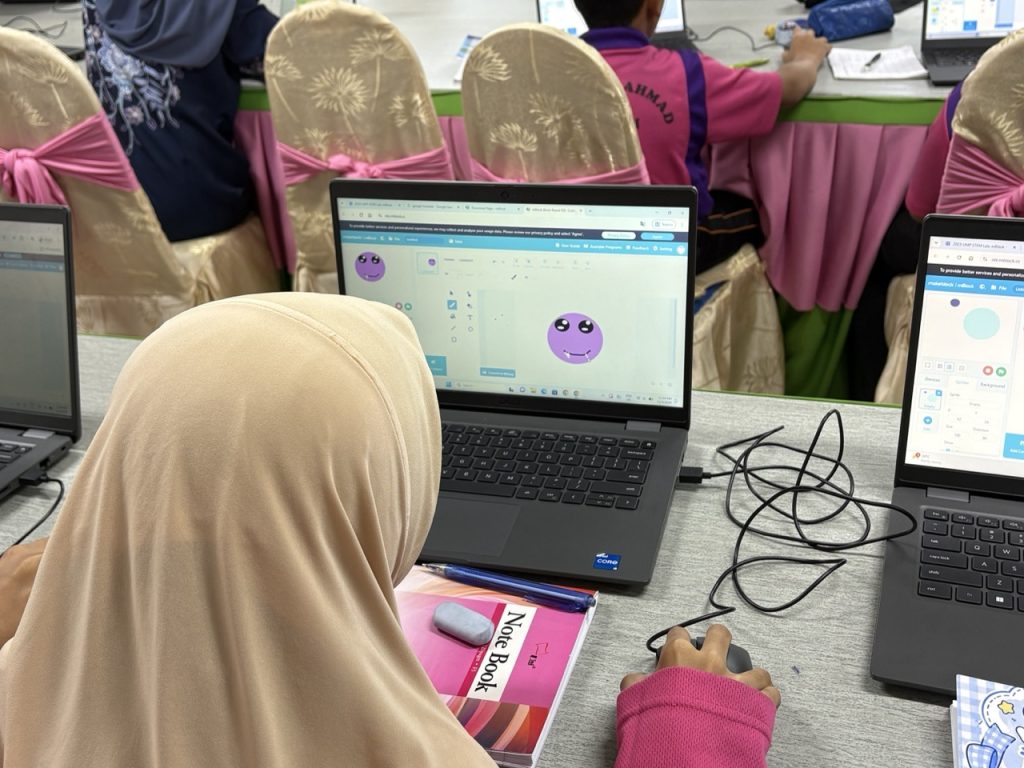
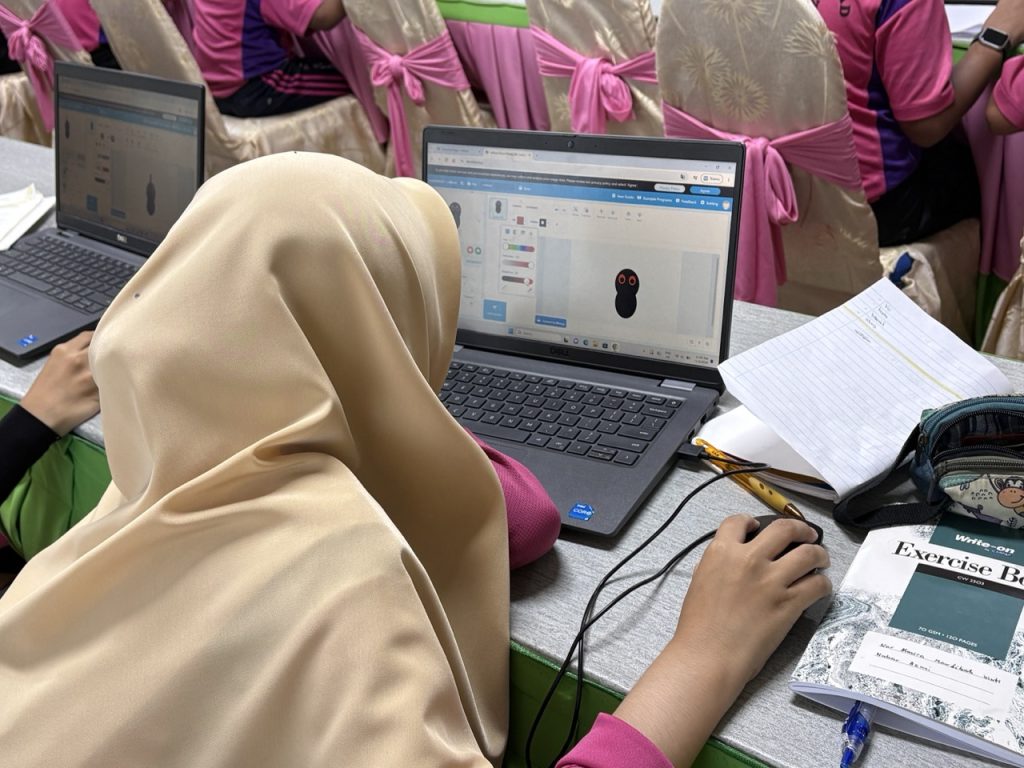
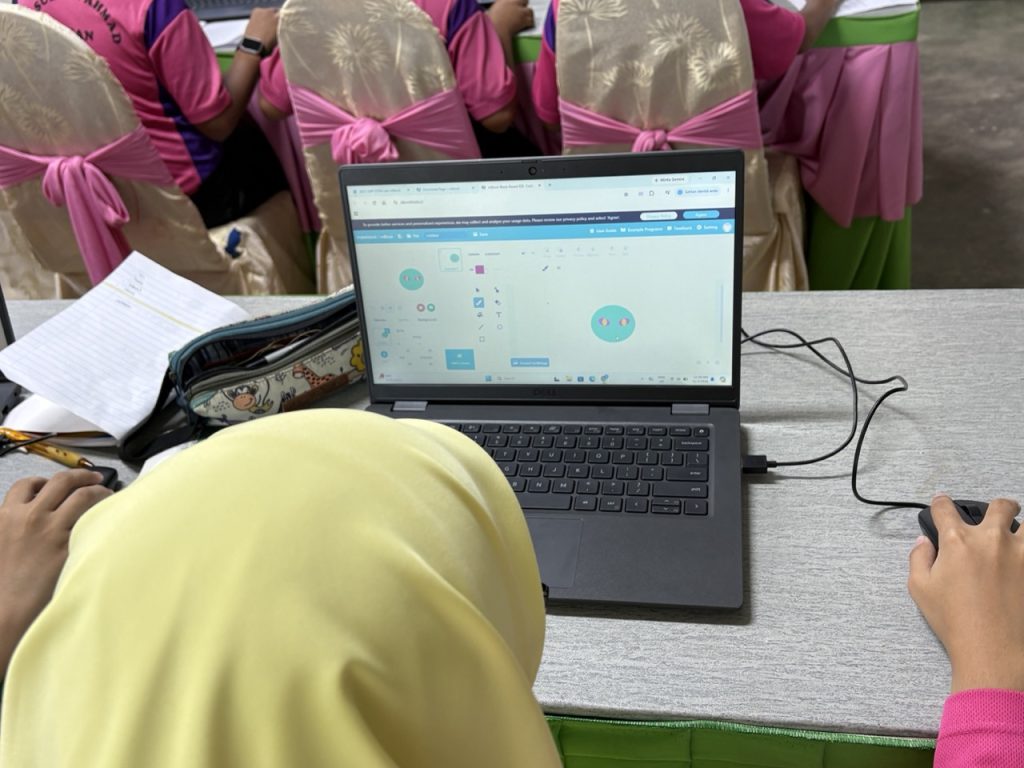
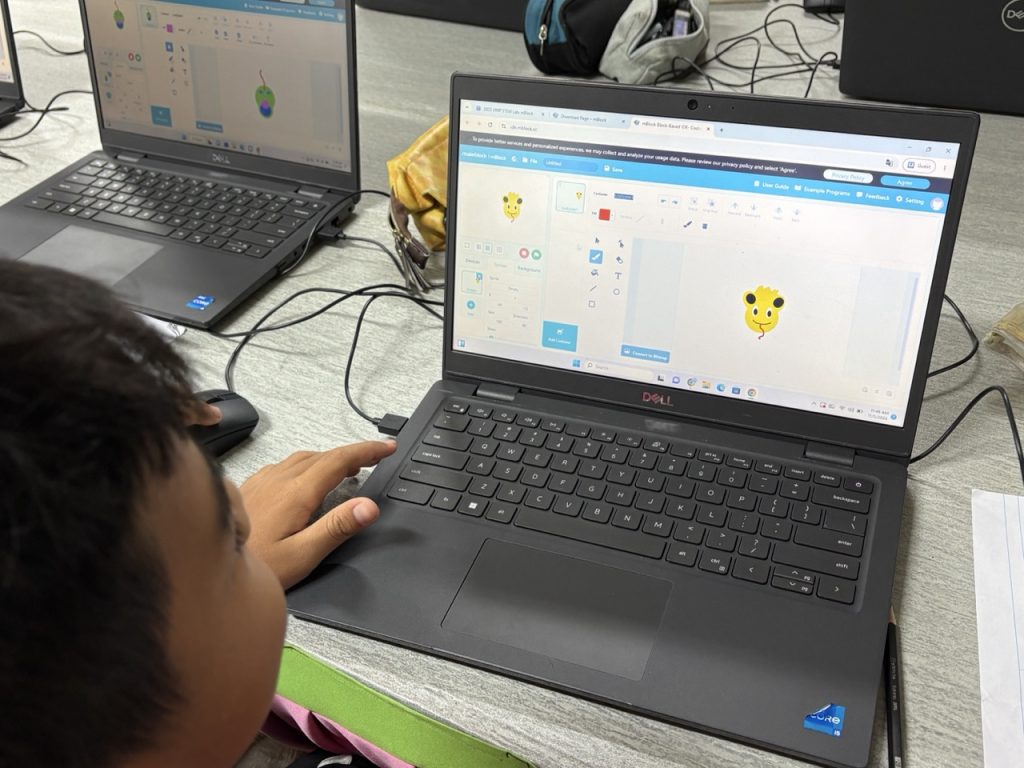
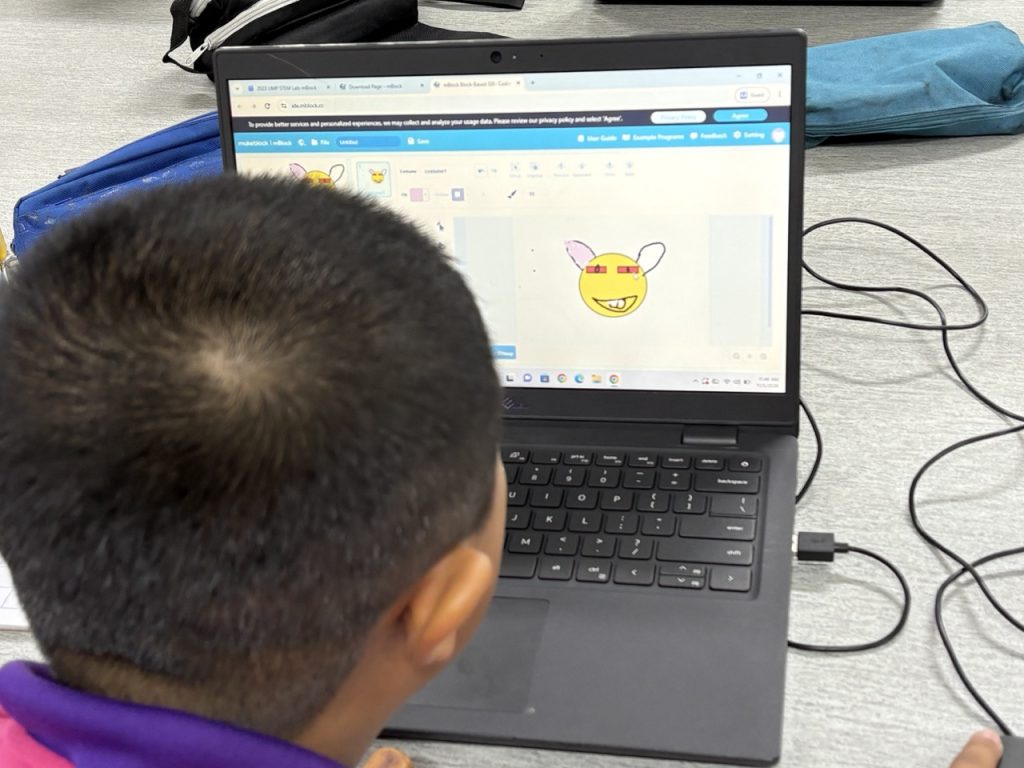
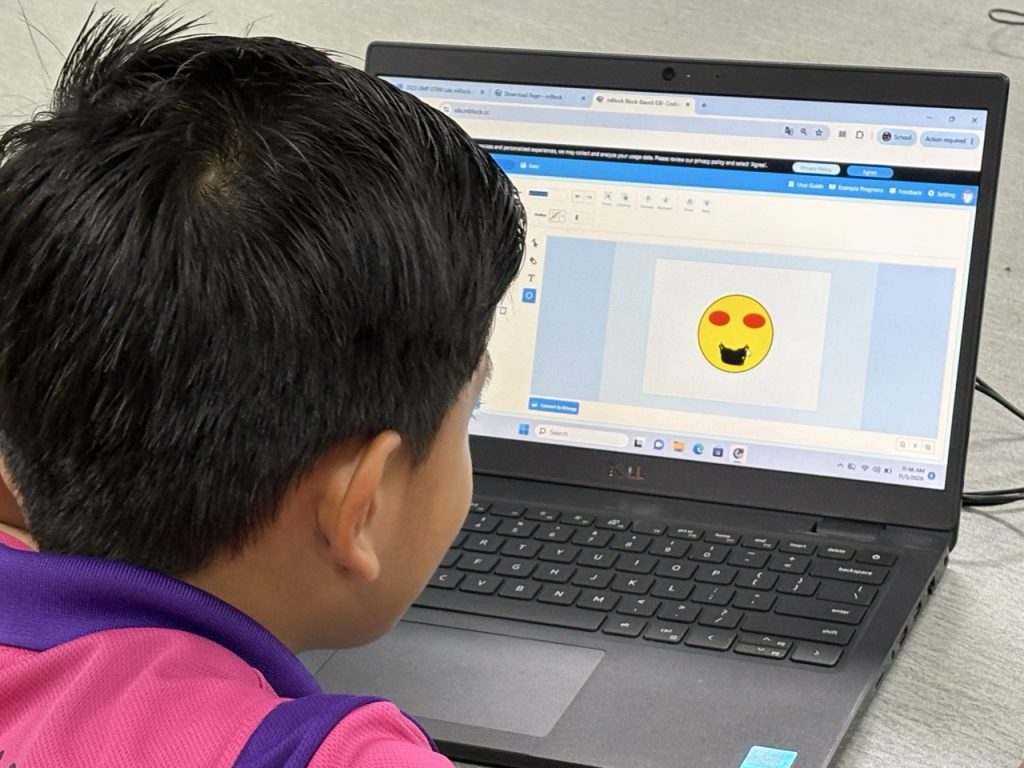
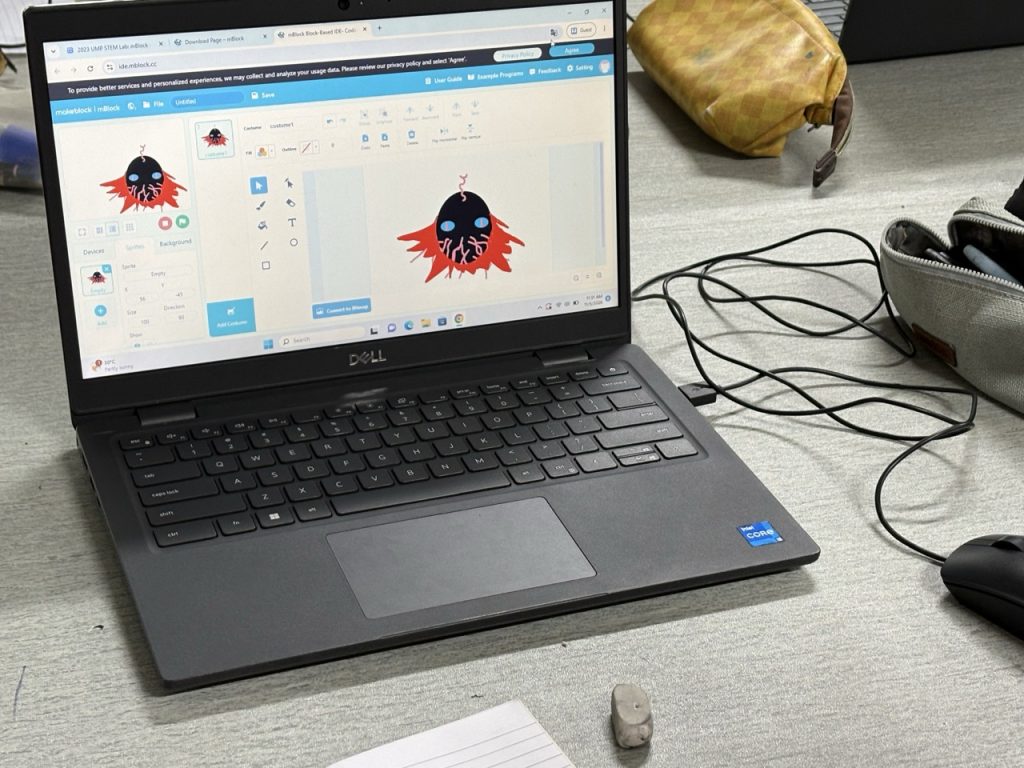
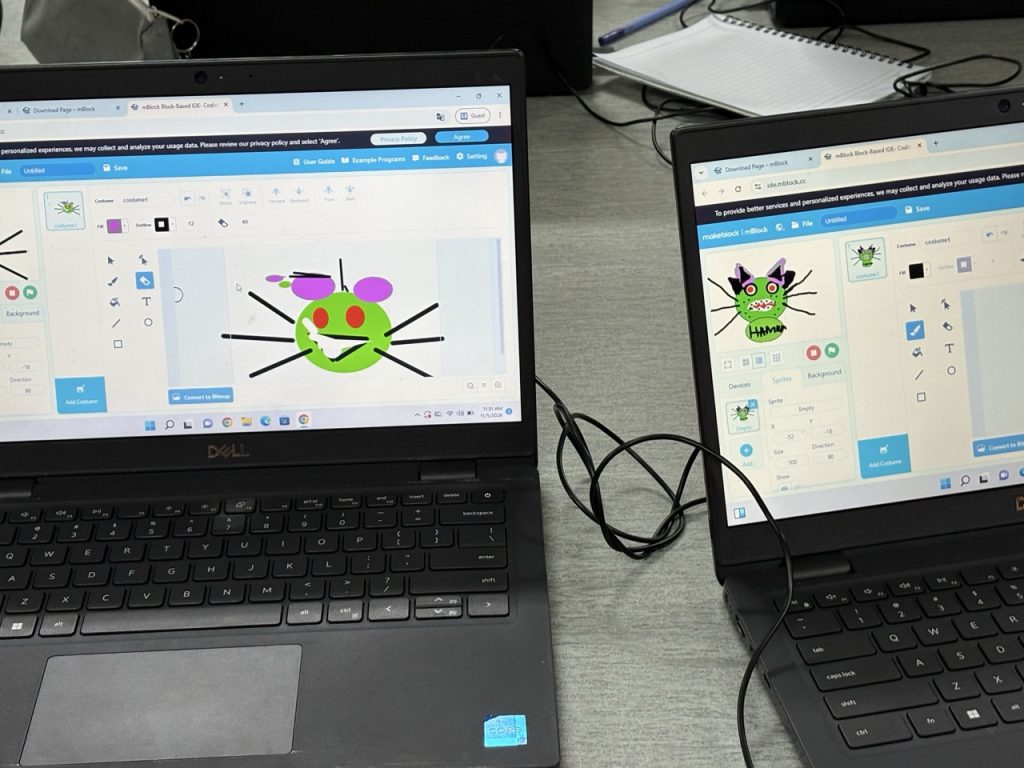
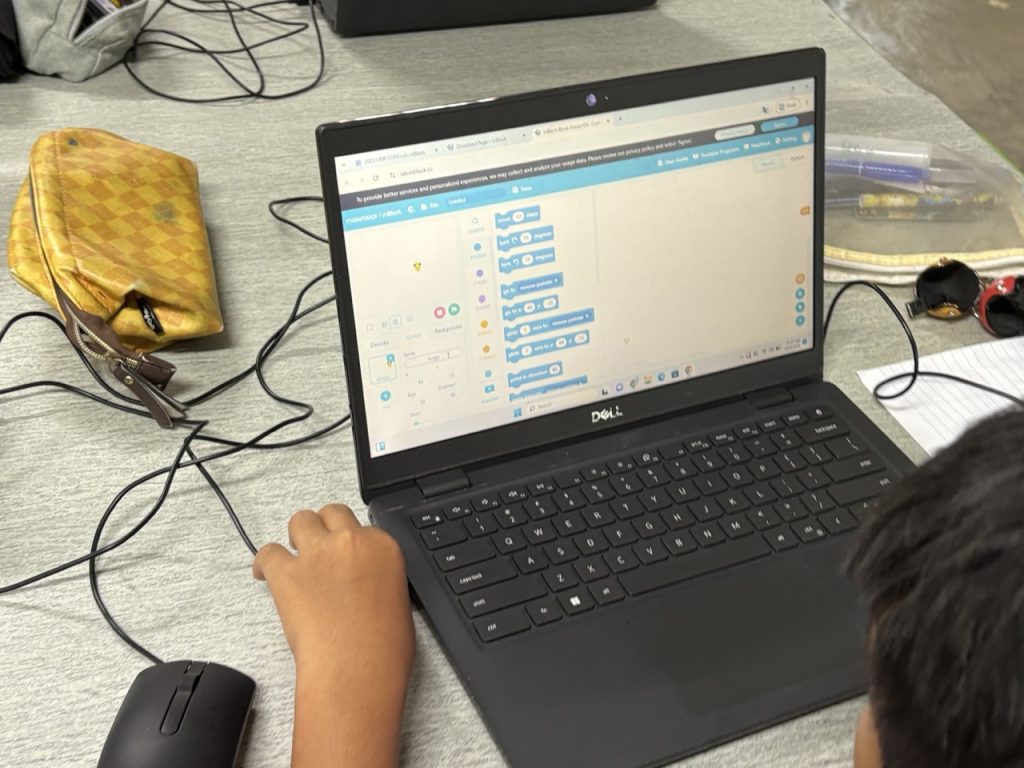
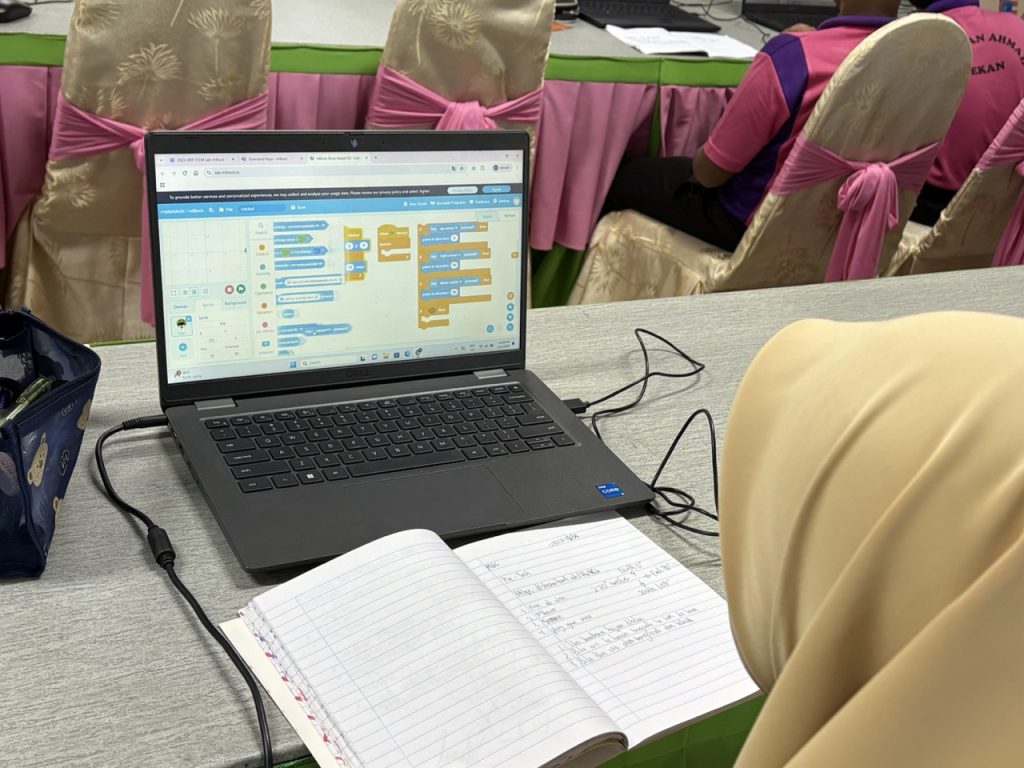
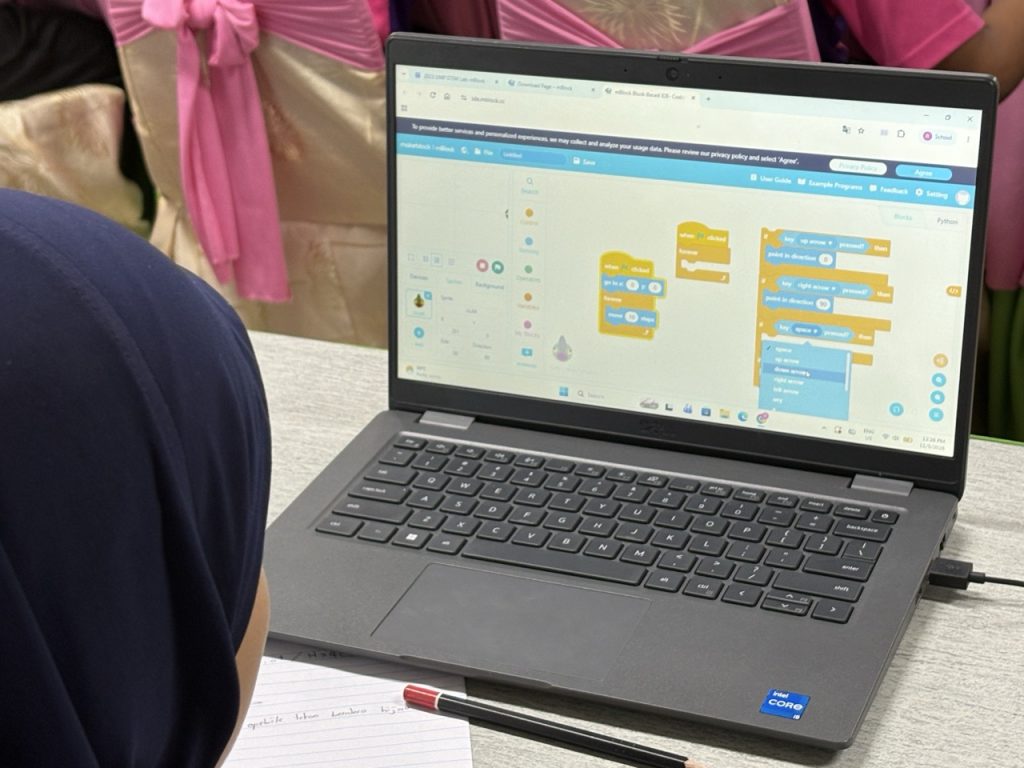
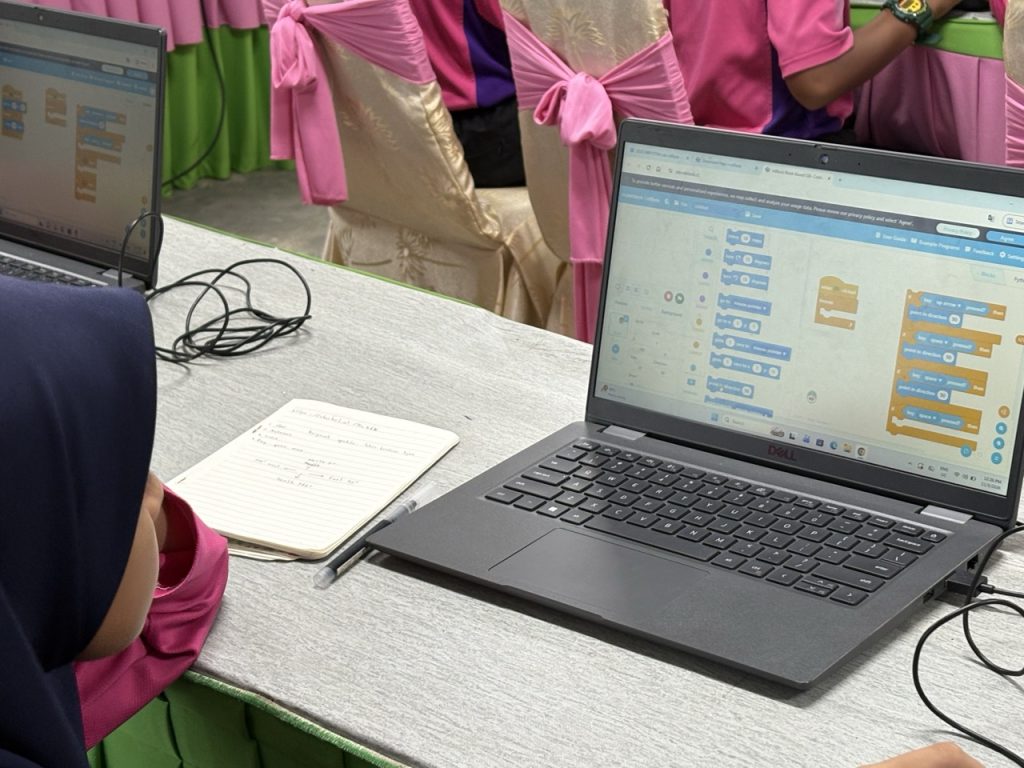
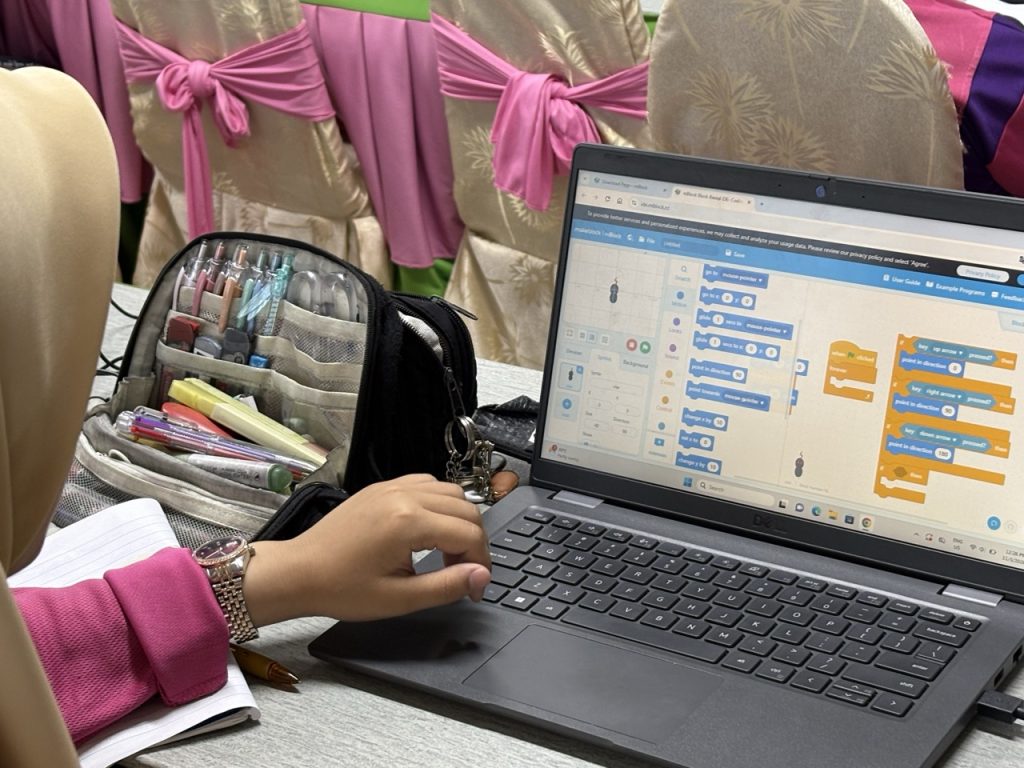
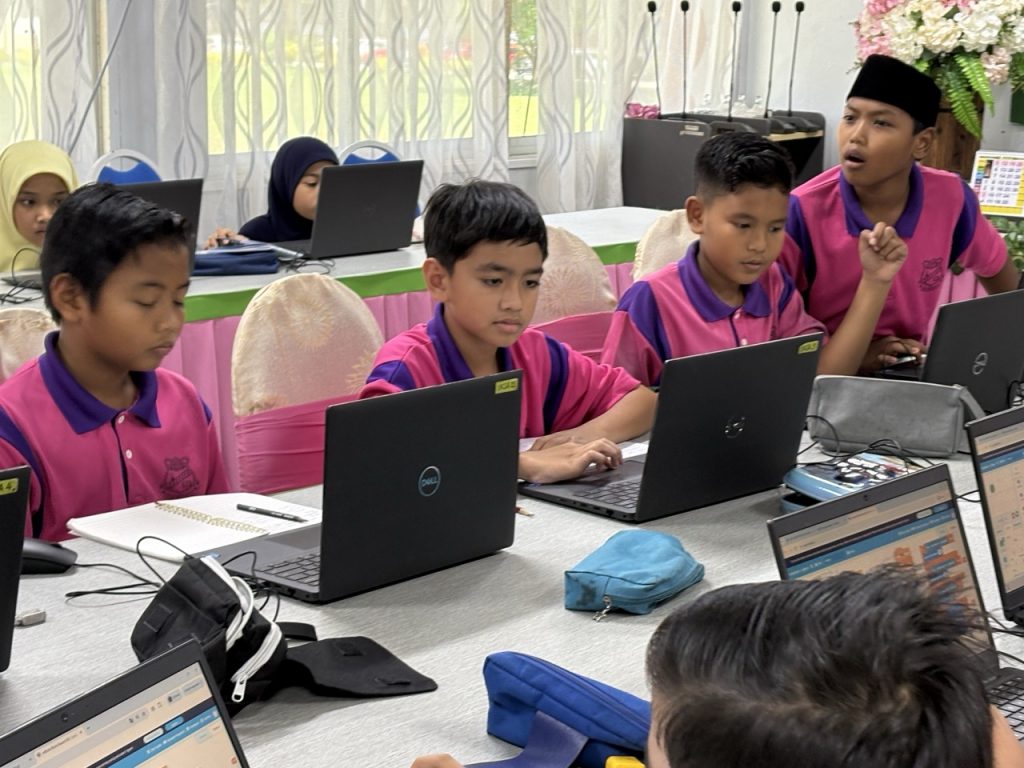
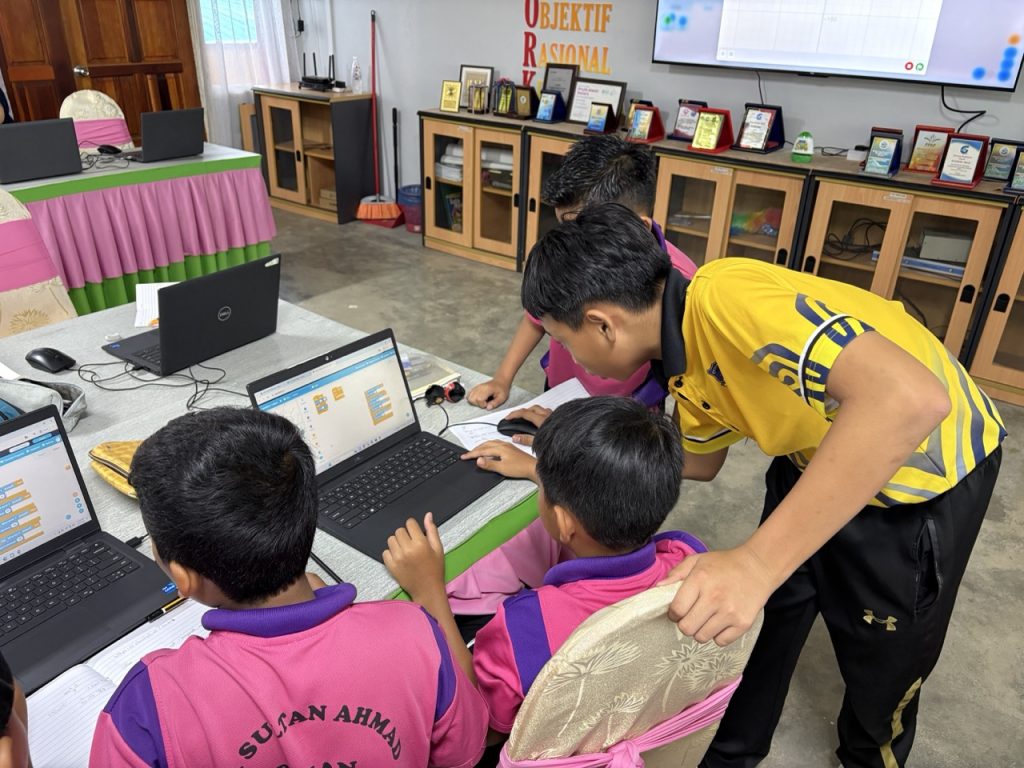
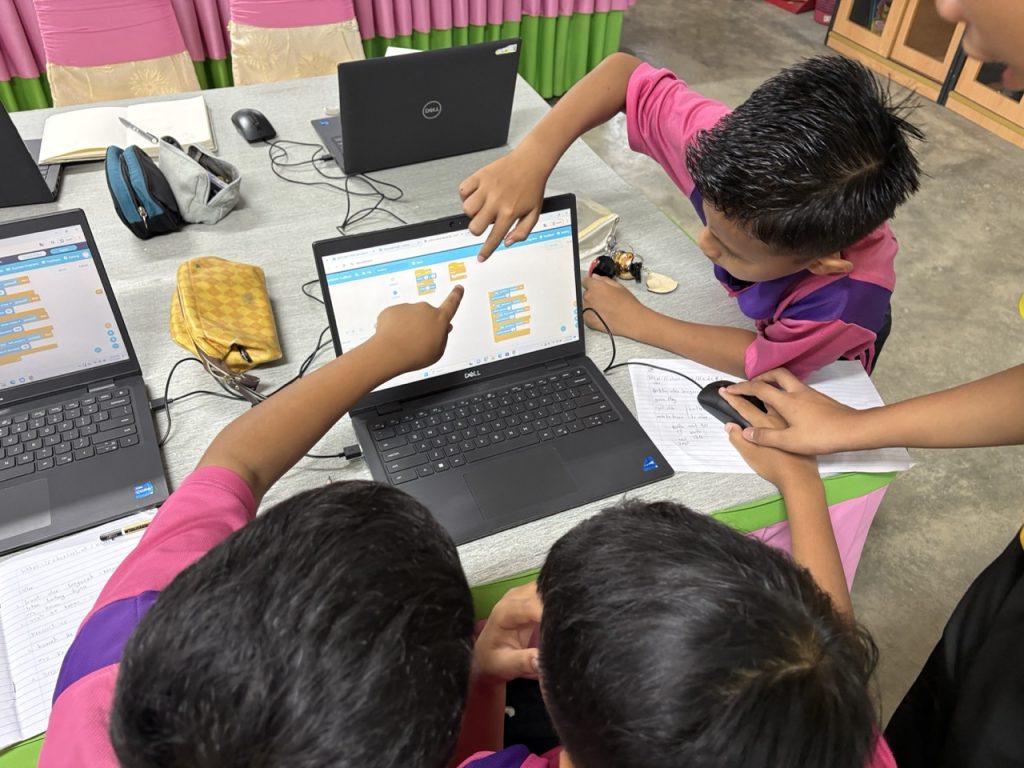
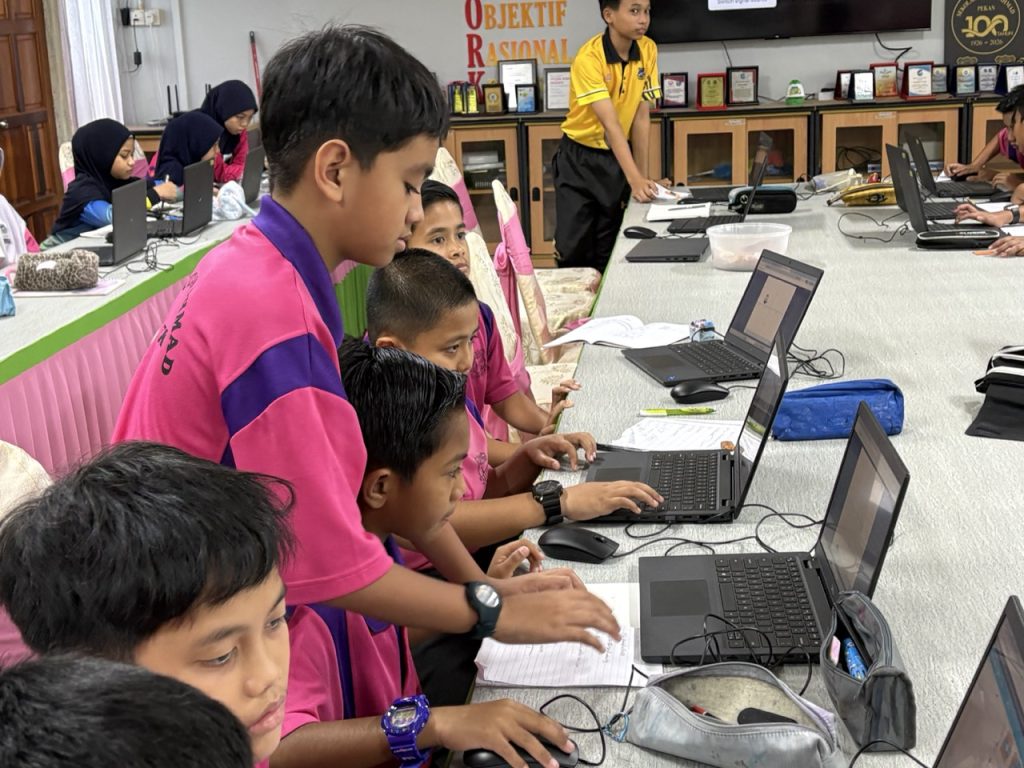
In today’s program, 40 participants from SK Sultan Ahmad Pekan were introduced to mBlock programming, learning to use its graphical interface to create sequences of instructions. They explored sequential programming, conditional statements, and loops through hands-on tutorials. These foundational skills were applied in two projects: a Snake game and a Pac-Man game. In the Snake game, they programmed the snake’s movement, growth, and collision detection, while in the Pac-Man game, they navigated a maze, collected points, and avoided ghosts. This approach provided a comprehensive understanding of programming concepts and their practical applications.

Appreciation to Cikgu Nek and Ustazah Athirah for coordinating the communication between the participants and UMPSA STEM Lab.

Raspberry Pi Programming 2026/9 – SK Temai

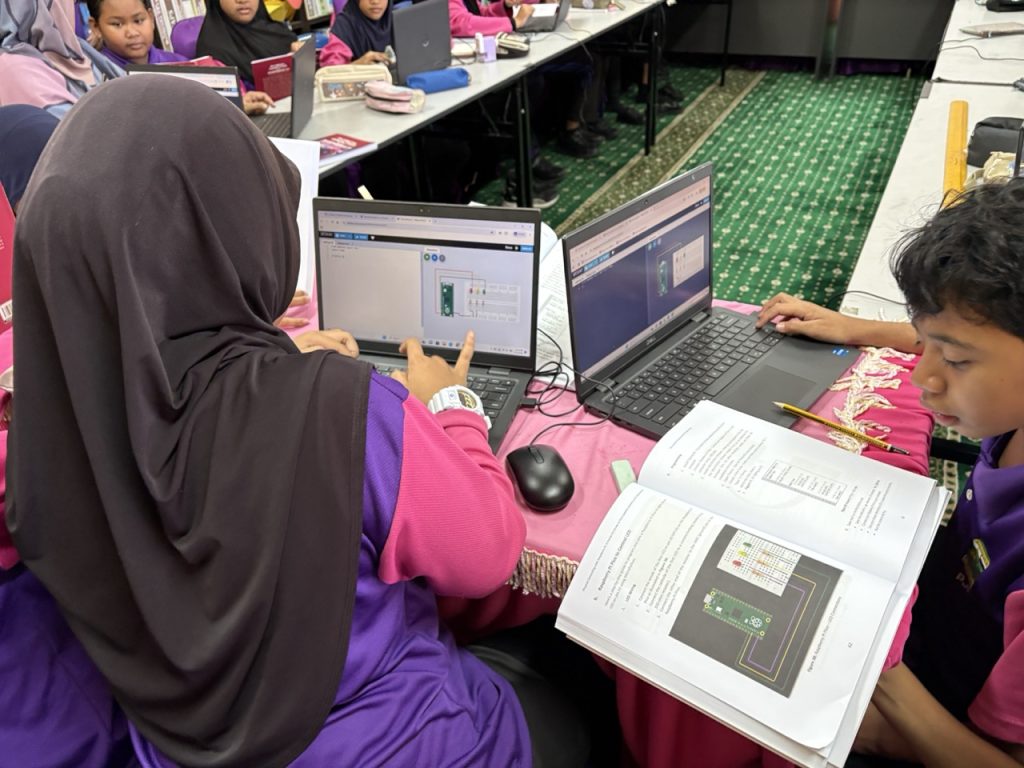
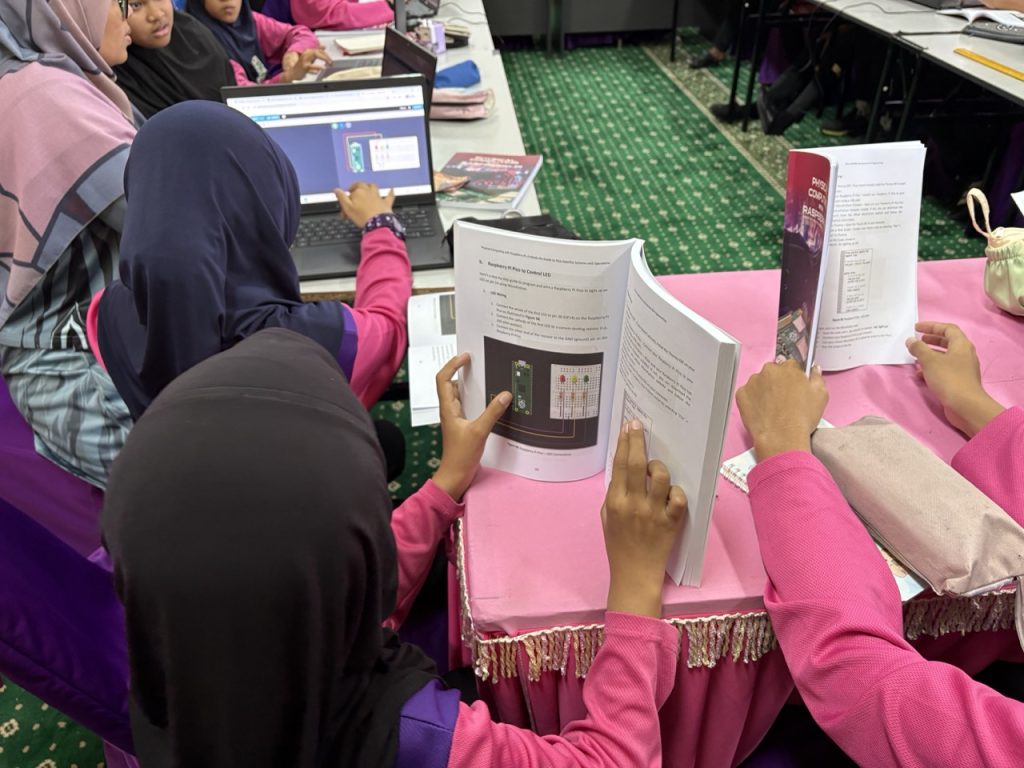
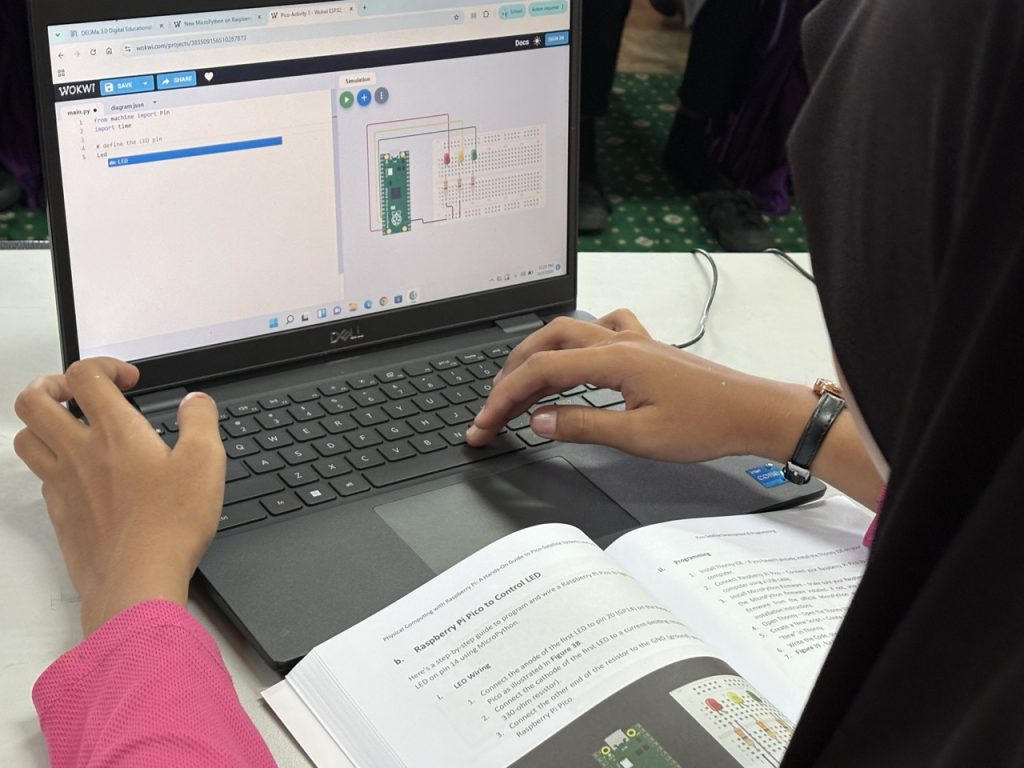
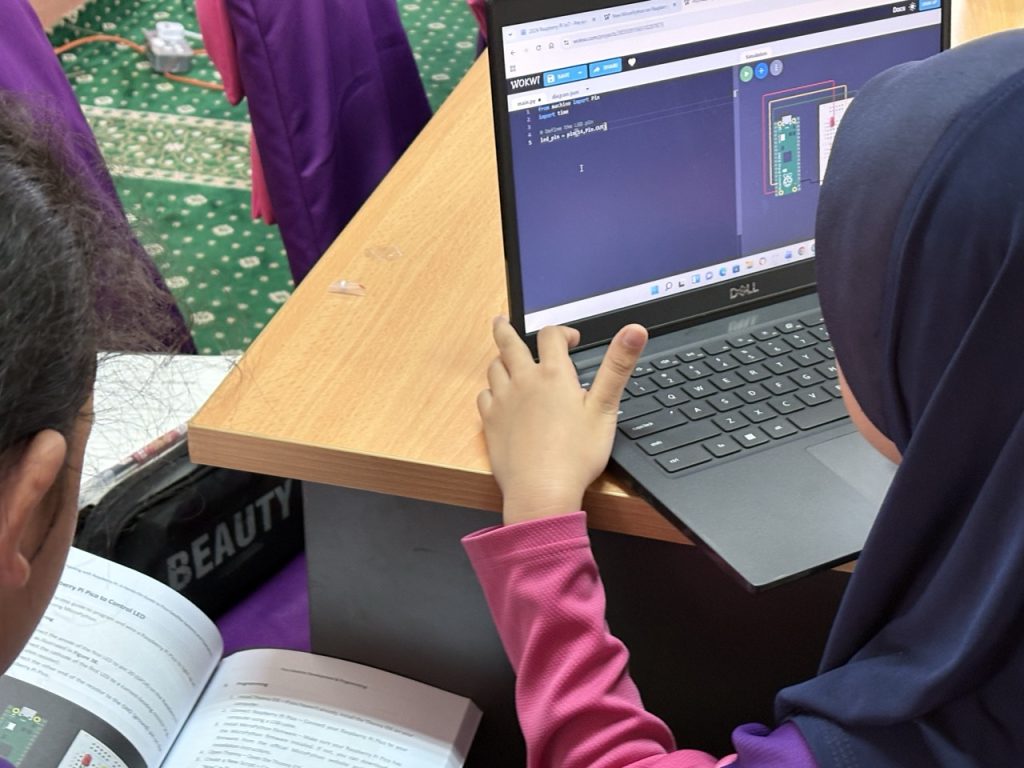
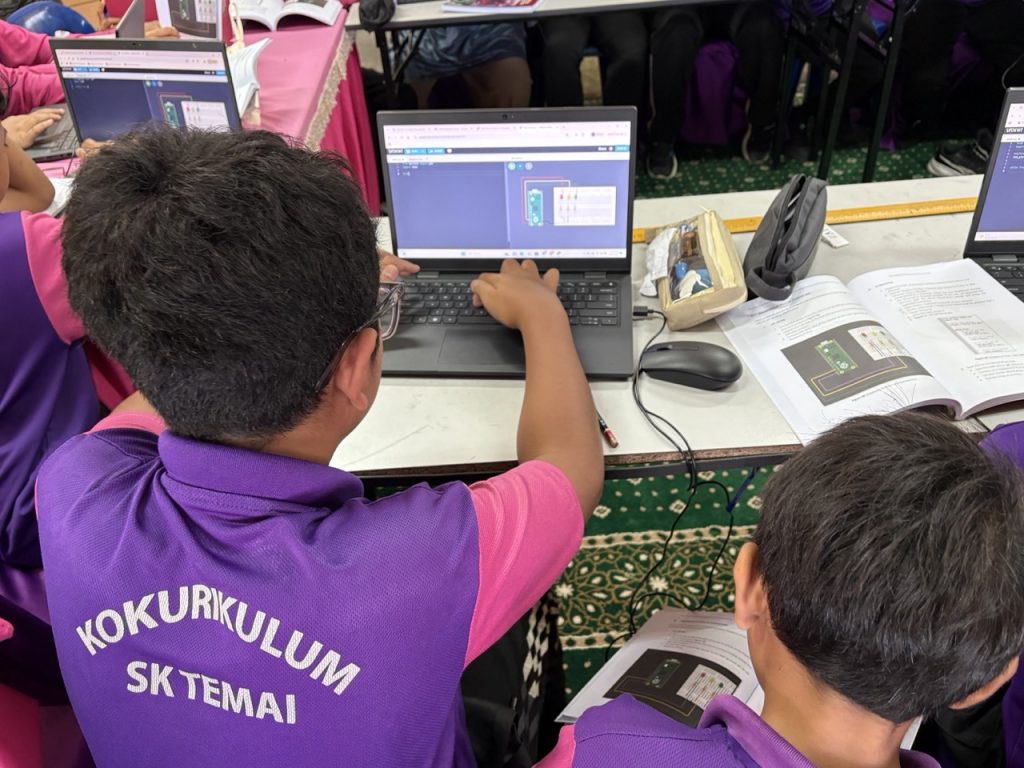
*UMPSA STEM Lab Raspberry Pi Programming Synopsis can be found here. In the Raspberry Pi IoT session, 40 students and teachers from SK Temai, awere introduced to the concept of the Internet of Things (IoT) using Raspberry Pi on the UMP STEM Cube, a pico-satellite learning kit specifically designed to facilitate engineering learning. The content … Continue reading “Raspberry Pi Programming 2026/9 – SK Temai”

*UMPSA STEM Lab Raspberry Pi Programming Synopsis can be found here.

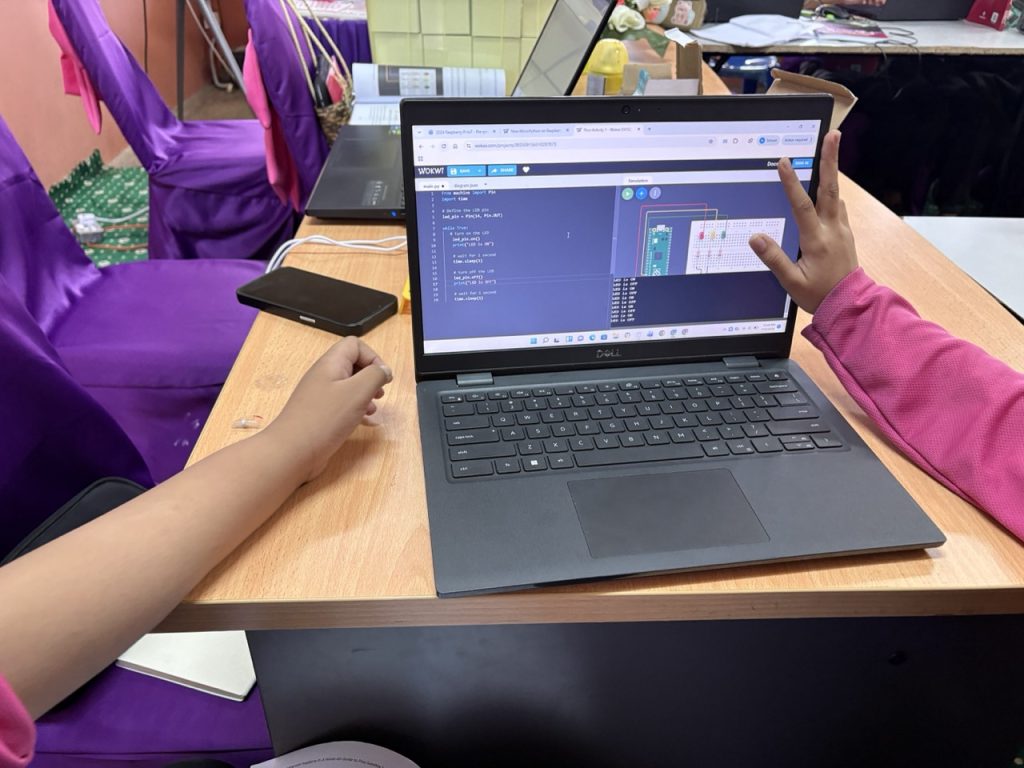
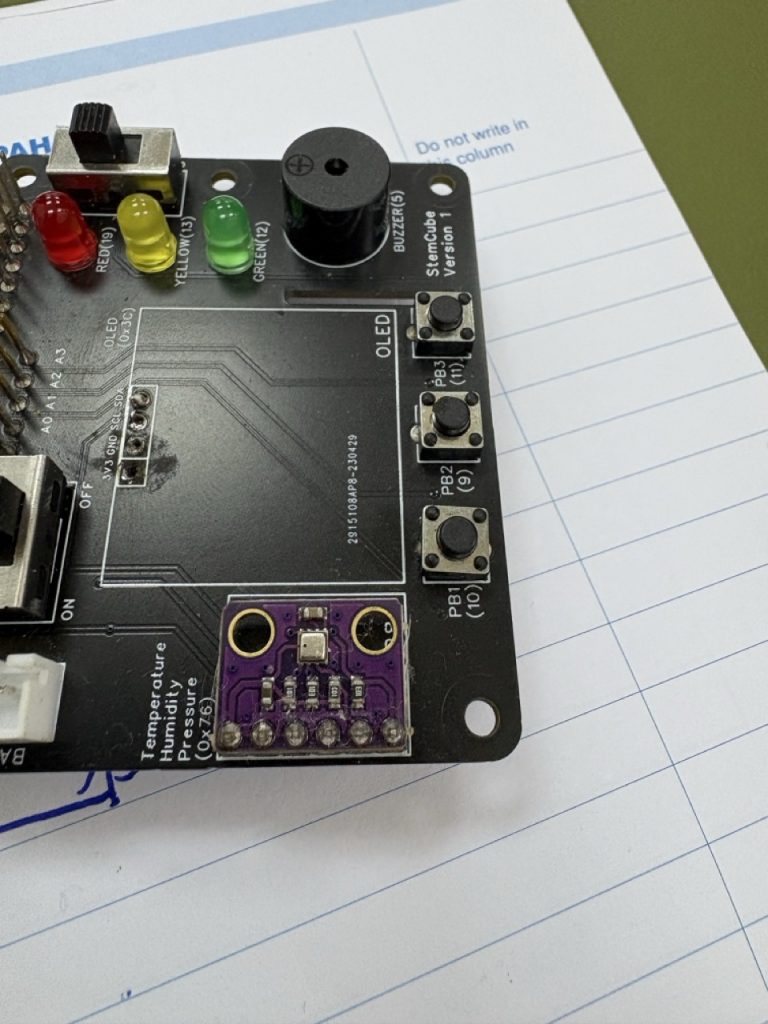
In the Raspberry Pi IoT session, 40 students and teachers from SK Temai, awere introduced to the concept of the Internet of Things (IoT) using Raspberry Pi on the UMP STEM Cube, a pico-satellite learning kit specifically designed to facilitate engineering learning.

The content covered basic digital input/output operations on onboard LEDs, as well as topics such as dashboard design using gyro meter and BMU280 sensor data, including collecting and storing data in a cloud database. Participants learned to interface sensors with Raspberry Pi boards and develop IoT applications for real-world scenarios. The session provided students with valuable insights into IoT technology and its applications in various domains.

A special appreciation is extended to Cikgu Izwan from PPD Maran for organizing and coordination in facilitating communication between the participants and the UMPSA STEM Lab :).

Nurul Nov 3rd

Research in Engineering and STEM Education – SMK Nenasi

On Oct 29th, I delivered a talk on Research in Engineering and STEM Education in SMK Nenasi. This is part of their teacher’s profesisonal development workshop involving 40 teachers from SMK Nenasi. The session drew on two decades of engineering education research — not as a retrospective, but as a working framework. This post distils … Continue reading “Research in Engineering and STEM Education – SMK Nenasi”

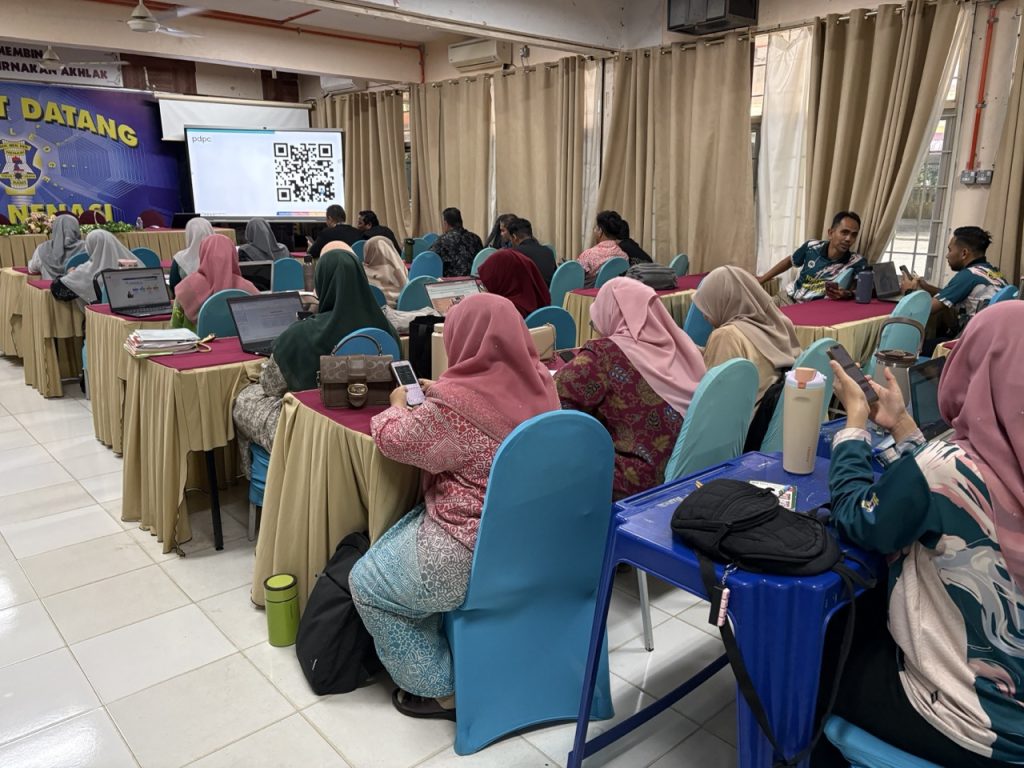
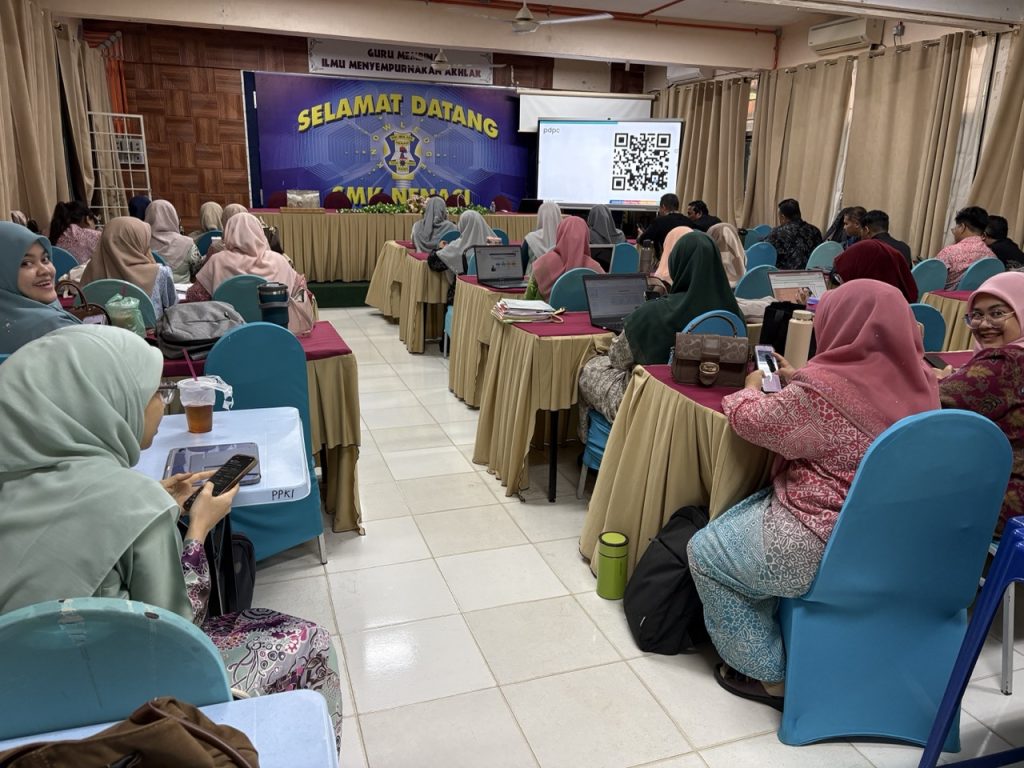
On Oct 29th, I delivered a talk on Research in Engineering and STEM Education in SMK Nenasi. This is part of their teacher’s profesisonal development workshop involving 40 teachers from SMK Nenasi.

The session drew on two decades of engineering education research — not as a retrospective, but as a working framework. This post distils the core ideas shared that day: a map of research areas in education, a cycle for turning classroom problems into publishable innovations, and four journal studies that demonstrate what that cycle looks like in practice.

A Framework for Understanding Educational Research

Conversations about education often reduce to familiar binaries — theory versus practice, teacher-centred versus student-centred. These oppositions are real, but they can obscure a more productive question: where, precisely, does a teaching problem live?

I’ve always believe in the framework that position the learning environment as a triangle of relationships: the Educator, the Student, and the Subject. Research in education tends to cluster around the edges and nodes of this triangle, giving rise to seven distinct areas of inquiry:

        1. Pedagogical research — approaches to teaching that connect educator to student
        2. Professional Development — how educators continue to grow in their practice
        3. Curriculum research — the selection, sequencing, and design of subject content
        4. Educational Technology — digital tools in support of learning
        5. Learning Sciences — how students learn particular content and skills
        6. Inclusive Education — equitable access and differentiated support for diverse learners
        7. Assessment — evidence of learning and feedback across the system

Any classroom problem can be located somewhere on this map. Most substantive problems touch more than one area — which is precisely what makes education research both challenging and consequential.

The Innovation Cycle in Teaching and Learning

Identifying where a problem lives is a starting point, not a solution. What translates observation into evidence is a systematic process. The Innovation Cycle in Teaching and Learning — Identify, Design, Apply, Evaluate — provides that structure.

      1. Identify. Define the problem precisely, through observation, diagnostic assessment, and engagement with existing literature. Vague problems produce vague solutions.
      2. Design. Develop an intervention grounded in educational theory. The design phase should be evidence-informed, not intuition-driven.
      3. Apply. Implement the intervention with real learners in a real context, with appropriate instruments in place to capture what happens.
      4. Evaluate. Analyse the data rigorously. Determine what worked, for whom, and under what conditions — then feed those findings back into a new cycle of Identify.

The cycle is not linear; it is iterative. Each pass through Evaluate generates a more precise version of Identify. Over time, this compounding of evidence produces not just better teaching practice, but publishable, replicable research that contributes to the broader field.

“Good teaching is, at its core, a form of research. Every classroom problem is a research question waiting to be asked properly.”

Four Studies: The Innovation Cycle in Practice

The following four studies in UMPS STEM Lab illustrate how this cycle operates across different educational contexts, learner populations, and research areas. Each began with a documented classroom problem; each produced findings published in internationally indexed journals.

Study 1 — Game Development-Based Learning and Programming Skill Acquisition

Noordin, N.H., & Karunanthini, G. (2026). Evaluating the impact of game development-based learning on programming skill acquisition and student engagement. International Journal of Evaluation and Research in Education (IJERE), Vol. 15, No. 1.
DOI: 10.11591/ijere.v15i1.35542 · Q2, SCOPUS-indexed

Research Area: Pedagogical · Learning Sciences · Educational Technology

The problem: Secondary school students encounter a well-documented gap in computing education — the ability to follow a worked programming example does not automatically translate into the ability to work independently. Form 1 students in a block-based programming context demonstrated strong performance during guided tasks and significant difficulty the moment that guidance was withdrawn.

Through the Innovation Cycle:

  • Identify: Students lacked the structured progression needed to move from dependent to independent programming. The gap was not motivational but scaffolding-related.
  • Design: A four-stage Full→Minimal scaffolding framework, with the development of a Snake Game in mBlock as the learning context. Game development was selected deliberately: it provides a meaningful goal that sustains engagement across multiple sessions.
  • Apply: Students worked through four progressively less-supported activity sessions, building a fully functional game by the final stage.
  • Evaluate: Pre- and post-test computational thinking scores, algorithm design quality, and block-programming error analysis. Result: Cohen’s d ≈ 1.86 — a very large effect size by conventional standards. Gains were observed in both achievement and self-reported engagement.

Key finding: Scaffolding design — not simply task design — determines whether students can transfer programming knowledge to novel problems.

Study 2 — The STEM Cube: Bridging Abstract Concepts and Physical Making

Noordin, N.H., Abdullah, K.K.B.H., & Eu, P.S. (2024). Assessing the effectiveness of UMP STEM Cube as a tool for developing digital making skill sets. IEEE Transactions on Education, pp. 1–11.
DOI: 10.1109/TE.2024.3376448 · Q1, IEEE

Research Area: Educational Technology · Curriculum · Learning Sciences

The problem: A structural weakness in STEM education is the tendency to teach Science, Technology, Engineering, and Mathematics as discrete disciplines. Students arrive at university able to calculate within a subject but unable to integrate across them — competent in isolated domains, underprepared for interdisciplinary engineering work.

Through the Innovation Cycle:

  • Identify: Engineering students lacked hands-on, integrated experience with IoT systems and physical computing. Existing curricula addressed components of STEM separately, not as a unified practice.
  • Design: The STEM Cube — a compact, 3D-printed kit (56×65×30 mm) integrating sensors, a servo motor, LEDs, and a microcontroller, programmable in both Arduino and Python. The physical artefact was designed to make cross-disciplinary integration tangible and unavoidable.
  • Apply: Students assembled, programmed, and tested the STEM Cube in project-based sessions, applying physical computing skills to self-defined engineering challenges.
  • Evaluate: Digital making skill sets assessed using validated measurement instruments. Results demonstrated significant gains across hardware integration, programming fluency, and design thinking — published in IEEE Transactions on Education, one of the field’s leading Q1 journals.

Key finding: Tangible, integrated learning objects can bridge the gap between disciplinary knowledge and cross-disciplinary application more effectively than software-only environments.

Study 3 — Computational Thinking Through Scaffolded Game Development

Noordin, N.H. (2025). Computational thinking through scaffolded game development activities: A study with graphical programming. European Journal of Educational Research, 14(4), 1137–1149.
DOI: 10.12973/eu-jer.14.4.1137 · Q2, SCOPUS-indexed

Research Area: Learning Sciences · Pedagogical · Assessment

The problem: A persistent concern in game-based learning research is whether students develop transferable thinking skills or simply learn to complete the specific task at hand. For programming education, the question is pointed: does building a game teach computational thinking, or does it teach game-building?

Through the Innovation Cycle:

  • Identify: First-year university students struggled with abstract Python object-oriented programming concepts. Without a meaningful goal, engagement and retention were low. The question was whether a structured game-development sequence could develop computational thinking as a generalised competency, not merely task performance.
  • Design: Seven sequential Pygame activities, moving from simple object manipulation to a fully playable slider puzzle game. Each activity introduced exactly one new computational concept — decomposition, abstraction, pattern recognition, or algorithmic design — before the next was added.
  • Apply: Implemented with 310 first-year students across a semester-1 programming course, in studio-style sessions conducted over multiple weeks.
  • Evaluate: Pre- and post-assessment of computational thinking using validated instruments. Significant gains in decomposition, abstraction, and algorithmic thinking — not merely game-making performance — confirming that the learning was transferable.

Key finding: Scaffolded game-development sequences can develop computational thinking as a generalisable skill, provided the design isolates and builds each thinking dimension deliberately.

Study 4 — AI Scaffolding in Programming Education

Noordin, N.H. (forthcoming). AI scaffolding in programming education. IEEE Transactions on Learning Technologies.
Accepted; DOI pending · Q1, IEEE

Research Area: Educational Technology · Inclusive Education · Learning Sciences

The problem: In large programming cohorts, instructor-to-student ratios make real-time, personalised scaffolding practically impossible. Students who struggle may not receive timely support, and by the time difficulty becomes visible it has often compounded. Artificial intelligence offers a potential structural solution — but only if the scaffolding it delivers is pedagogically sound and equitably distributed.

Through the Innovation Cycle:

  • Identify: Large-cohort programming courses cannot provide adaptive scaffolding at the individual level through human instruction alone. The gap between strong and struggling students widens precisely because those who most need responsive support receive it least.
  • Design: An AI-powered scaffolding system designed to respond in real time to learner behaviour within a programming environment, delivering calibrated hints and prompts based on each student’s current state rather than a fixed sequence.
  • Apply: Deployed within a programming education context. Students received dynamic AI-generated guidance while working through programming challenges, with no change to their instructor contact time.
  • Evaluate: Results accepted for publication in IEEE Transactions on Learning Technologies (Q1). The findings confirmed that AI scaffolding produced measurable learning gains — and revealed a significant pattern in which students benefited most, with important implications for equity in programming education.

Key finding: AI scaffolding in programming education is not simply an efficiency tool. Its most significant contribution may be to equity — reaching learners who are systematically underserved by conventional large-cohort instruction.

From Research to Practice: What This Means for Teachers

The four studies above were conducted in higher education settings, but the framework underpinning them is not institution-specific. The Innovation Cycle in Teaching and Learning is as applicable in a secondary school classroom as it is in a university research project.

A teacher who notices that students disengage during a particular topic has completed the first step: they have Identified a problem. The question is whether the response will be intuitive — a minor adjustment next time — or systematic: a Designed intervention, Applied with observation, and Evaluated with evidence.

The difference between those two responses is not access to a research grant or an institutional affiliation. It is the discipline of asking the problem precisely, building a response theoretically, and measuring what actually happens. That discipline is available to any educator. It is, in a meaningful sense, what professional teaching is.

The seven research areas in the triangle framework are not an academic taxonomy. They are a prompt: Which relationship is under strain — between teacher and student, between student and subject, or between teacher and subject? Locating the problem correctly is half the solution.

Conclusion

Two decades of research in engineering education have produced one consistent finding above all others: the classroom problems that resist easy solutions are almost always the ones worth studying. The gap between imitation and independent thinking in programming. The disconnect between disciplinary knowledge and integrated practice in STEM. The invisibility of struggling students in large cohorts. These are not incidental frustrations — they are the defining challenges of the field, and they are solvable through systematic, evidence-based inquiry.

The Innovation Cycle offers a structure for that inquiry. The Research Areas framework offers a map. What teachers and researchers bring to both is the most important element of all: sustained attention to the learner, and a commitment to acting on what that attention reveals.

References

Noordin, N.H., & Karunanthini, G. (2026). Evaluating the impact of game development-based learning on programming skill acquisition and student engagement. International Journal of Evaluation and Research in Education (IJERE), 15(1). https://doi.org/10.11591/ijere.v15i1.35542

Noordin, N.H., Abdullah, K.K.B.H., & Eu, P.S. (2024). Assessing the effectiveness of UMP STEM Cube as a tool for developing digital making skill sets. IEEE Transactions on Education, pp. 1–11. https://doi.org/10.1109/TE.2024.3376448

Noordin, N.H. (2025). Computational thinking through scaffolded game development activities: A study with graphical programming. European Journal of Educational Research, 14(4), 1137–1149. https://doi.org/10.12973/eu-jer.14.4.1137

Noordin, N.H. (forthcoming). AI scaffolding in programming education. IEEE Transactions on Learning Technologies. [Accepted; DOI pending]


https://nurulhazlina.github.io/eduResearch/PdPcNenasi

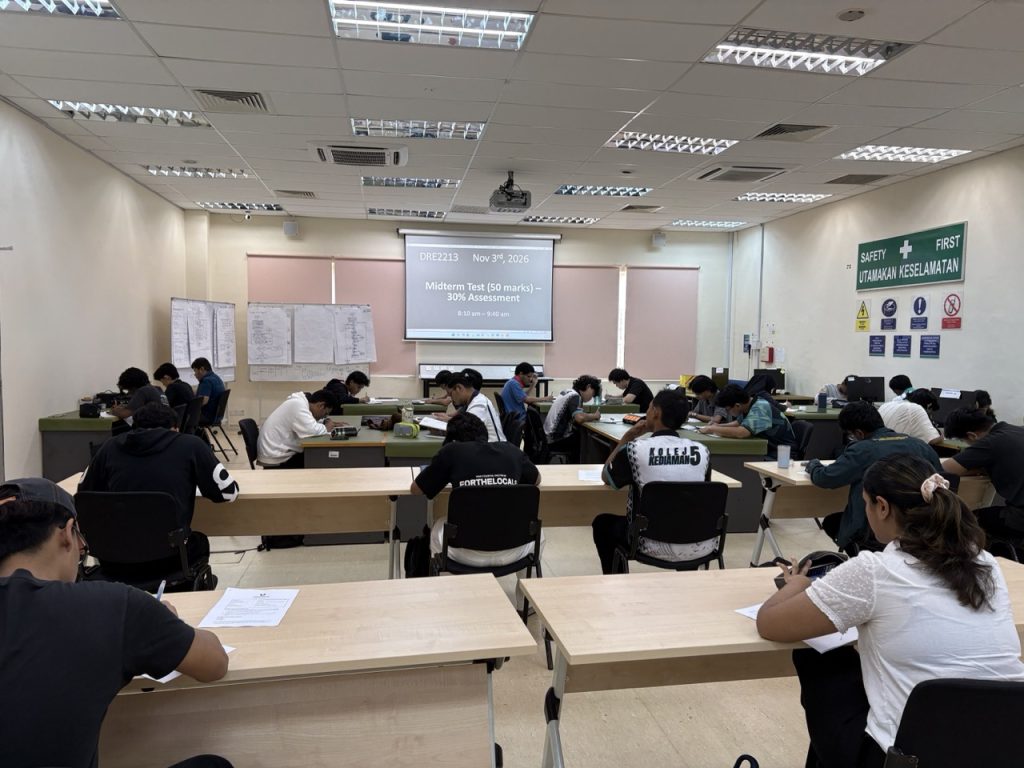
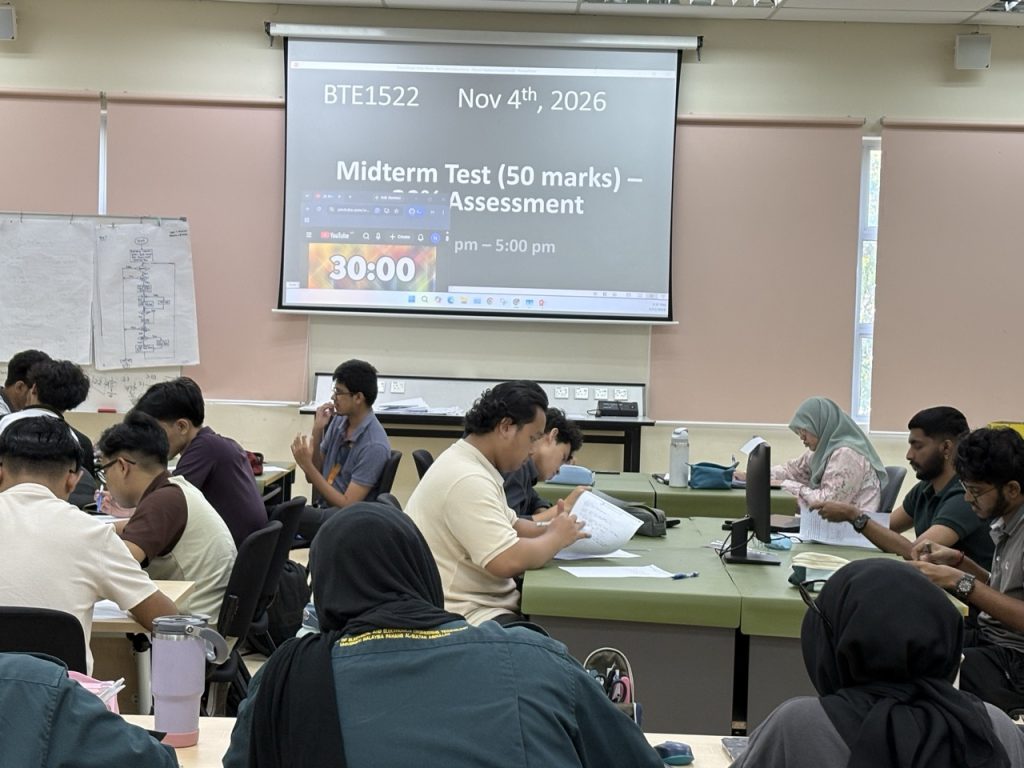
BTE1522 DRE2213 Week 4 – Flow Chart and Programming Skill

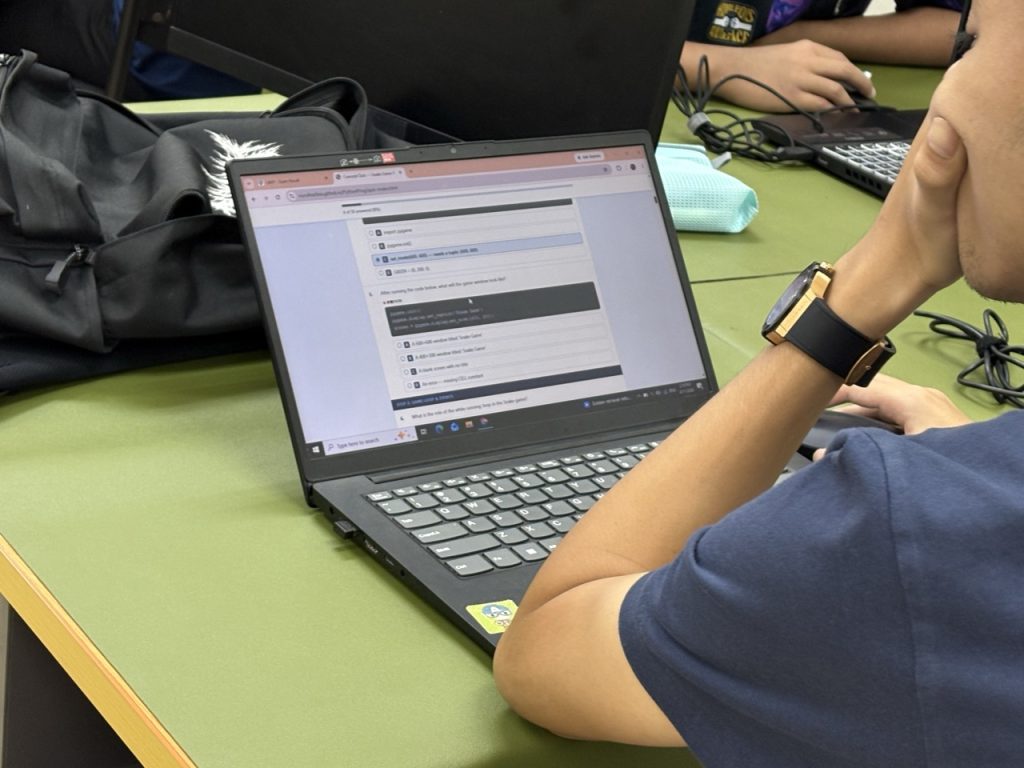
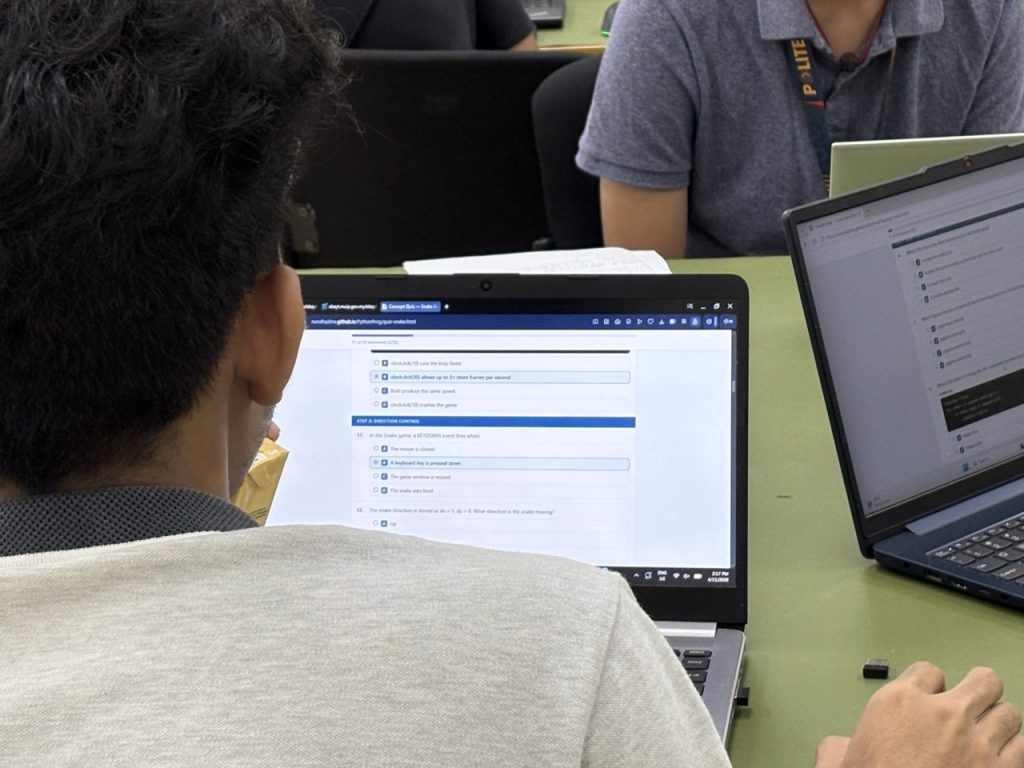
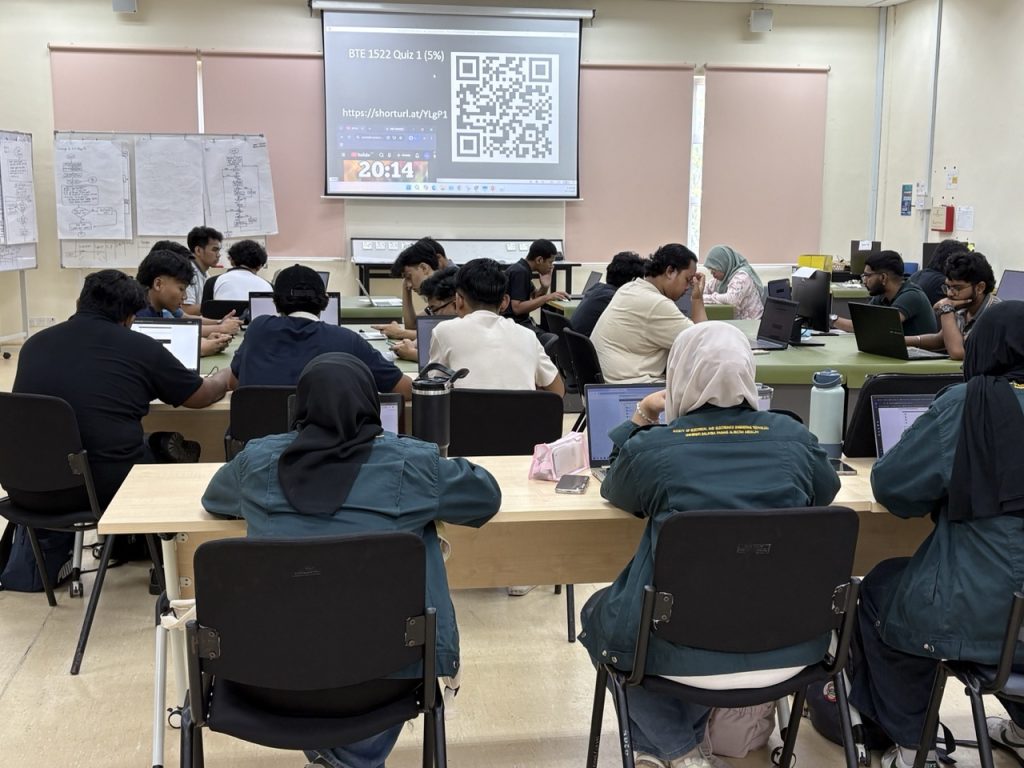
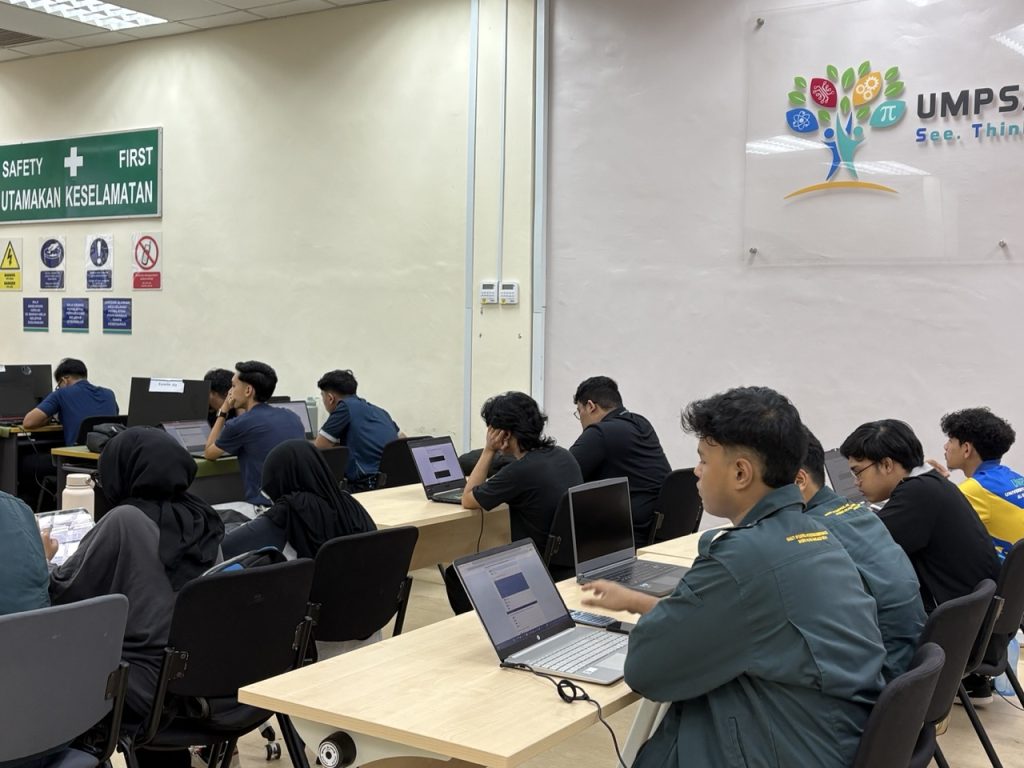
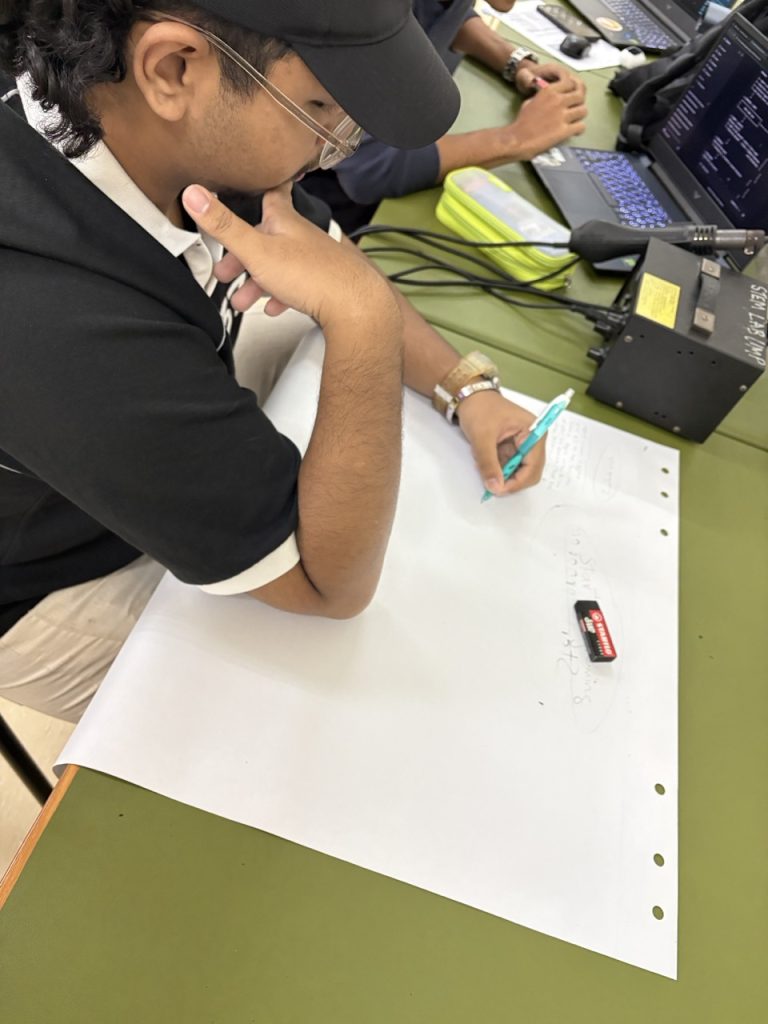
Week 5 marks a real milestone in our 10-step Snake Game Python journey. Students have now worked through nine of ten modules — from variables and game loops all the way through Object-Oriented Programming. But this week, we did not write a single new line of code. Instead, students were given one task: derive the … Continue reading “BTE1522 DRE2213 Week 4 – Flow Chart and Programming Skill”

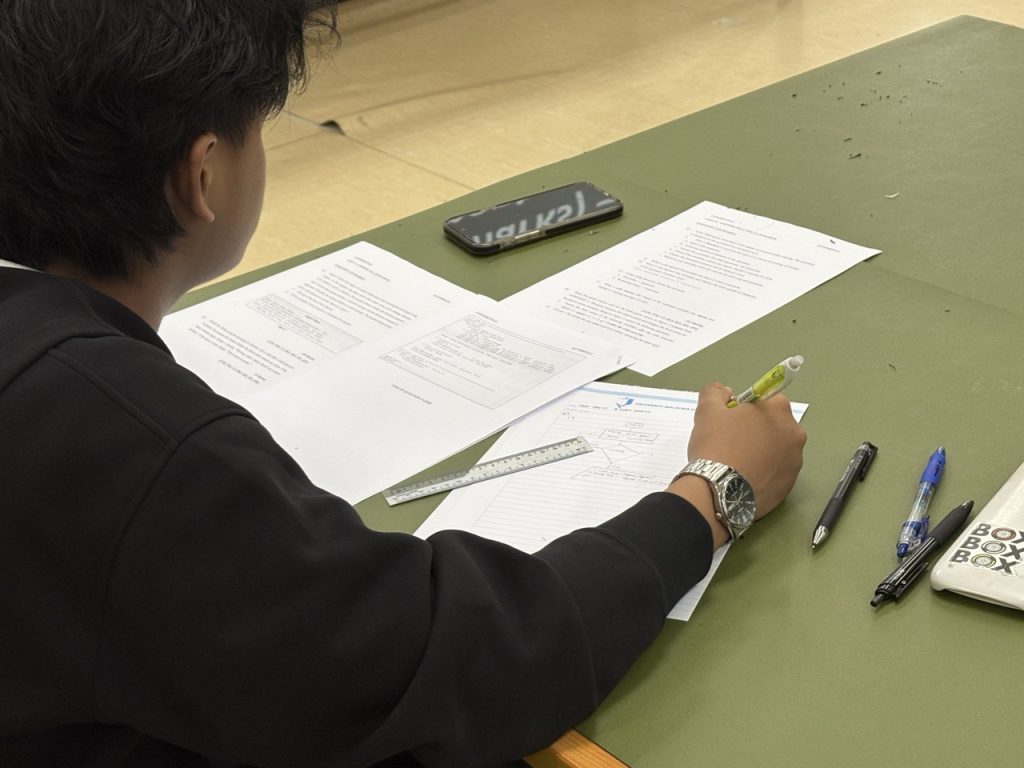
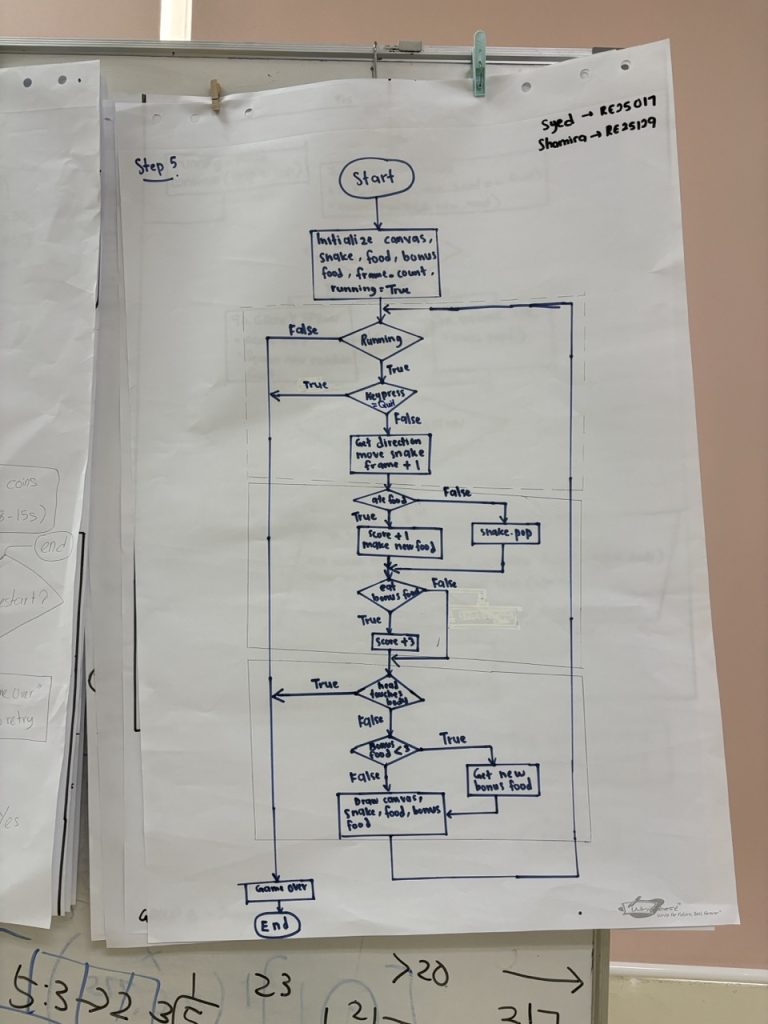
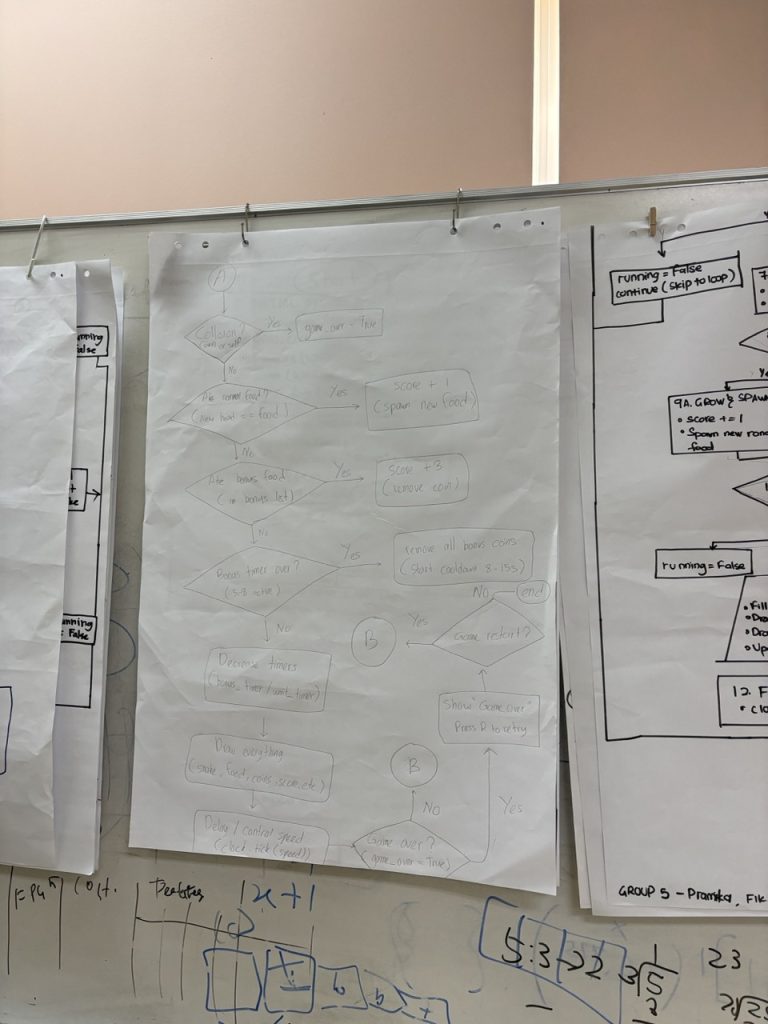
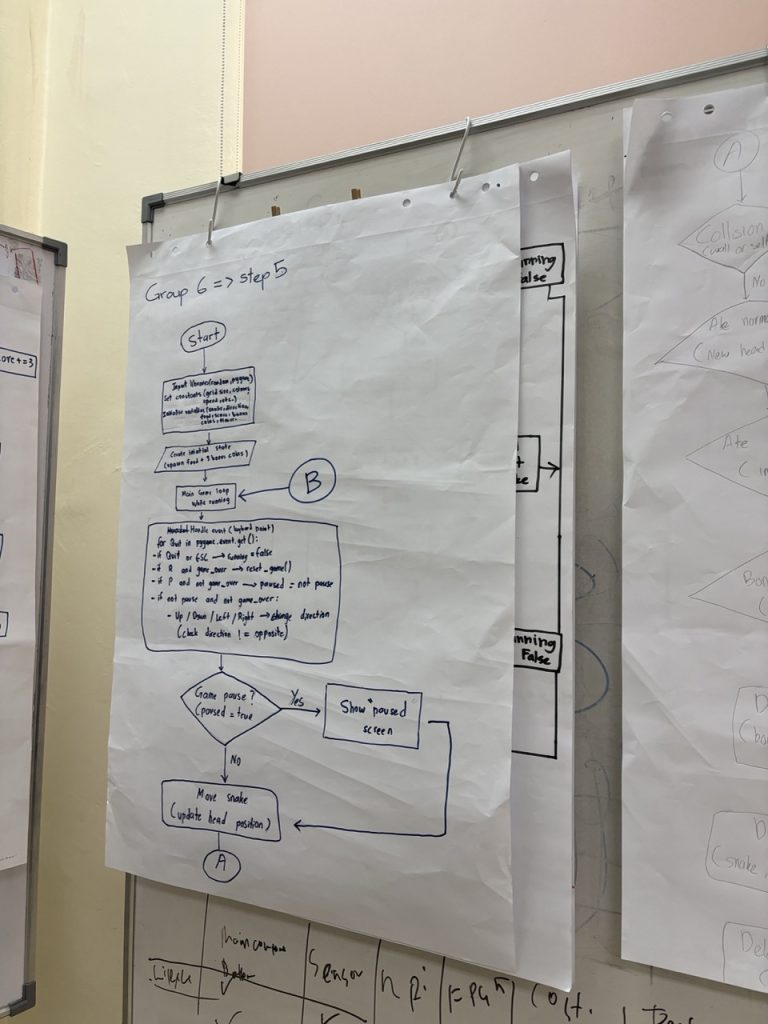
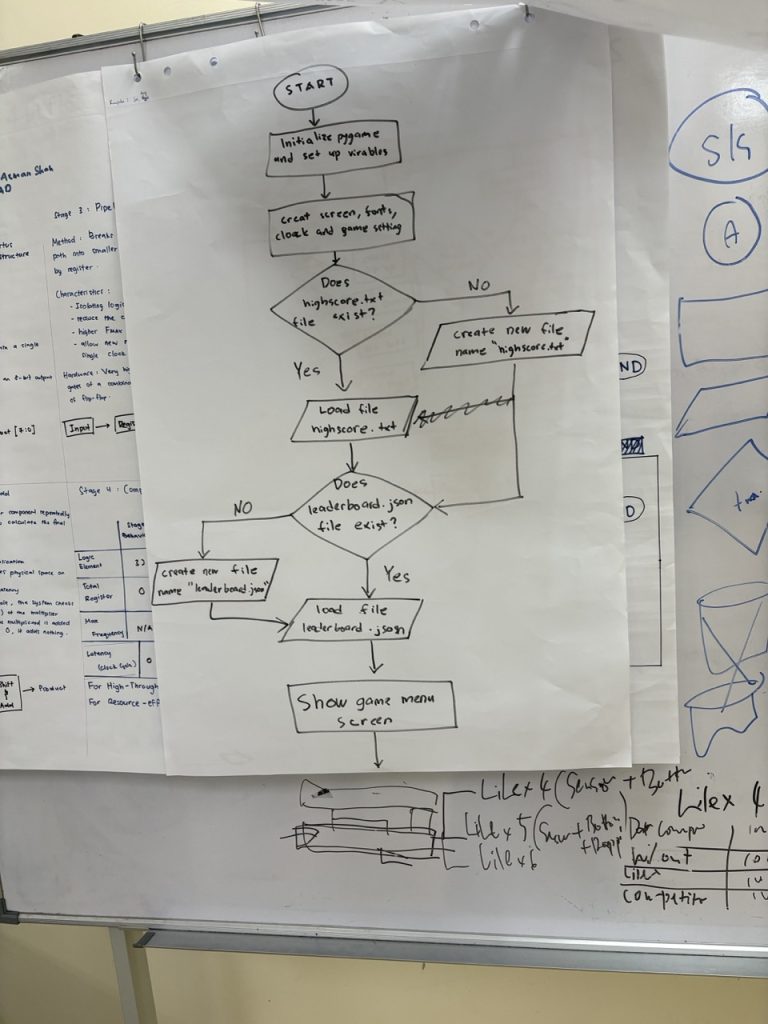
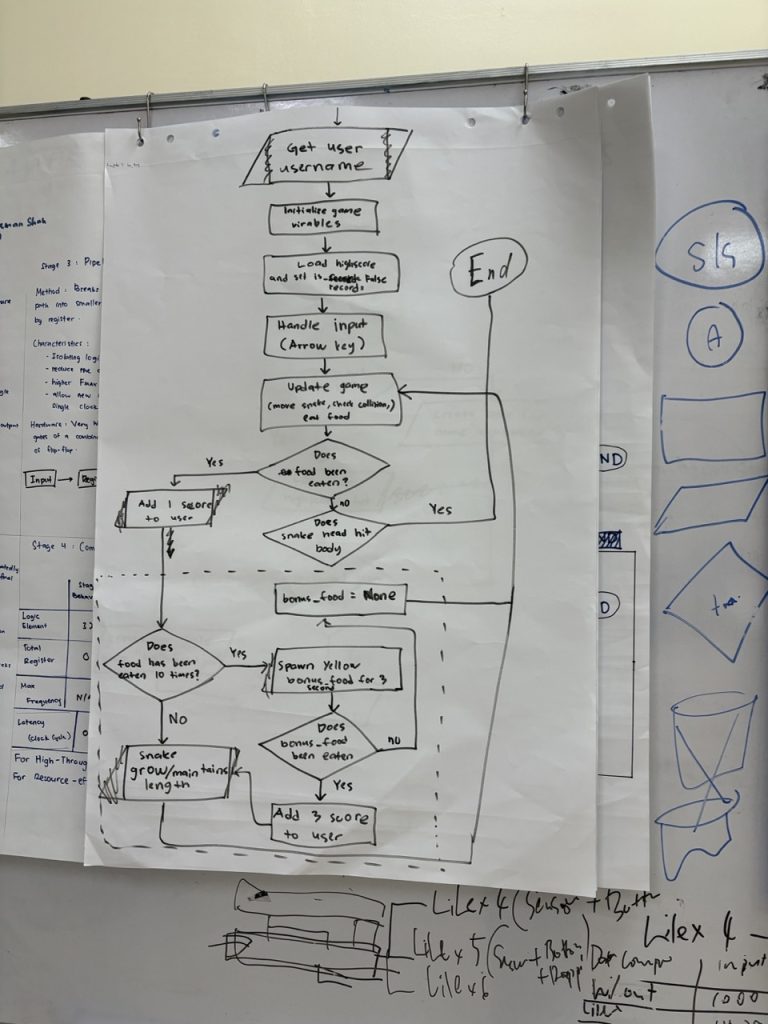
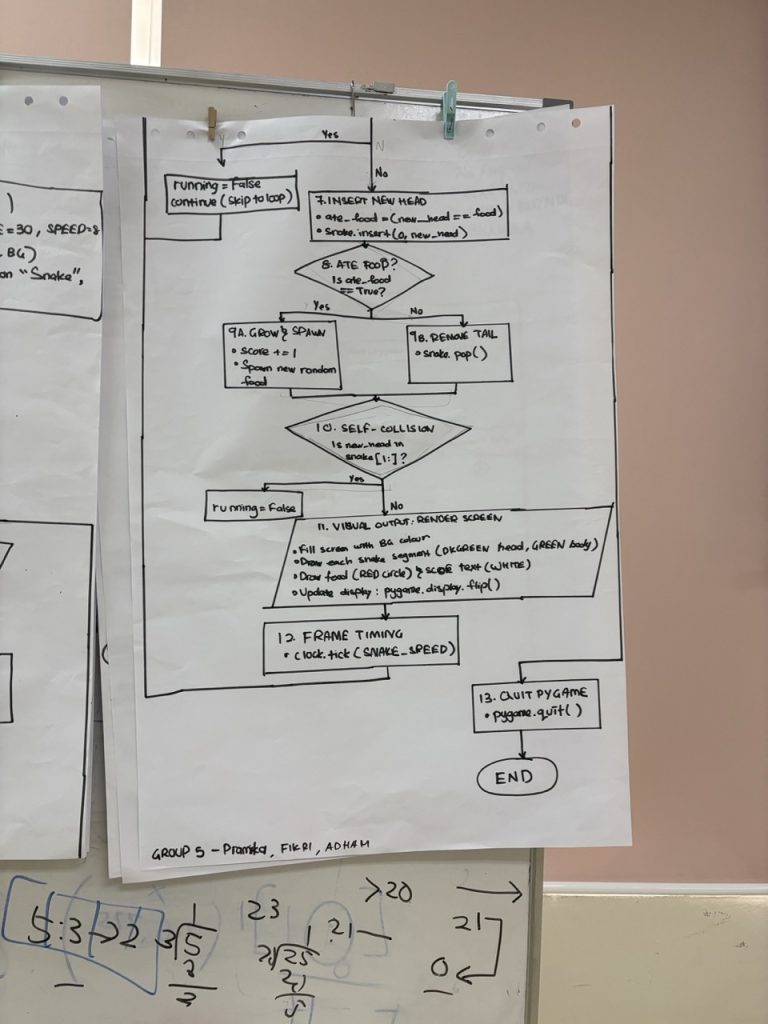
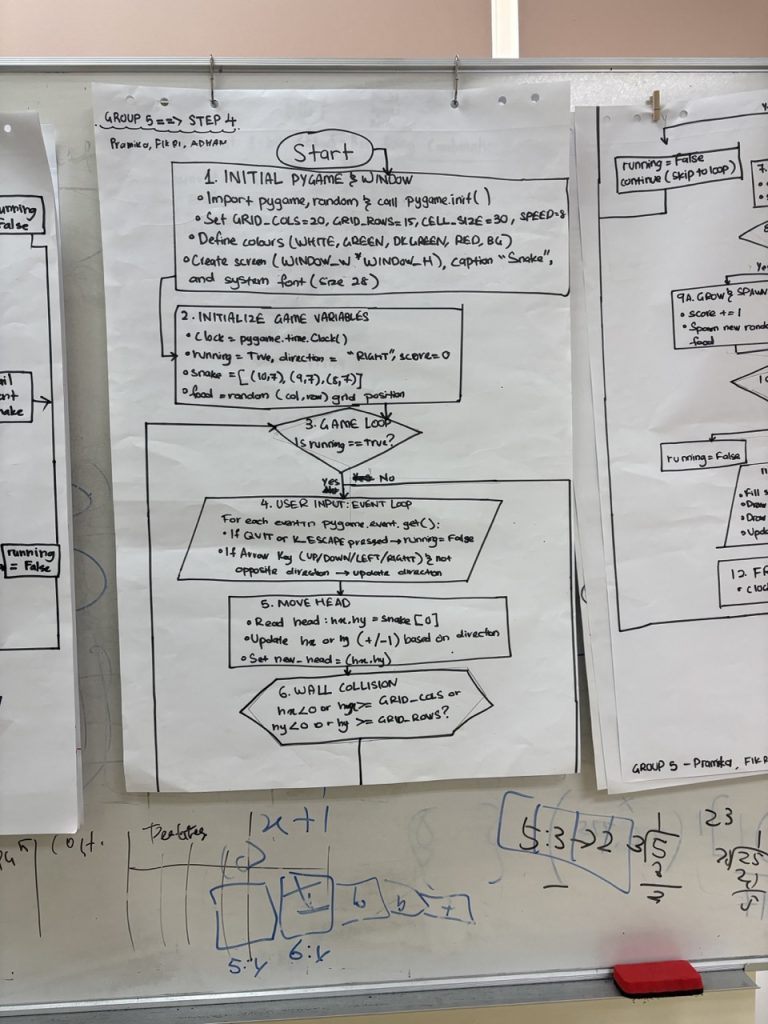
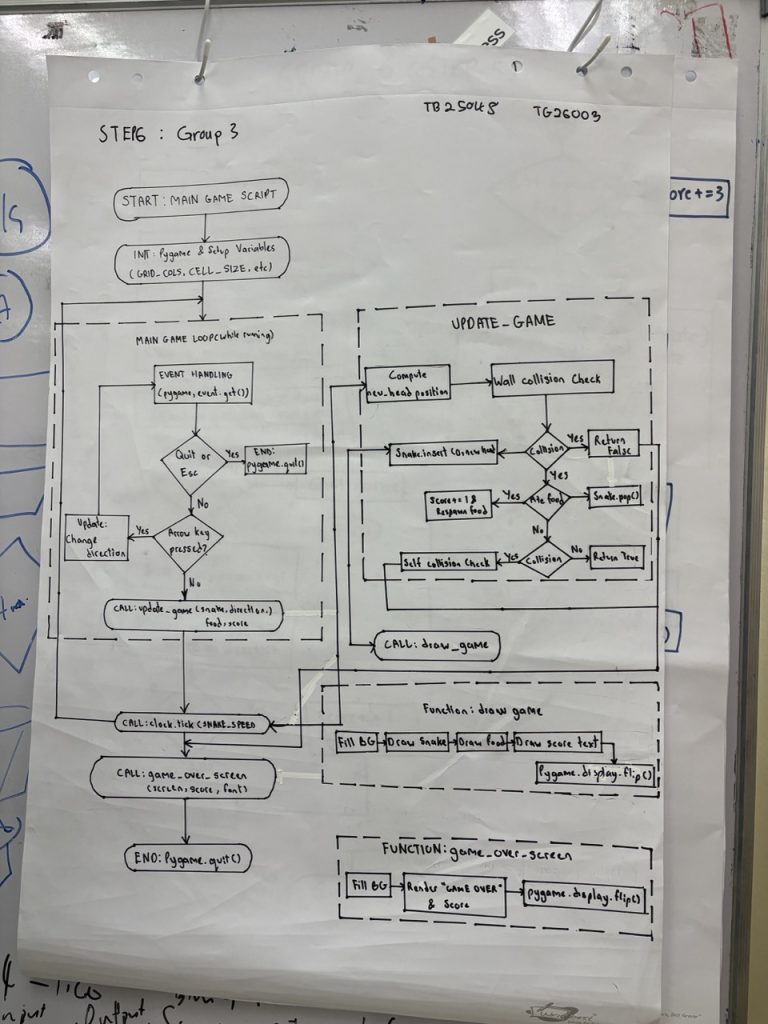
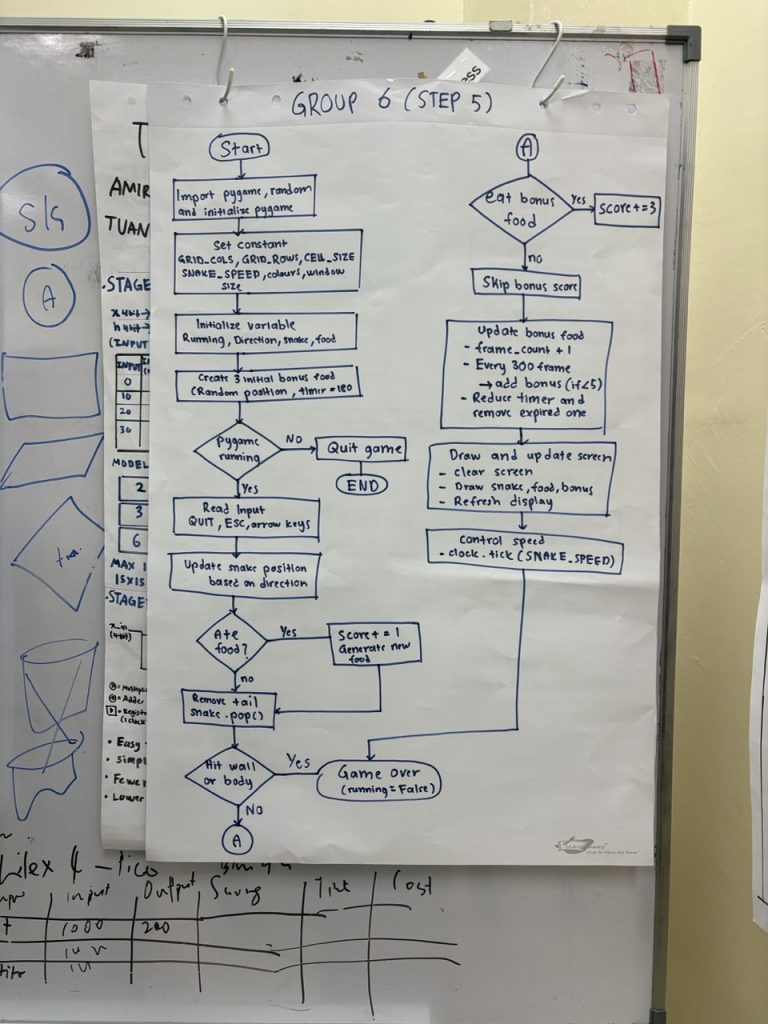
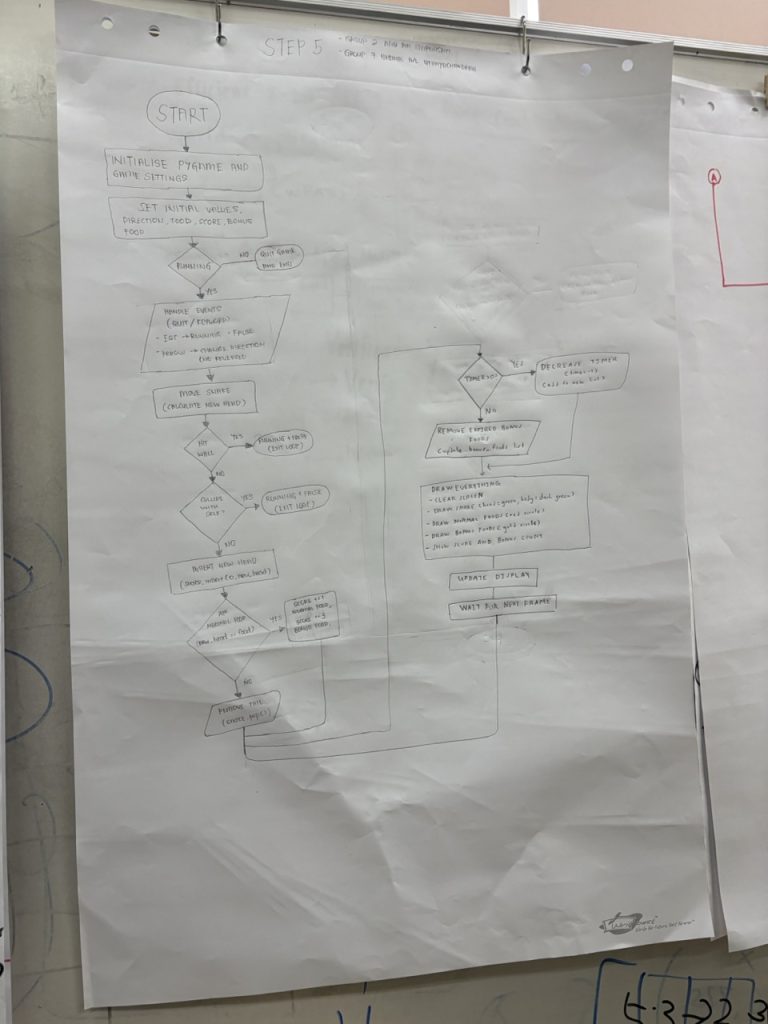
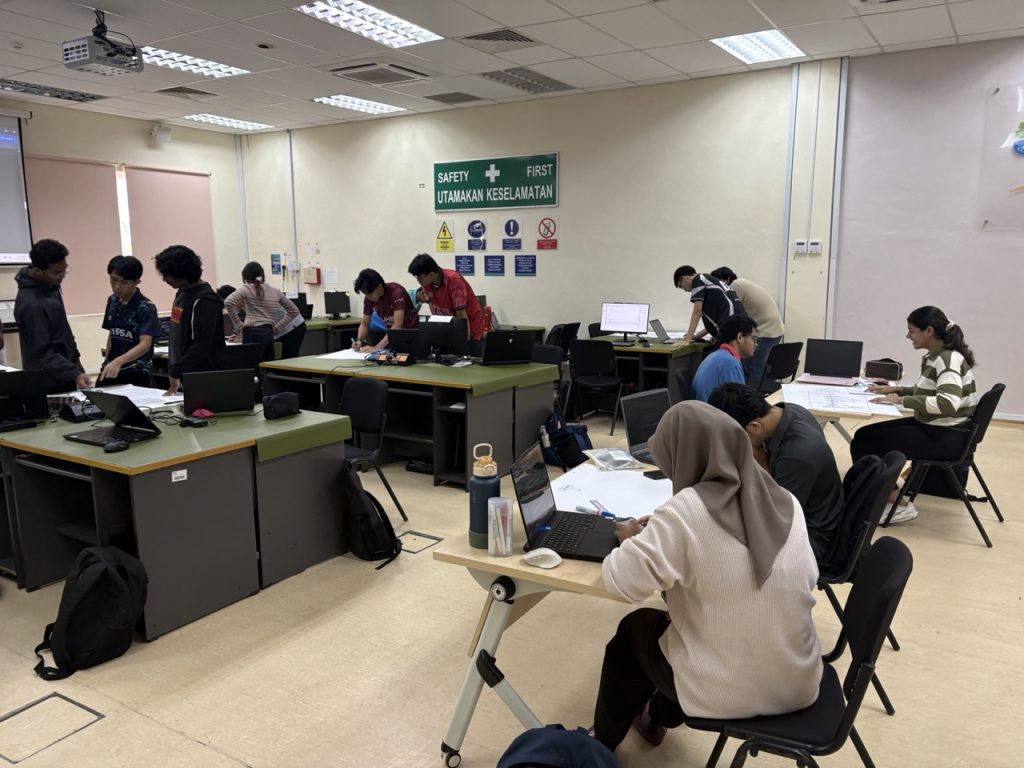
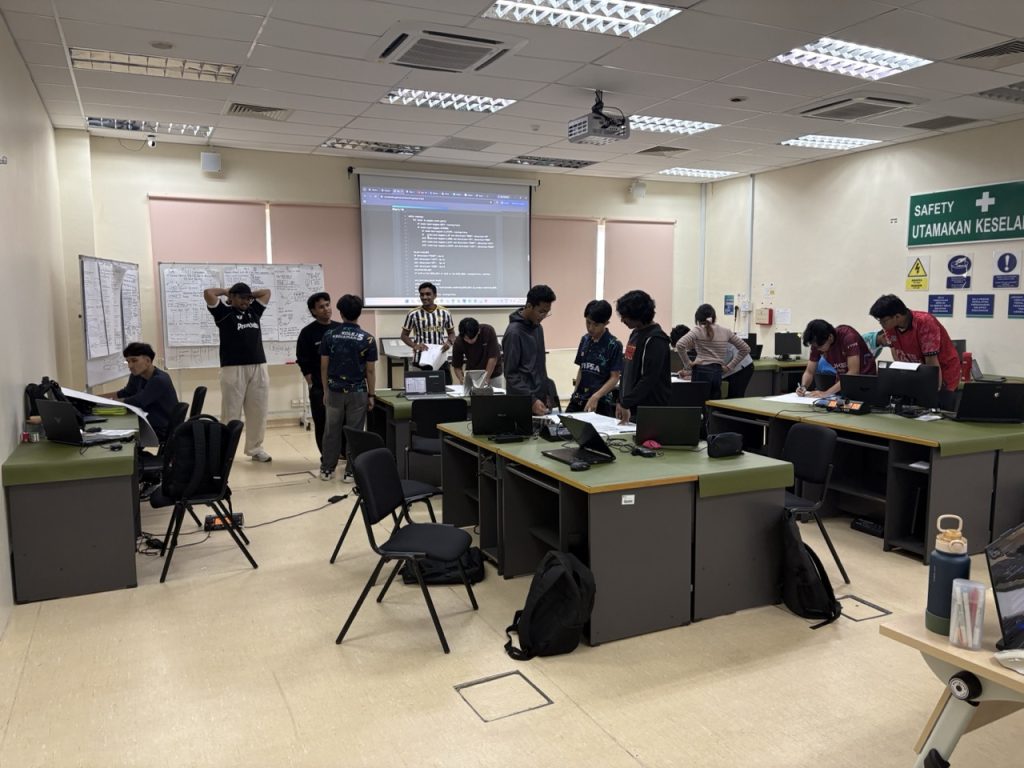
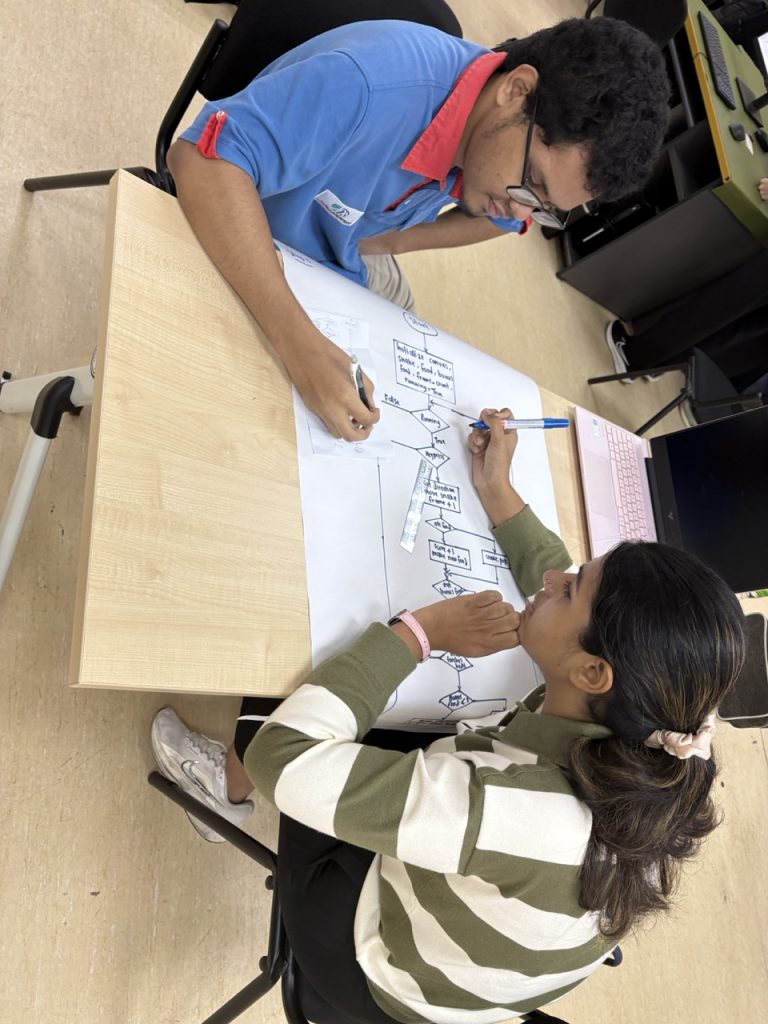
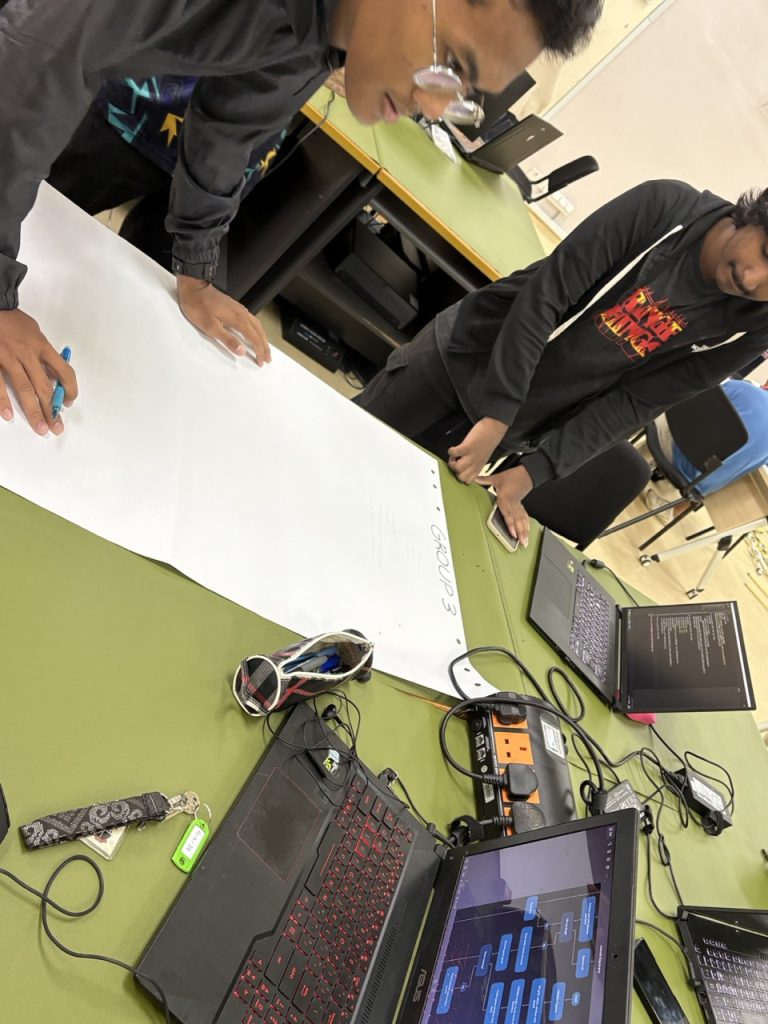
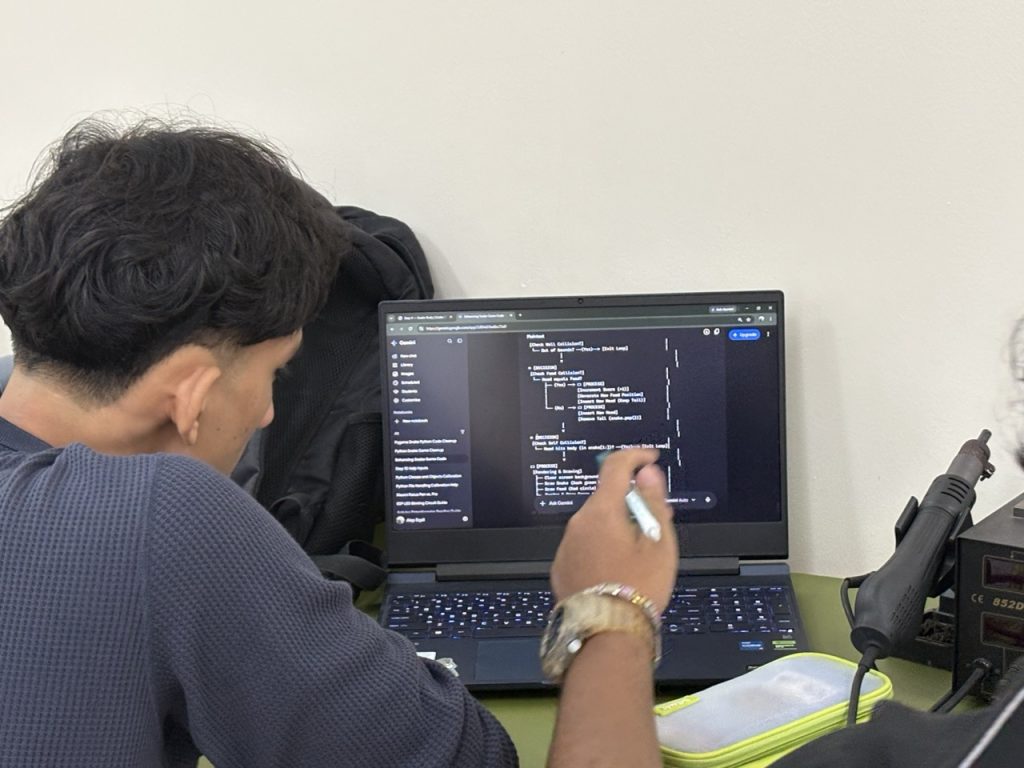
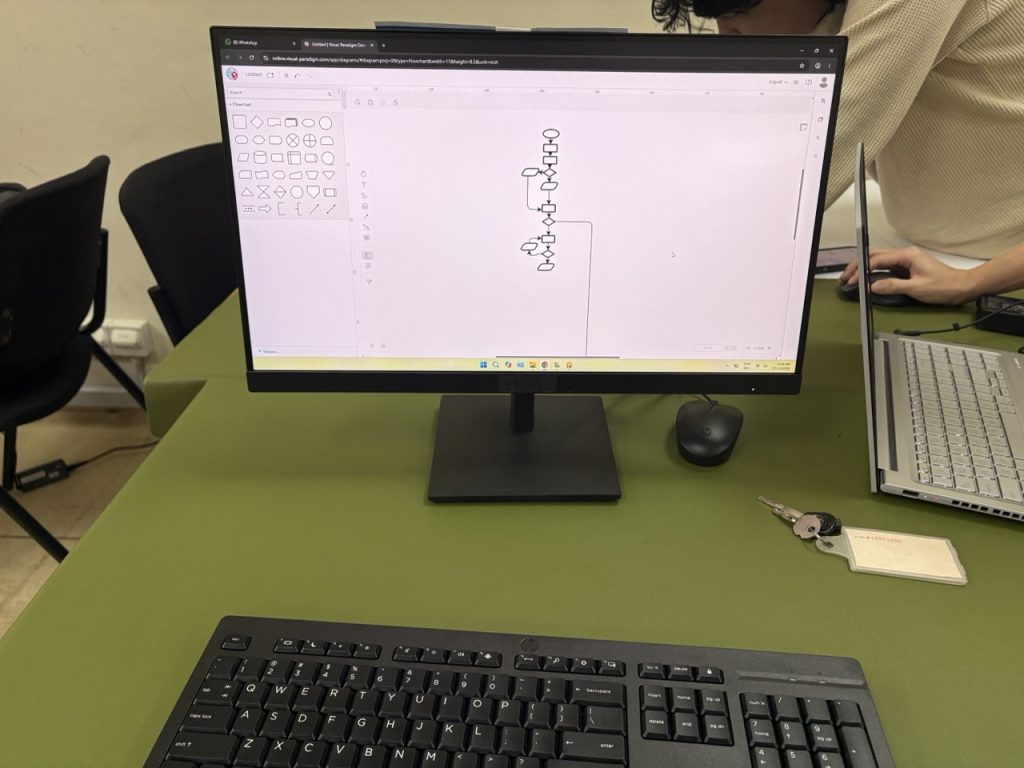
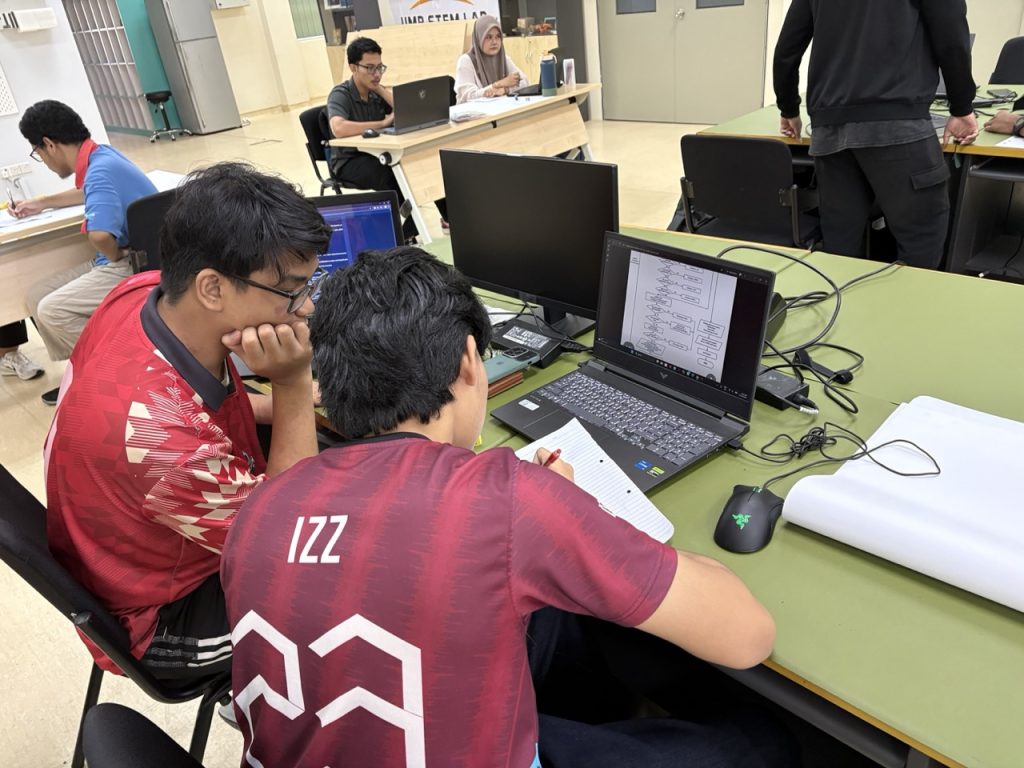
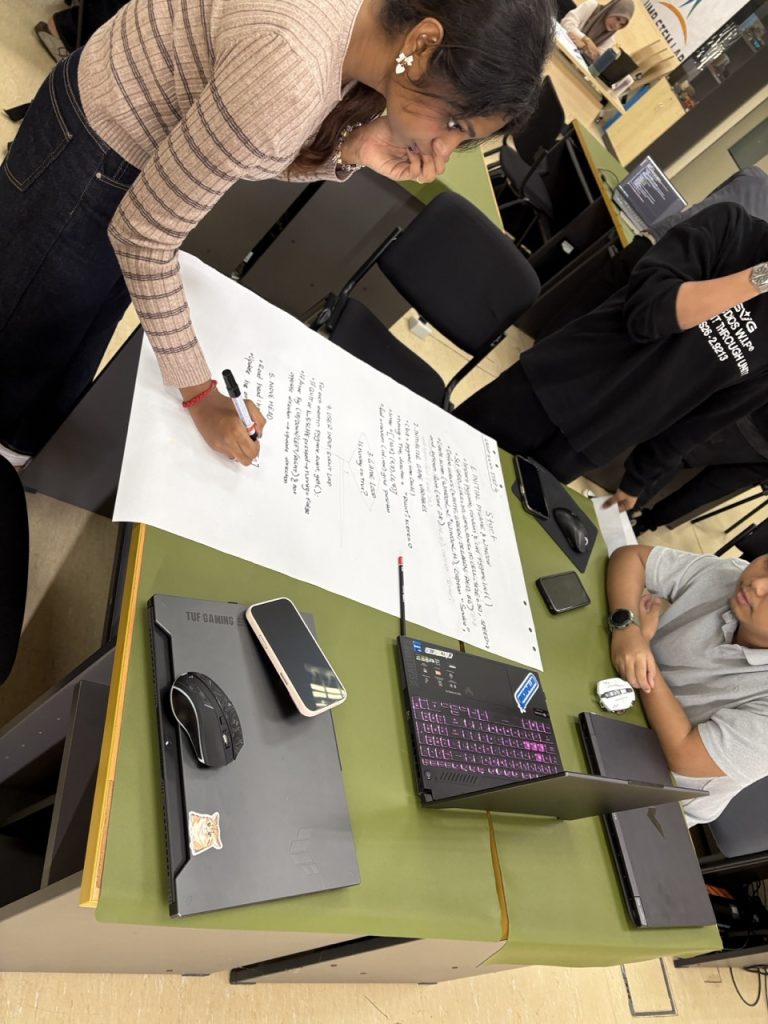
Week 5 marks a real milestone in our 10-step Snake Game Python journey. Students have now worked through nine of ten modules — from variables and game loops all the way through Object-Oriented Programming. But this week, we did not write a single new line of code. Instead, students were given one task: derive the flowchart of the snake game you have already built.

The result was one of the most insightful sessions of the entire series.

What Students Have Covered So Far

Step Topic
1 Variables & Constants — Grid Setup
2 Game Loop — Animation & Frame Rate
3 Direction Control — Boolean Syarat
4 Snake Body — Lists, insert(), pop()
5 Bonus Food — Timers & Modulo
6 Functions — Decompose & Reuse
7 Wrap-Around — Modulo for Boundaries
8 File I/O — High Score Persistence
9 ✓ OOP — Classes & Encapsulation
10 ML / Q-Learning — AI Agent (coming up!)

This Week’s Activity: Charting the Game Logic

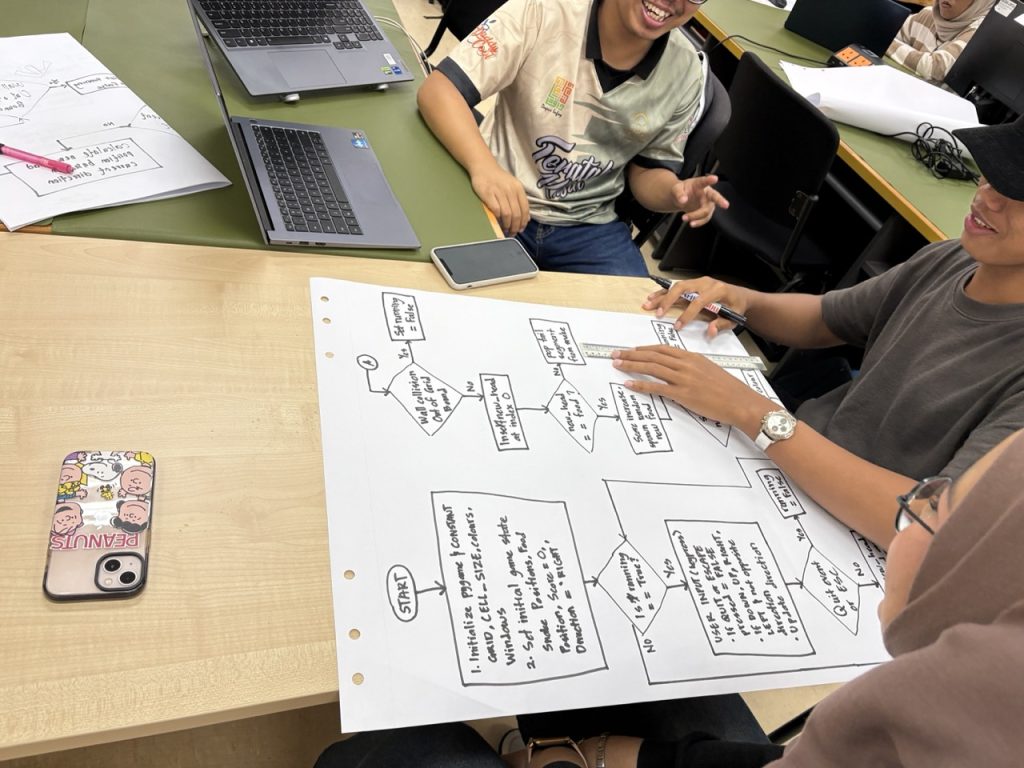
The challenge was open-ended — no template, no hints. Students had to read their own code, reason about control flow, and represent the game’s execution as a diagram. For many, it was the first time they had looked at the full program as a system rather than a collection of steps they had built one by one.

Students who had been through all nine modules found the exercise satisfying rather than daunting. They could trace a path from “Start” through the game loop, through every conditional branch, and back to the top — because they had lived through every one of those concepts over the past weeks.

Building a flowchart is a metacognitive act. It forces a student to hold the program’s execution model in their head, sequence decisions, and check their understanding against what the code actually does.

The Code Students Traced

1. Game Setup — Constants & Initial State

python
# Constants
COLS = 20
ROWS = 15
CELL_SIZE = 25
FPS = 10
BONUS_INTERVAL = 300   # frames between bonus spawns
BONUS_TIMER = 240      # frames a bonus food lasts

# Initial state
snake = [(10, 7), (9, 7), (8, 7)]  # list of (x, y) tuples
direction = "RIGHT"
score = 0
frame_count = 0
game_over = False

2. The Main Game Loop

python
while not game_over:

    # 1. Handle events
    for event in pygame.event.get():
        if event.type == pygame.QUIT:
            game_over = True
        if event.type == pygame.KEYDOWN:
            handle_direction(event.key)

    # 2. Move snake — compute new head with wrap-around
    head_x, head_y = snake[0]
    dx, dy = DIRECTION_MAP[direction]
    new_head = ((head_x + dx) % COLS,
                (head_y + dy) % ROWS)

    # 3. Check self-collision
    if new_head in snake:
        game_over = True

    # 4. Update body
    snake.insert(0, new_head)
    if new_head == food:
        score += 1
        food = spawn_food()
    else:
        snake.pop()   # remove tail if no food eaten

    # 5. Bonus food logic
    frame_count += 1
    if frame_count % BONUS_INTERVAL == 0:
        spawn_bonus()
    bonus_foods = [(pos, t - 1) for pos, t in bonus_foods if t > 0]

    # 6. Draw frame
    draw()
    clock.tick(FPS)

3. Direction Control — The “Syarat” Logic

python
DIRECTION_MAP = {
    "UP":    (0, -1),
    "DOWN":  (0,  1),
    "LEFT":  (-1, 0),
    "RIGHT": (1,  0),
}

def handle_direction(key):
    global direction
    # Syarat: cannot reverse into yourself
    if key == pygame.K_UP    and direction != "DOWN":
        direction = "UP"
    elif key == pygame.K_DOWN  and direction != "UP":
        direction = "DOWN"
    elif key == pygame.K_LEFT  and direction != "RIGHT":
        direction = "LEFT"
    elif key == pygame.K_RIGHT and direction != "LEFT":
        direction = "RIGHT"

The Flowchart

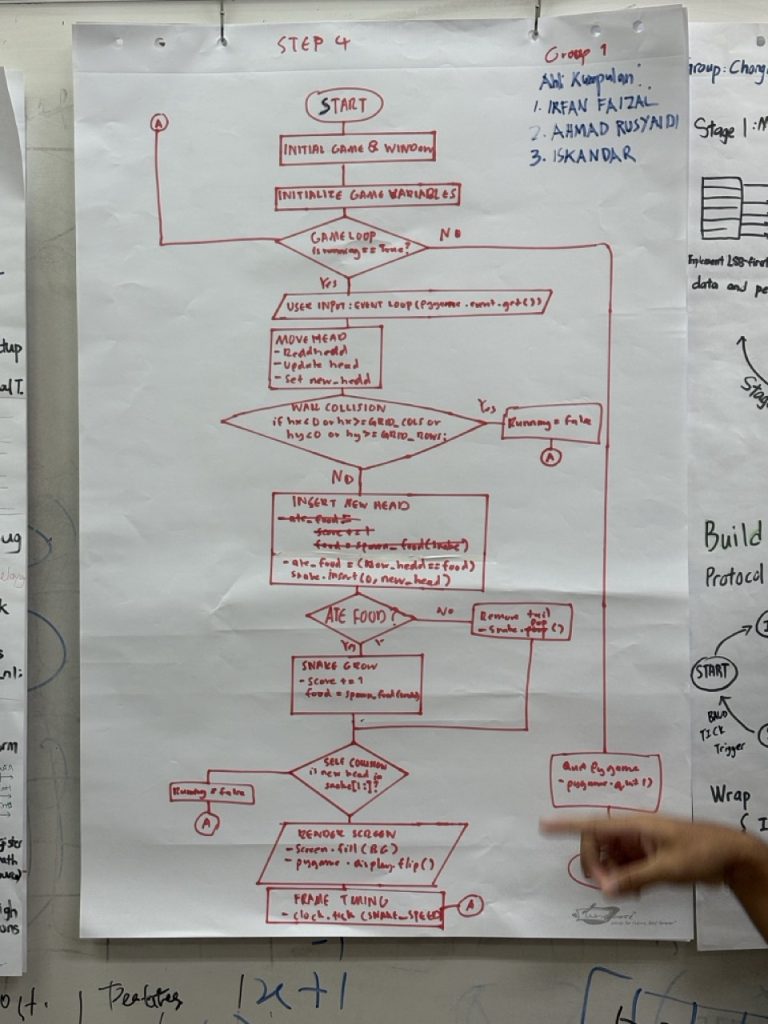
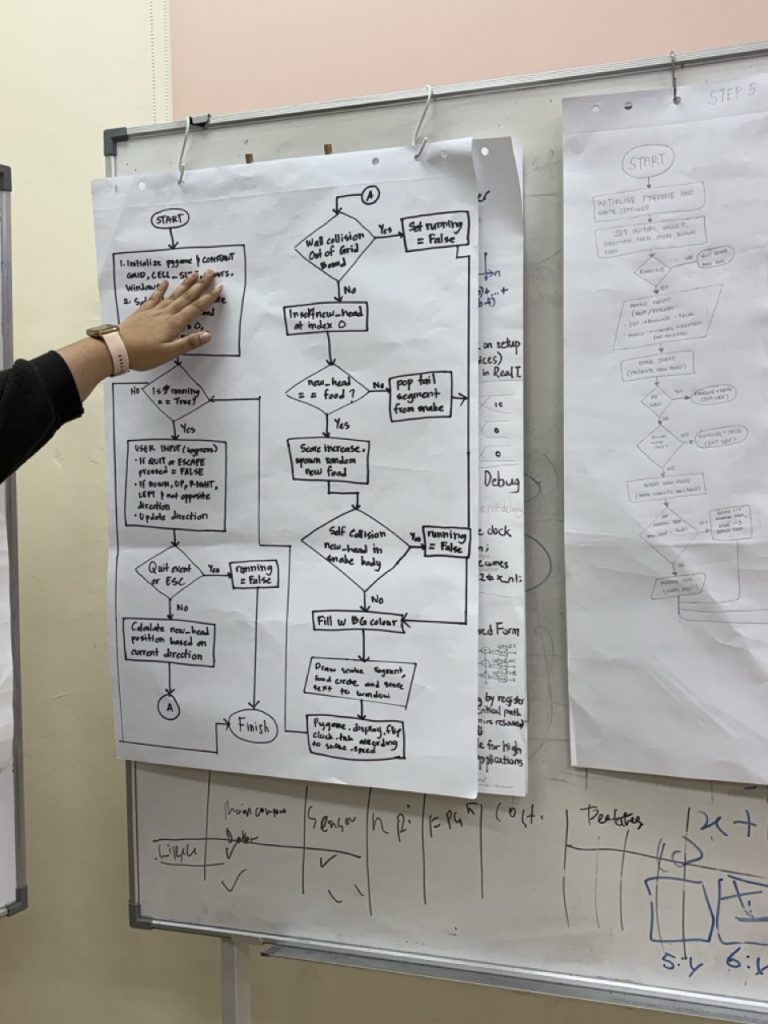
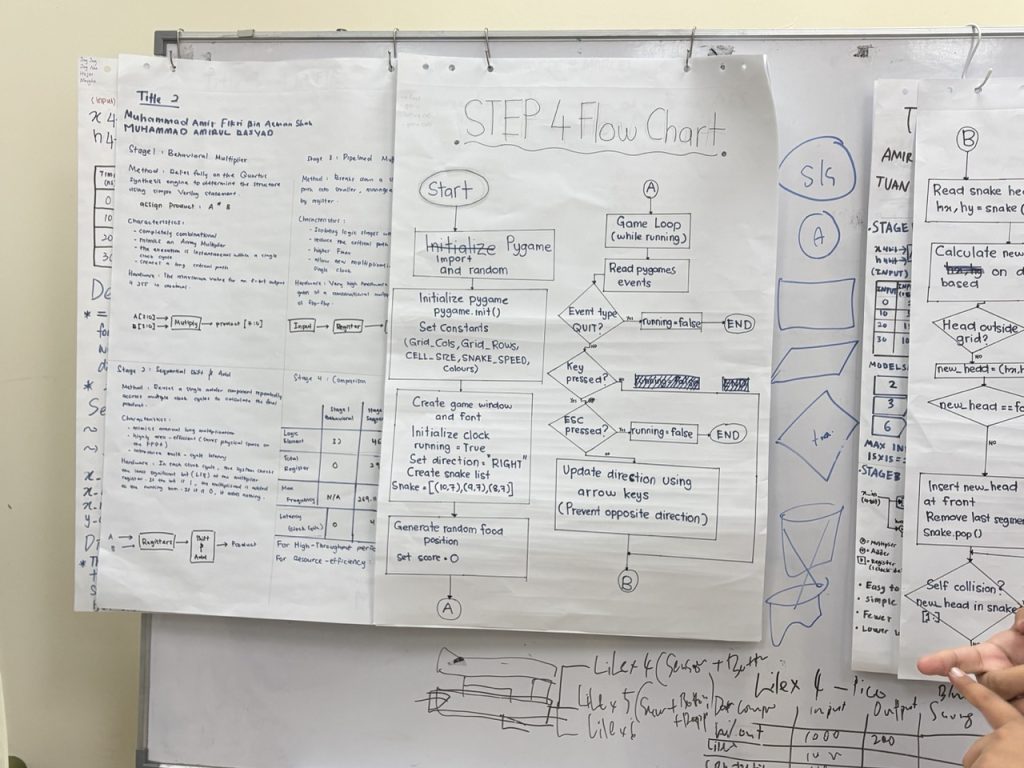
The flowchart covers one full iteration of the game loop:

      1. START → Initialise snake, food, direction, score
      2. GAME LOOP → Process events (QUIT? → END)
      3. Update direction (syarat: cannot reverse)
      4. Compute new_head using DIRECTION_MAP + modulo wrap
      5. Self-collision? → YES: GAME OVER + save high score | NO: continue
      6. snake.insert(0, new_head)
      7. Ate food? → YES: score += 1, spawn new food | NO: snake.pop()
      8. Bonus food logic → frame_count % BONUS_INTERVAL == 0
      9. draw() + clock.tick(FPS)
      10. → Loop back to Step 2

Why This Activity Works — 4 CT Pillars

Decomposition — Students break the game into distinct sub-processes: events, movement, collision, food, rendering. Each becomes a separate node in the chart.

Pattern Recognition — The insert/pop pattern for the snake body, and the modulo pattern for periodic events, stand out clearly when drawn as flowchart branches rather than buried in code lines.

Algorithmic Thinking — The flowchart forces students to think about sequence and order. A common discovery: does the collision check come before or after inserting the new head? Getting that order wrong changes the game’s behaviour entirely.

Abstraction — Students represent function calls like draw() and spawn_food() as single chart nodes — hiding internal detail behind a named action, exactly as abstraction works in OOP (which they just finished in Module 9).

What Comes Next

With nine modules done and a clear visual model of how the game works, students are ready for Module 10: extending the snake game with a Q-Learning agent that trains itself to play. The flowchart work this week means they enter that module with a stable mental model of the game loop — a foundation the reinforcement learning extension builds directly upon.

The metacognitive journal entries from this week will be especially valuable for the research analysis. They capture the moment students shifted from following code to reading code as a system — which is exactly the kind of transfer we are looking for.