

The world is digital, but life is analog..
UMP STEM Lab Arduino Robotics Synopsis can be found here.
33 students and teachers of SBPI Tun Abdul Razak, Pekan (Batch 1) had participated in this program. Participants went through activities involving Arduino Programming and electronics systems.
Thank you Cikgu Hamidah for coordinating the communication between UMP STEM Lab and the school.


This assignment serves 20% of the overall assessment in BTE3232 Com System Design Laboratory. Part 1: Tech Talk on Wireless System Communications Technology First up, you had the opportunity to attend a TechTalk session at UMP STEM Lab on April 29th. If you’ve missed it, watch the recorded session. It’s time to get creative! Choose … Continue reading “BTE3232 – Com System Laboratory – Assignment Project (20 Marks)”
This assignment serves 20% of the overall assessment in BTE3232 Com System Design Laboratory.
Part 1: Tech Talk on Wireless System Communications Technology
First up, you had the opportunity to attend a TechTalk session at UMP STEM Lab on April 29th. If you’ve missed it, watch the recorded session. It’s time to get creative! Choose a format—whether it’s a mind map, infographic, or engaging essay—to summarize the TechTalk session. Make sure to elaborate on the communication technology trends discussed, highlighting key advancements and their implications in the field. Don’t forget to incorporate key points such as the introduction to the TechTalk topic, emerging trends, examples and applications, and future outlook. And remember, creativity is key! Use visuals, diagrams, or relevant statistics to enhance your presentation.
Part 2: Site Visit to Communication Tower
Next, we are planning for a site visit to a Communication Tower. In your post-program report, start with a brief introduction outlining the visit’s purpose and relevance to the course objectives. Then, detail your key observations and insights from the visit, focusing on system design, implementation, and management. Analyze real-world communication system applications observed during the visit and their alignment with theoretical concepts. Reflect on the visit’s impact on your academic and professional development, addressing any challenges faced. Finally, provide recommendations for future visits or improvements to enhance educational value, and conclude by summarizing the report’s main points and emphasizing the visit’s significance. Don’t forget to include any supporting materials, such as photographs or interview transcripts, in the appendices.
Part 3: Campus Radio System Application Identification
For the final part of the assignment, it’s time to look around campus and identify an application of radio systems that you think would be beneficial. You can choose from Frequency Modulation (FM) modulator, Frequency Modulation (FM) demodulator, Amplitude Modulation (AM) modulator, or Amplitude Modulation (AM) demodulator. Once you’ve identified the components required via FTKEE UMPSA component request form. Design and simulate the circuit on a circuit simulator (up to your preference). Analyse the output waveform. Discuss the performance. Construct the radio circuit, measure the output.
Reports need to be submit the components list via the provided link before June 3rd, 2024.
IEEE TRYEngineering IEEE STEM Champion for the 2024-2025 term were announced yesterday, and I am honored to be listed ! This opportunity holds great significance for me as I believe it will connect me with a network that can further my passion for STEM education, particularly in digital making skillsets, and allow me to contribute … Continue reading “IEEE STEM Champion for the 2024-2025”

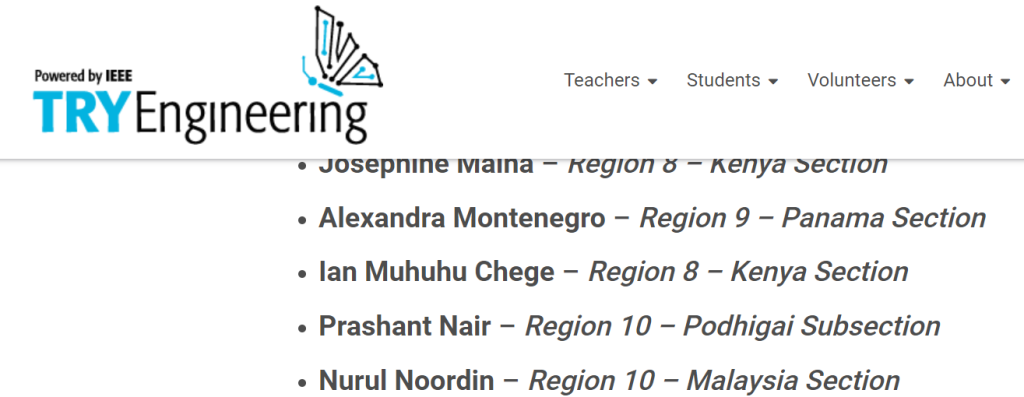
IEEE STEM Champion for the 2024-2025 term were announced yesterday, and I am honored to be listed !
This opportunity holds great significance for me as I believe it will connect me with a network that can further my passion for STEM education, particularly in digital making skillsets, and allow me to contribute to empowering the next generation of technology innovators and problem solvers.
My involvement in STEM Outreach dates back to 2016, with a focus on digital making skillsets encompassing programming, physical computing, and 3D modeling. Through the UMP STEM Lab, we’ve developed various modules tailored to specific outreach objectives, including robotics, computational thinking, media & information literacy, web development, coding, and game making.
One of the most rewarding aspects of STEM outreach is the challenge it presents: explaining complex concepts, such as electronics engineering principles, in simple terms. As an educator, this challenge pushes me to continuously improve and innovate in my teaching methods, finding creative ways to make STEM subjects accessible to all students.
I firmly believe that overcoming this challenge not only enhances my skills as an educator but also equips me to inspire and empower students to pursue their passions in STEM. It’s a journey of growth and learning, both for myself and for the students I have the privilege to teach.
I am dedicated to ensuring that students at all levels, from undergraduates to school children, are equipped with the right skills and knowledge. Within the framework of the UMP STEM Lab module, we prioritize a collaborative approach that involves undergraduate students becoming mentors to younger school children. This intergenerational collaboration fosters a sense of community, nurturing curiosity, critical thinking, and a passion for lifelong learning.
Engaging in STEM outreach has brought me immense fulfillment. Observing students delve into STEM concepts, such as robot making and computational thinking in programming, fills me with joy and satisfaction. Witnessing their eyes light up with curiosity and excitement upon completing modules is truly rewarding.
The STEM Outreach program for school-aged students that I am most proud of is the open-source robotics program. This program provides students with a hands-on experience in various digital making skillsets, including programming microcontrollers, exploring physical computing concepts in robotics application, and creating detailed 3D models.
One of the most rewarding aspects of the robotics module is witnessing the students’ engagement and excitement as they learn to code microcontrollers to interact with sensors and create their own electronic circuits for robots. This hands-on experience not only teaches them valuable coding skills but also introduces them to the world of sensors and electronic systems. Additionally, when students are able to make their own electronic circuits and code them to be functional, such as designing a line-following robot or obstacle avoidance mechanism, it further enhances their understanding of robotics principles and fosters a sense of accomplishment and confidence in their abilities.
Moreover, the robotics module offers a comprehensive learning experience that covers a wide range of skills within the digital making domain. From programming to 3D modeling, students have the opportunity to explore various aspects of technology and develop their interests.
I am particularly proud of the robotics program because it encourages collaboration and problem-solving among students. Being part of the students’ journey to solve their challenges in learning to make and code robots has been a truly rewarding moment for me. Seeing them work together to overcome obstacles and achieve their goals fills me with pride and reinforces my belief in the power of STEM education to inspire and empower young minds.
As I step into my new role as an IEEE STEM Champion, I am eager to continue making a positive impact in my community and beyond. I am committed to conducting engaging STEM outreach events, sharing results with the vTools platform, and actively participating in the Pre-University STEM Community. Additionally, I’m excited to serve as a reviewer for STEM grants and programs, contribute to promoting IEEE’s pre-university education initiatives, and help build a vibrant STEM outreach volunteer community.
Together, let’s inspire the next generation of technology leaders and change-makers through the power of STEM education.
In today’s BTE1522 session, we looked into the multimedia capabilities offered by the Raspberry Pi. Step 6 and Step 7 of our hands-on activities took us through the exciting journey of photo capture, video recording, and local video streaming.


Photo Capture and Video Recording
In this step, our focus was on harnessing the power of the Raspberry Pi camera module to capture photos and record videos using Python. The learning outcomes were twofold: exploring multimedia capabilities and mastering Python programming for media tasks.
Photo capture using the Raspberry Pi camera module enables users to capture high-quality images directly from their Raspberry Pi devices. This functionality is very useful in projects requiring visual documentation, such as surveillance systems, wildlife monitoring, and environmental monitoring. With Python programming, users can customize photo capture settings, automate image capture based on predefined conditions, and integrate photos into larger projects seamlessly.
Innovative Uses includes –
Local Video Streaming
Moving forward, we explored the basics of video streaming and implemented local video streaming on the Raspberry Pi. This step aimed to broaden our understanding of multimedia applications and introduce the concept of live video streaming.
Video streaming on the Raspberry Pi enables users to transmit live video footage over a network, facilitating real-time communication, monitoring, and collaboration. This functionality finds applications in remote surveillance, video conferencing, educational webinars, and live event broadcasting. Using the power of Python and video streaming libraries, users can create customized video streaming solutions tailored to their specific needs.
It’s innovative work includes:-
This activities today laid the foundation for more advanced streaming applications and paved the way for further exploration in multimedia development. By the end of these activities, students gained valuable insights into the multimedia capabilities of Raspberry Pi and develop their Python skills for media-related tasks. They left the session equipped with the knowledge and confidence to embark on more ambitious multimedia projects in the future.

Stay tuned for our next session as we continue our journey into the world of innovation with Raspberry Pi!


Well done Haikal for progressing well in completing in PSAD work.
Well done Haikal for progressing well in completing in PSAD work.


I had the incredible opportunity to be in Petrosains KLCC in a a pre-workshop focusing on developing a learning module for an AI line tracer. Hosted by a team of experts (Dr Fauzan and Aein) in robotics and AI technology, the workshop deals with the innovative process of retrofitting an existing Arduino robot with a camera module to enable advanced image processing capabilities.
The centerpiece of the workshop was the integration of a camera module, specifically the ESP Cam, into the Arduino robot. This integration was facilitated through a serial connection, utilizing a soft serial approach to convert digital pins into serial inputs. Before attaching the ESP Cam to the Arduino, the camera module underwent initial coding to capture images using the AIthinker ESP camera module. These captured images were then fed into an AI image processing platform called Edge Impulse (https://edgeimpulse.com/) , where the magic truly began.
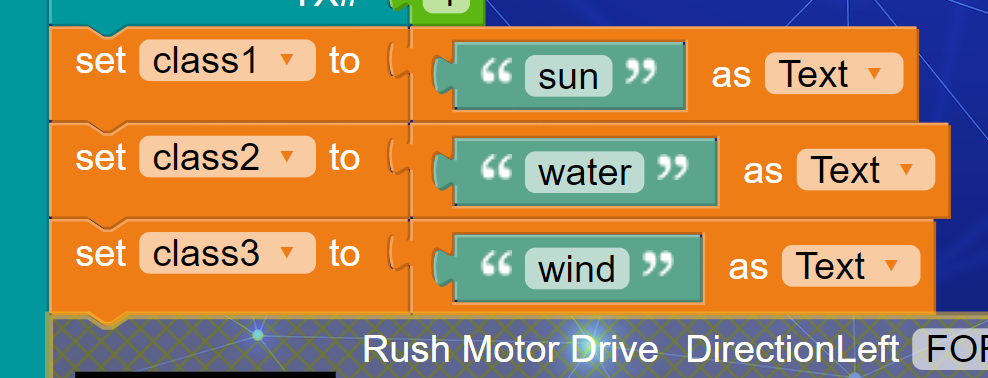
The task at hand was to train the system to detect specific images, namely images representing wind, water, and sun. This process, known as clustering, involved training the Edge Impulse platform with the collected images. Edge Impulse, as one of the available web AI platforms, utilizes sophisticated algorithms to process and classify images. Once the images were trained, Edge Impulse generated an Arduino library with AI image classification capabilities, enabling the Arduino robot to recognize and respond to the detected images.
The integration of the AI image processing module into the Arduino robot was a meticulous process. Due to the limited number of pins on the Arduino Nano, a soft serial approach was employed to establish communication between the ESP Cam and the Arduino. This involved coding two digital pins to serve as a transmit (TX) and receive (RX) interface for the serial connection.
Using a block programming approach known as Tinkercode, the Arduino robot was programmed to follow a line track while simultaneously activating the camera to “see” images. Additionally, the gripper mechanism on the robot was coded to release or block whenever the right image was detected, adding an extra layer of functionality to the system.
The workshop – master class – brought another perspective of robotics education, showcasing how AI image processing can be seamlessly integrated into Arduino-based systems. With the ability to detect and respond to visual stimuli, Arduino robots equipped with AI capabilities hold immense potential in various applications, from automated manufacturing to environmental monitoring. This serve as a perfect playground to nurture interest and skills in digital making skillsets =).
Nurul – May 7th, 2024




Exploring Temperature & Humidity Sensing with Python In Week 9 of our BTE 1522 Innovation (Python) class, we explored temperature and humidity sensing using Python programming. Let’s recap the key activities and learning outcomes from this week’s session: Activity 5 – Temperature & Humidity Sensor We learned about working with the I2C communication protocol, which … Continue reading “BTE1522 – Innovation (Python) – Week 9 – BME 280”


Exploring Temperature & Humidity Sensing with Python
In Week 9 of our BTE 1522 Innovation (Python) class, we explored temperature and humidity sensing using Python programming. Let’s recap the key activities and learning outcomes from this week’s session:
Activity 5 – Temperature & Humidity Sensor
We learned about working with the I2C communication protocol, which is commonly used for connecting and communicating with external sensors.
Reading data from external sensors and interpreting the sensor data were the main coding concepts covered in this activity.
Level up Activities
In the Level Up challenge for Week 9, students were tasked with building upon their knowledge from previous labs and enhancing their Python programs to incorporate additional features and functionalities.
1. Completed Lab 4 with BME 280 Sensor
Students revisited Lab 4, which involved reading ambient temperature, pressure, and humidity using the BME 280 sensor. This sensor is commonly used for environmental sensing applications and provides accurate measurements of these parameters.


2. Modified Codes to Incorporate Enhancements
3. Level Up Challenge: Displayed Data on an OLED Screen
The level up activities encouraged students to innovate and enhance their Python programs beyond the basic requirements. By incorporating OLED display integration, students elevated their projects to a new level of sophistication. OLED displays provide a visually appealing way to present sensor data in real-time, offering clear and concise information to users. Through this enhancement, students not only demonstrated their mastery of sensor data acquisition and interpretation but also showcased their creativity in user interface design and data visualization. Overall, the level up activities served as a platform for students to explore advanced concepts and apply innovative solutions to real-world challenges, fostering a spirit of creativity and experimentation in their Python projects.


